Your face and your National Identification Number are about to become boarding requirements. From 1st January, no scheduled domestic airline in Nigeria will be permitted to board a passenger who has not been verified through vPASS.
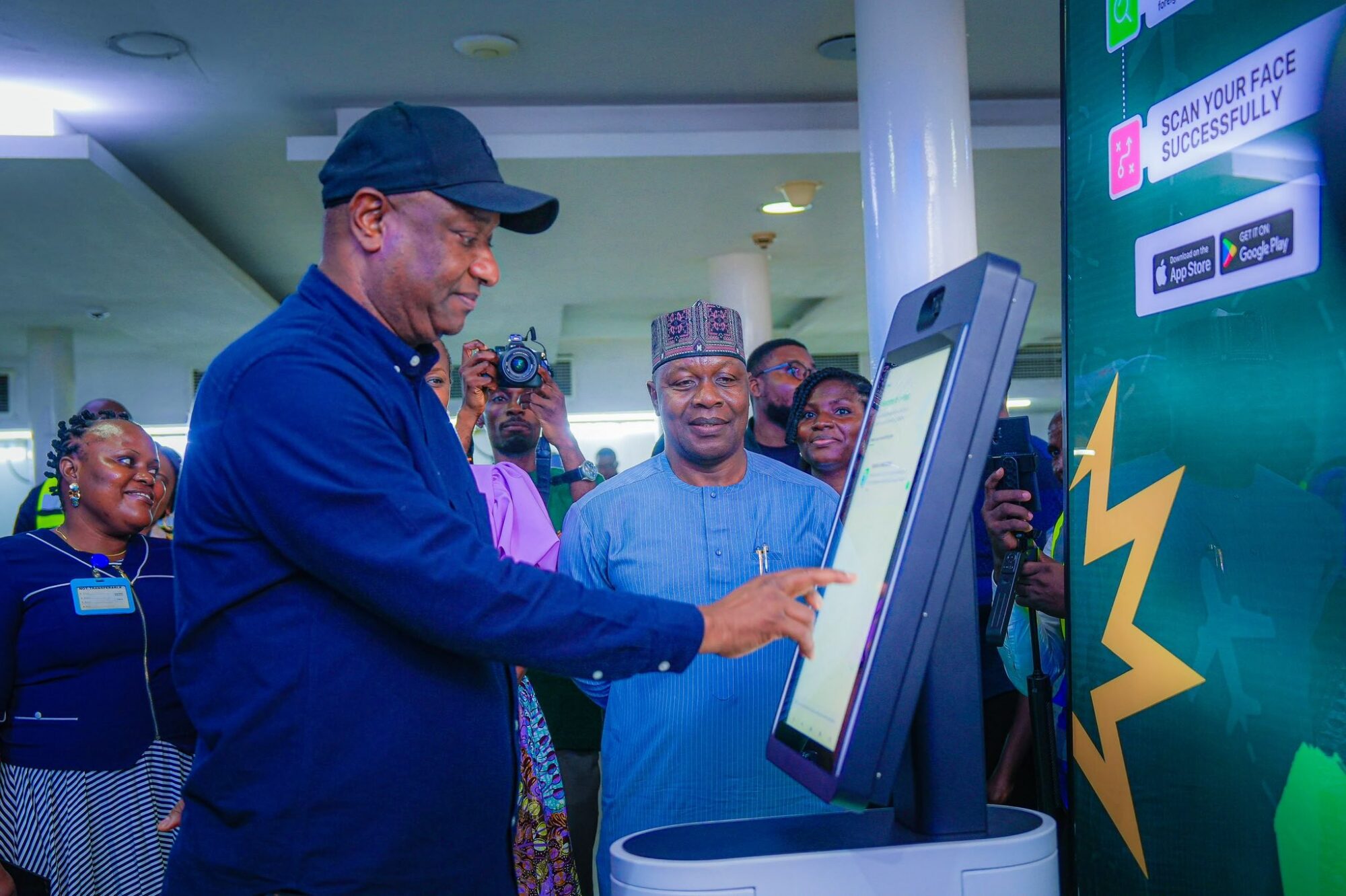
The Minister of Aviation and Aerospace Development, Festus Keyamo, launched the system at the General Aviation Terminal of Murtala Muhammed International Airport in Lagos. Airlines have until 31st December to integrate their booking and boarding operations with it.
What it actually does
vPASS ties a traveller’s NIN and facial biometrics to their flight record. Nigerian passengers enrol with their NIN and a face capture. Foreign passengers enrol with an international passport, read by OCR and matched biometrically.
Registration is a one-off and takes about a minute. After that, verification at the gate runs in under thirty seconds. You can enrol through a mobile app or at designated facilities at the airport.
It starts at the domestic terminals in Lagos and Abuja and extends to every other domestic airport from there. International travel is not covered. A separate arrangement for that is being handled with the Ministry of Interior.
Who is running it
This is the part worth reading twice. vPASS is not purely a government system.
The Federal Executive Council approved the project in 2025, and the Federal Airports Authority of Nigeria is deploying it in partnership with VERXID Technologies Limited under a concession agreement signed on 9th April this year. Implementation involves private sector investors.
A concession means a private company builds and operates the infrastructure and earns from it over an agreed term. So the thing standing between a Nigerian and a domestic flight from January is a privately operated identity check, holding a database of faces matched to National Identification Numbers.
The stated case for it is straightforward: identity fraud on domestic routes is real, passenger processing is slow, and airport security has gaps that a verified identity layer closes. Those are not invented problems.
The questions that follow are also not invented. Who holds the biometric data, under what retention period, with what access by third parties, and what the fallback is for a passenger whose NIN record does not match their face on the day.
What it means over the next six weeks
December is the heaviest domestic travel month in the Nigerian calendar. Lagos to Abuja, Lagos to Port Harcourt, Abuja to Kano, and everybody going home.
The sequencing matters here. The gates are live in Lagos and Abuja now, the airline integration deadline is 31st December, and enforcement starts the day after. That means the system will be bedding in across exactly the period when the terminals are at their fullest and the queues are at their longest.
If you are flying domestically over the festive period, enrol before you get to the airport rather than at it. A one minute registration is a one minute registration until two thousand other people are doing it at the same desk.
And if you are flying in the first week of January, you are flying under the new rule, not the grace period.