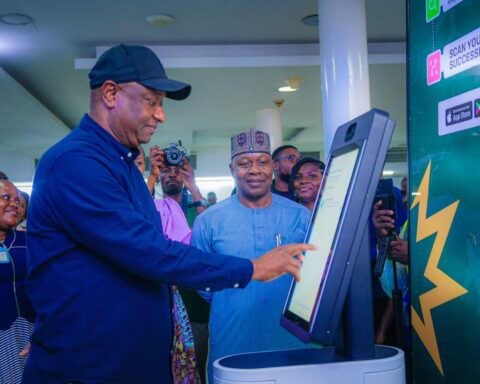
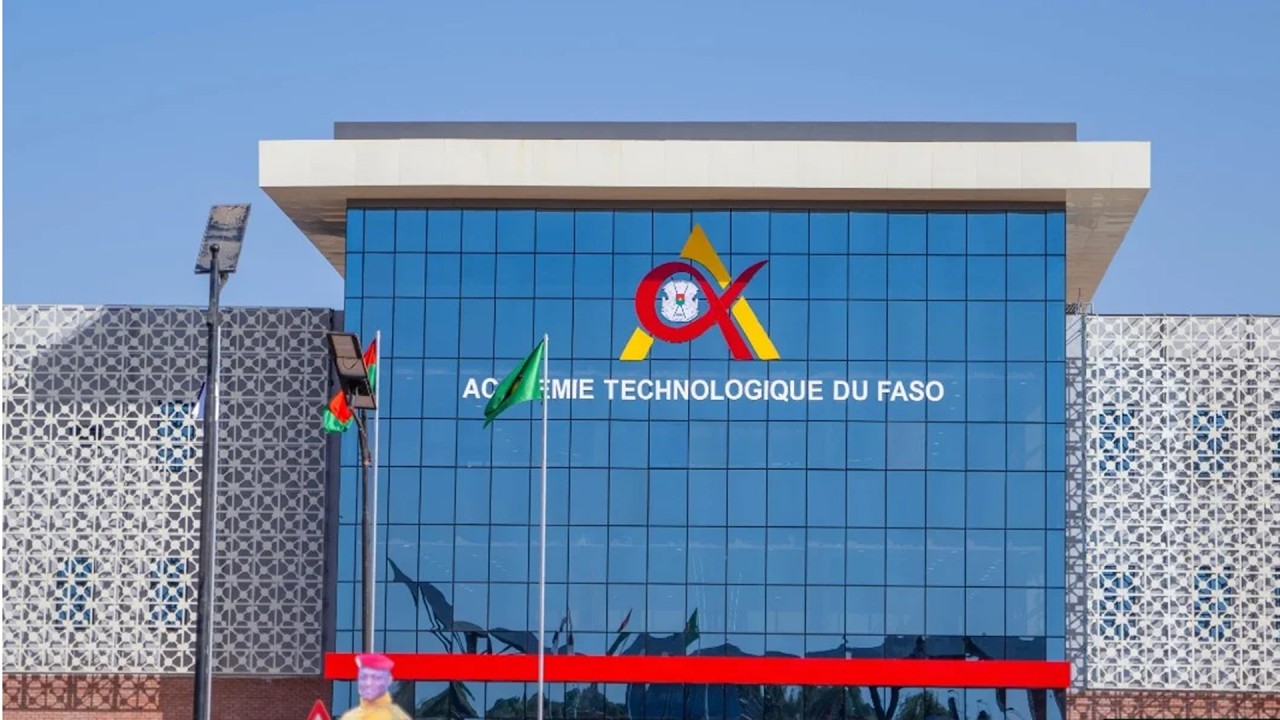
A sixty-hectare site sits at the northern edge of Ouagadougou, in a rural commune called Pabré, and until the end of last year there was nothing standing on it. On Monday, two hundred and fifty students walked into its workshops as the first cohort of the Académie technologique du Faso.
Captain Ibrahim Traoré presided over the opening. The students were picked from thousands of applicants, all of them holders of science and technical baccalaureates, and the government’s own account of the day has them already at work in the fabrication and electronics workshops rather than sitting through speeches.
The numbers the government is putting forward
The first phase cost 37,369,648,089 CFA francs, a figure approved in the Council of Ministers on 17 December 2025 and quoted in full, down to the franc, in the official record. At current rates that is somewhere around sixty-six million dollars. The whole of it came from the national budget, with no external lender and no donor attached, which is the part the presidency has pushed hardest in its messaging.
Construction ran eleven months against a twelve-month plan, according to the presidency. The campus reports directly to the Presidency rather than sitting under the education ministry, an arrangement that says something about how the project is meant to be run and who answers for it.
Students begin with two years of common coursework before specialising. The fields on offer run to eleven and read like a list of the industries a state would want to stop importing expertise for: computing, cybersecurity, electrical energy, mining, metallurgy, civil engineering, aeronautics and nuclear technology among them. The academy’s remit also covers doctoral training and applied research, not only undergraduate engineering.
Why a government fighting an insurgency builds a campus
Burkina Faso has spent the past four years under military rule and most of the last decade under armed pressure from jihadist groups that control or contest large parts of the countryside. Schools have closed across whole regions. Against that, a new campus for two hundred and fifty people is small, and nobody involved is pretending otherwise.
The point is not the headcount. It is the argument the building makes. Traoré’s government has spent its time in power detaching the country from France, leaving ECOWAS alongside Mali and Niger, taking state stakes in mining assets and nationalising a cotton company. Technical sovereignty is the same argument applied to people rather than minerals: if the state intends to run its own mines, its own grid and eventually its own nuclear programme, it needs engineers who were trained at home and are not on secondment from somebody else’s company.
That is an easier case to make than to finish. A campus is a building and a budget line. Whether it produces metallurgists and nuclear engineers depends on faculty the country has to find or import, on laboratory equipment that has to be maintained for decades, and on the second and third phases being funded when the first one has already used thirty-seven billion CFA. None of that is visible on inauguration day.
What the day does not settle
The things that make this notable are also the things that make it hard to assess from outside. A project financed entirely from domestic revenue and delivered ahead of schedule is reported here through the state’s own channels, in a country where independent reporting has become materially harder and where journalists and critics have been conscripted into military service. The cost figure, the timeline and the enrolment all come from the government. They are consistent across the accounts, and they are still the government’s numbers.
What can be said plainly is that the campus exists, that two hundred and fifty people started classes in it this week, and that the state paid for it out of its own budget. In a region where the standard model for a facility of this size involves a foreign lender, a foreign contractor and a repayment schedule measured in decades, that last detail is the one other governments in West Africa will be reading most closely.
The harder test arrives in four or five years, when the first cohort finishes and the country finds out whether there are jobs waiting for them inside Burkina Faso, or whether it has just built a very well equipped departure lounge.