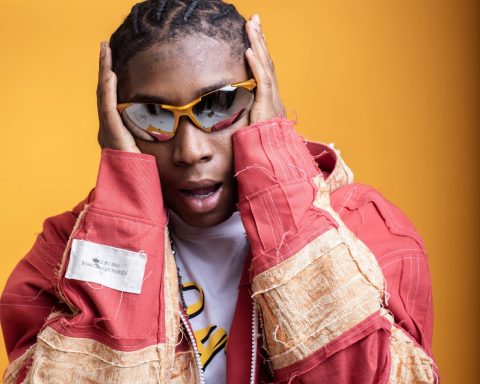

Bella Shmurda, post-High Tension has not cut the most stellar figure. The EP, released at the start of 2020, was as good as debuts get, and getting a cosign from Olamide for “Vision 2020” in addition, a pat on the back from a street pop legend, was a dream start for his career. He would later close the year with the ferocious banger, “Cash App”, ensuring he was one of the biggest names to emerge from the pandemic year.
But as happens with many who are thrust into the limelight so early in their careers, skipping several steps of ascent in a zoom to the top, this level of early success proved unsustainable, and record label squabbles were soon to follow. The rest of his career has been spent chasing these heights, and nowhere does it reflect as in the naming of his subsequent projects.
This album is named Hypertension, but with its cover image depicting electricity and lightning, and not, say, heart health and blood pressure it is usually associated with, there may be some questions about Shmurda’s understanding of the word’s meaning. However, to consider this album as one of a set – High Tension, High Tension 2.0 and now, Hypertension, clears any such doubts.
His breakout, High Tension, brimmed with quality, and many who came to it for Olamide’s verse left with a lot more. In it, Bella Shmurda laid bare his reality. It was street music all right, but where there would be braggadocio and chest-thumping associated with this music, Bella instead chose vulnerability, presenting the stories of his life – a girlfriend of strict parents pregnant for him, a sister gone wayward and sidetracked from school, a mother urging him to make money as she rubs the success of his contemporary in his face, with the utmost honesty and relatability.
High Tension 2.0 could not live up to these standards, first because the onerous circumstances that made for moving material were no longer present, and second because, seemingly, neither was the songwriting prowess. So the 2021 album fell short of expectations, and singles that came this year – “My Friend”, “Many Things”, “Fvck Off” – sauntered without purpose, empty lyrics laced on catchy beats, with neither strong enough to make an impression for much longer than the day of their release. It is telling that the sole exception from this run of singles, the slow-burning “So Cold” from August last year, is also the only one with a spot on the album, suggesting that the singer had some idea that his recent work fell acutely short of album quality.
It is difficult to ascertain at which point exactly Shmurda shaped up once more to become the artist he once showed every potential of being, surely somewhere between August’s “New Born Fela” and the Omah Lay assisted “Philo” a month later. On Hypertension he makes a half-return to his debut, embracing the low-tempo spirituality of High Tension, while ignoring its material. Just as well, for it would be more than a little odd to hear the man who recently narrated how he spent 2 million in the club one night sing once more about the ugly effects of poverty. Hypertension is in keeping with his current status, and as such his material revolves around the realities of a popstar’s life.
“New Born Fela”, with its ambitious naming, must have raised eyebrows at its release, for though there many Nigerian artists who leverage on the legend, none are quite so brazen in proclaiming themselves his successor. The track itself is scattered in focus, “I be the new born Fela/ Story teller/ battery charger/ Baby pana”, with Bella unable to decide if he wants to make an effort to honor the legend’s legacy or just slip into the conventional Nigerian pop songwriting pot for reheated material bordering on sex and women’s bodies. A fair assessment of the single would be that Shmurda only intends to follow in Fela’s sexual notoriety, and if that is the case, he has quite a long way to go.
“Philo” did not dress up its sexual material with praises to a legend. The track featured Omah Lay, just winding down from the release of Boy Alone, and together, they lace a mellow track about the beautiful Philo. The crowd chorus comes off a little forced, but being the popular thing in 2022, it was expected to make an appearance at some point. Themes of Love and sex drive a few other tracks on the album, like “Oh Oh Oh” and “Fire”, but it is a compensation that these songs do come out sounding pleasantly, and a happy discovery to make that it is not the extent of Shmurda’s focus on the album.
Other tracks widen the thematic scope. “Level up” is a reminder that Bella Shmurda’s ambitions have not stopped growing. He places his future in God’s hands, and the reasons for this ambition – “I just have to level up, just to take it all/ I just have to do it for, for my family” – appear genuine and give a strong sense of familial connection, and they wouldn’t be at all surprising to keen listeners of his first project.
“Addicted” is an unexpected attempt at tackling drug dependency, and its attendant ills of indiscriminate partying and unsafe sex. “Just one night, different hoes/ Plenty trouble we cause, we gbess”, he says, after listing a few drugs that caused this inebriation. Transparency is a longstanding quality of Bella Shmurda’s music and he brings it with him to Hypertension, he is not eager to drape over the ugly parts of life to present only the good.
As this is Bella Shmurda’s first project with guest artists, it should not be glossed over that their performances on this album are about as good as can be. Apart from Omah Lay co-starring on “Philo”, Simi (“Loose It”), Phyno (“Converse”), Victony (“No other”), Popcaan (“So Cold”) and Pa Saleiu, Not3S and L. A. X. (“Nakupenda”) also make appearances, and after noting the diversity that this group brings in artistry, within themselves and to the lead artist, what’s next is to remark that each featured act elevates the track they appear in.
One track in particular, Converse, with Phyno, should be singled out for how it tries to tap into a Igbo culture, using a guest feature, and on a galala-esque beat, no less, but Bella Shmurda will hope his delivery on the chorus in his poor attempt at Igbo language will be viewed as incoherent – and not offensive – to native speakers.
Linguistic gaffes aside, Bella Shmurda would rest content that he has delivered an album that can wrestle comfortably with the many gems from the stables of Nigerian music in 2022. Hypertension does not show the thematic consonance that is required to elevate a project to classic heights, but his breaking out from traditional pop beats to explore folksy, traditional sounds (especially “Ase”, “Lagos City”), will provide an edge over the competition. Equally important, a combination of good music and well-worked features will ensure it remains in shuffles long enough to establish his position in the upper echelons of Nigerian music, a fulfilment of promised potential.