Some Lagos myths get repeated so often they pass for history. Here are six, checked.
“Tinubu built Lagos.”
Contested. Bola Tinubu was governor from 1999 to 2007. His supporters say he rescued a state that was falling apart, and his media office put out a 30-minute documentary in which he called himself an “architect, a builder, and a developer bunched into one”.
Critics say the claim is too big. Former Jigawa governor Sule Lamido told Channels Television that Tinubu “never built Lagos”. His argument is that a former capital had a large federal presence, and that Nigerian money paid for its port, airport and bridges.
Even inside the APC, chieftain Tunde Bank-Anthony said Lagos was already established before Tinubu took power. He pointed to Babatunde Fashola (2007 to 2015) and Akinwunmi Ambode (2015 to 2019) as the governors who followed. Tinubu’s own supporters are more careful than the slogan. One of them, Wole Badmus, said they are not claiming Tinubu brought Lagos, only that he transformed it.
“Julius Berger had to cut a deal with Mami Water to build Third Mainland Bridge.”
Folklore, with no record behind it. We found nothing in the bridge’s documented history about a deal like that. The documented story also has more than one builder. According to Wikipedia, this is how it went:
- 1976: a contract is awarded.
- First phase: goes to a consortium of Impressit Girola and Borini Prono, with Trevi Group supporting the piling.
- 1980: the first phase is completed and commissioned by President Shehu Shagari.
- Second phase: Julius Berger takes it, from Ebute-Metta to Oworonshoki.
- 1990: President Ibrahim Babangida completes the project.
“Third Mainland is the longest bridge in Africa.”
Used to be true. At about 11.8km, it held the title until 1996, when Cairo’s 6th October Bridge was completed.
“Lekki is an island.”
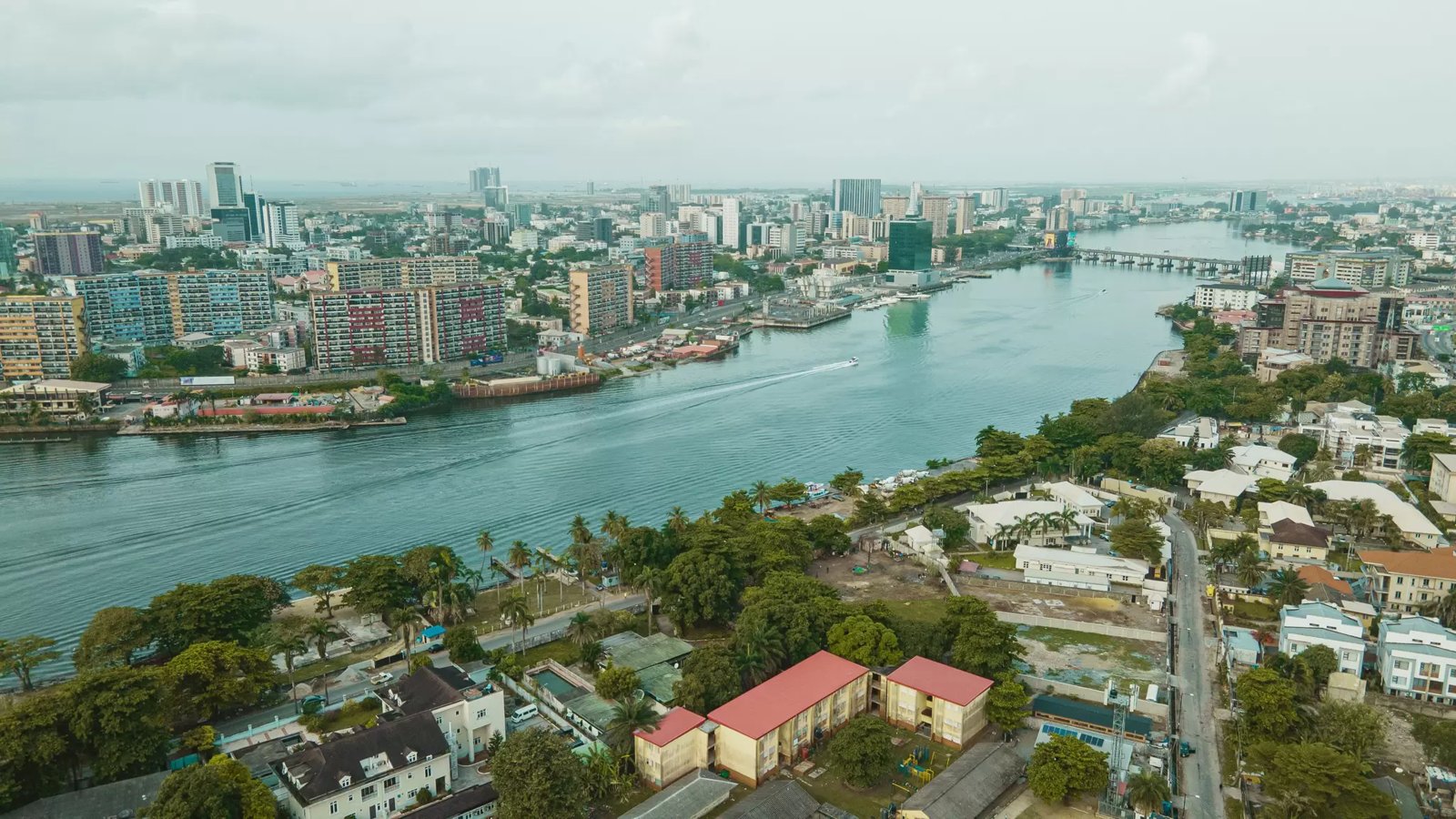
Mostly a nickname. Lekki is a peninsula, with the Atlantic to its south and the lagoon to its north. “The Island” is a loose term for the part of Lagos across the main channel that drains the lagoon into the Atlantic. Lagos Island, where the city started, is joined to Ikoyi by landfill, and Victoria Island lies south of it.
“Lagos is a Yoruba name.”
No. The Yoruba name for the city is Èkó, which likely comes from Ereko, a Yoruba word for a farmstead or hamlet. Lagos is the Portuguese word for “lakes”, and the city was most likely named after Lagos in Portugal, a main base for Portuguese expeditions down the African coast in the 15th century. The Awori, a Yoruba subgroup, settled the area in the same century.
“Lagos is the biggest city in Africa.”
Depends who is counting. Wikipedia calls Lagos the most populous urban area in Africa, but its own infobox ranks it second and says Lagos “may” have overtaken Kinshasa. Estimates for 2025 run from 17 million to 21 million people. The 2006 census counted 8,048,430 in metropolitan Lagos, a figure that was disputed, with the Lagos State Government saying the true number was much higher.