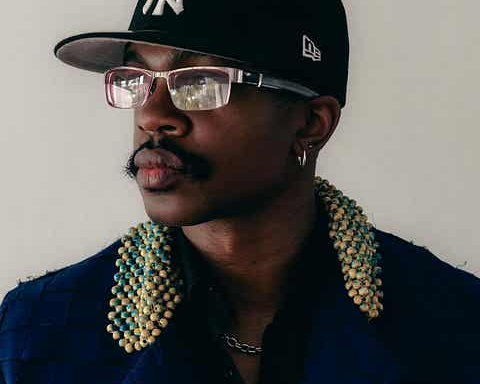
On August 19th 2024, Davido posted a short video from the cabin of his private jet. He was doing a loose, unbothered two-step to a sound called “Sojinu,” and the caption read: “Very expensive demure Sojinu @thetrenchboy.” Within hours, the man who made the sound had filmed himself screaming and rolling on the floor in Lagos, thanking the biggest pop star in the country for noticing him.
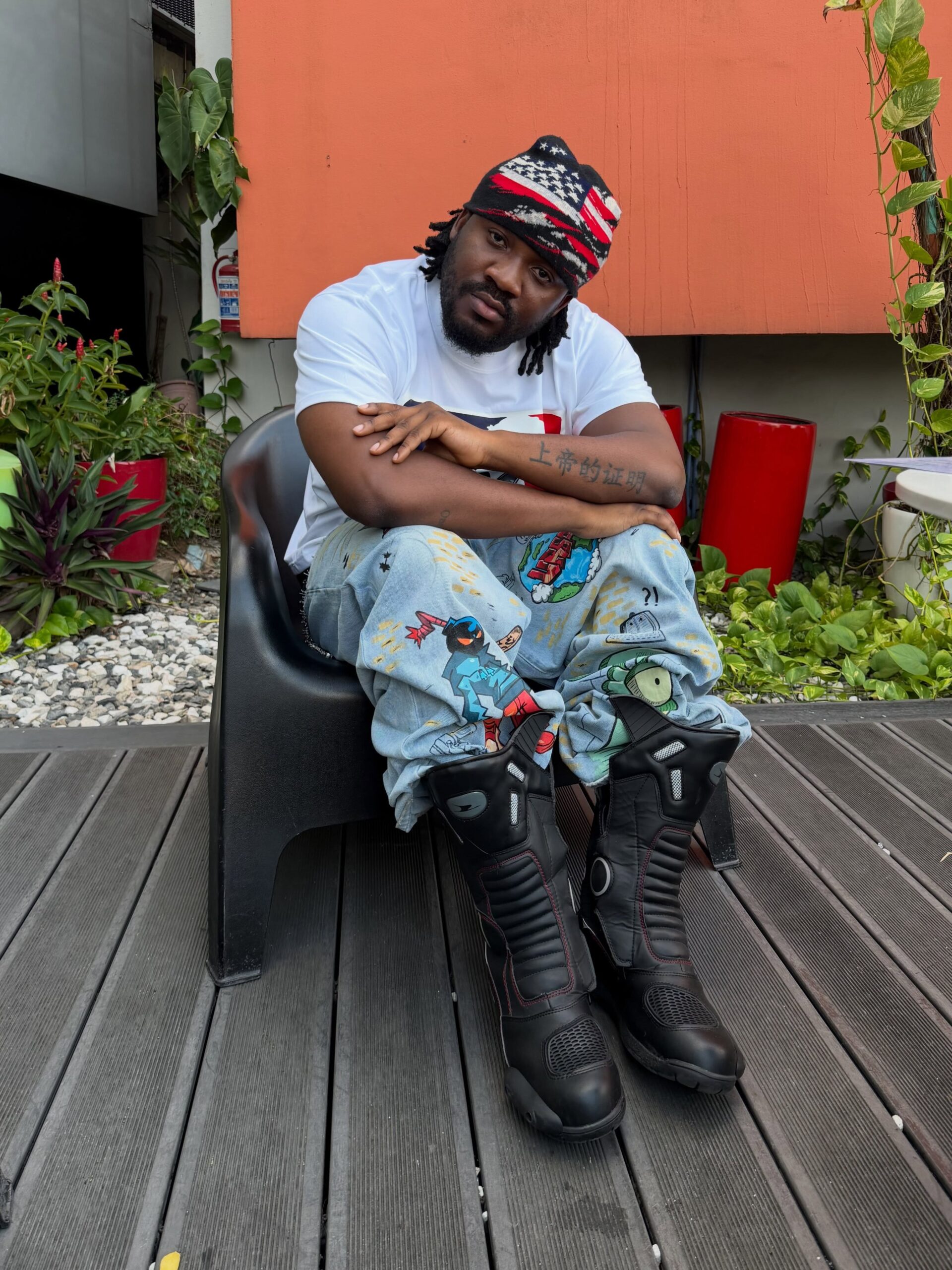
That clip is the cleanest summary of where the current wave of Nigerian pop culture now originates. Not in a studio, not on a label’s release calendar, but in a 30-second skit shot on a phone by a former University of Lagos student who calls himself Trench Boy. Two years on, Divine White is arguably the most consistently watched skit maker in the country, and the slangs that leave his videos tend to end up in everyone’s mouth.
In America, the comedian who does this job is Drew “Druski” Desbordes. He started posting skits on Instagram from his mother’s living room in 2017, built a fake record label into a real business, and earned an estimated $14 million in 2025, according to Forbes. The comparison writes itself. Whether it holds up is a harder question, and the answer says less about Trench Boy’s talent than about the economy he is working in.
The Second Man Out of the Squad
Trench Boy did not arrive alone, and he did not arrive first. The first of his circle to break was Muhammed Gilmore, whose videos started dominating the Nigerian ‘For You’ page in 2022. His comment sections were filled with one recurring reaction: we all lived the same lives. Gilmore turned relatability into a genre, and fans started calling him its king. Around him grew what some describe as the Gilmore clan: Trench Boy, Paper Chase, Stonecode Comedy, and a rotating supporting cast in which the same actors play siblings in one creator’s video and girlfriends in another’s. It works like a repertory company. Each member runs his own page and his own style, but they share faces, sets, and audiences, so a fan of one becomes a fan of all.
For a long stretch, Trench Boy was furniture in Gilmore’s videos, the protégé in the background, until he stepped out of that shadow through sheer volume of posting. The origin story he tells is quieter. When the pandemic emptied the campus, he stayed behind in his hostel while other students went home, and the Trench Boy persona was built in that empty building.
The University of Lagos matters here. Akoka has quietly become the most productive entertainment incubator in the country, a campus where students from every region share hostels, slang, and Wi-Fi, and where a skit shot between lectures can reach the whole country by evening. By 2022, Don Jazzy had co-signed Trench Boy. By April 2025, the clan had reached the top of the food chain: Gilmore, Trench Boy and Paper Chase shot a skit with Davido the day before his album 5ive dropped, and a single fan repost of it on X passed 500,000 views.
Sojinu: How a Street Word Got on a Private Jet
Here is the fact most people miss: Trench Boy did not invent Sojinu. The word was already Lagos street slang for calm down or ‘take it easy’, the kind of thing said to a friend getting worked up over nothing, and it was already bubbling in July 2024. What Trench Boy added was the packaging: a sound, a dance, and a format anybody could copy in ten seconds.
Then the clan did what a label’s street team used to do. The Sojinu push was largely a group effort, with his friends working the sound into their own videos until the algorithm had no choice. By the time Davido posted from the jet, he was joining a wave, not starting it. He also followed Trench Boy on Instagram the same day, which in Nigerian creator economics is worth more than most brand fees.
What followed was a full cultural cascade. Victor Boniface, then scoring for Bayer Leverkusen, turned Sojinu into a goal celebration. Broda Shaggi and Shank Comics jumped on it. Trench Boy released “Sojinu” as a single so the sound could live on streaming services. Note Davido’s caption, too: “demure” was lifted from the American “very demure, very mindful” TikTok trend of that same August. One clip, a Lagos street word and an American meme in the same sentence. That is what Nigerian internet culture looks like now.
The Sojinu run proved something the music industry still underestimates. In Nigeria, a skit maker with a tight network can now take a phrase from the street to the most famous man in the country in about six weeks, with no budget, no radio, and no label.
The Content Creator’s Room is Lagos
Relatability gets used as a compliment so often it has stopped meaning anything. In Trench Boy’s case, it is a technical skill, and it comes from geography. He is an Igbo kid who grew up across the Lagos mainland, in Meiran, Ajegunle and Igando, before landing at UNILAG. That route gives him three registers at once: the home language, the Yoruba-inflected street slang of Lagos, and the Pidgin that holds the whole country together. Most skit makers write from one of those positions. He writes from the overlap.
Look at the titles on his TikTok and the pattern is obvious. “Mummy!!” “Understanding girlfriend.” “Embarrassment vs Shame.” “make I kpeme”. None of these is a joke premise in the stand-up sense. Each is a social situation every Nigerian under 30 has been inside: the mother who escalates, the friend who drags you into a fight, the person on the danfo whose phone call is a public broadcast.
The craft is in the compression. A Trench Boy skit usually runs on one recognisable type, one escalation, and one line built to be quoted. That last part is the business model. A line that can be lifted out of the video and dropped into a WhatsApp group or an X reply travels further than the video itself, and every time it travels, it points back to him.
This is also why he reads as Lagosian before he reads as anything else. Lagos is the one Nigerian city where ethnicity gets flattened into a shared urban accent, and Trench Boy performs that accent fluently. Viewers in Enugu, Ibadan and Kaduna watch him and see the Nigeria they recognise, which is mostly a Lagos they have absorbed through screens.
Rage Bait: The Word Nigeria was Paid to Live Inside
The current proof of his reach is the rage bait series. In his newest run of skits, captioned with lines like “Na rage bait!” and “No Rage bait Me Jor!!!!!”, Trench Boy and his cast turn provocation into a domestic sport.
The word itself is not Nigerian. Rage bait means content built to make people angry so they engage with it, and Oxford named it Word of the Year for 2025 after its use roughly tripled in twelve months. But Nigerian X was living inside the definition long before it learned the term.
The reason is money. Once X started sharing ad revenue with verified accounts, anger acquired a price. Before this year’s cuts, payouts worked out to roughly $8.50 per million verified impressions, and the quickest way to make a blue tick reply is to provoke one. So the timeline filled with manufactured takes on marriage, tribe, politics, and whatever was trending that morning. Courses teaching the method sold for as little as ₦3,000. Reply rings formed, groups of accounts agreeing to pile onto one another’s posts within minutes of publishing.
Then the hustle went abroad. Nigerian accounts worked out that American politics and Japanese timelines paid better than Lagos gender wars, and moved into those reply sections. When X introduced country labels on profiles, some of the loudest pro-Trump and anti-immigrant accounts on the platform turned out to be run from Nigeria and other countries far from the fights they were farming. X’s head of product, Nikita Bier, shared data showing that when Japanese users reported spam replies, nearly 16 percent of those accounts were Nigeria-based.
The bill arrived in 2026. In February, monetisation dashboards across Nigerian X went to zero, with unconfirmed estimates of 80 to 90 percent of local creators frozen for engagement manipulation. In March, Bier floated paying creators mainly for engagement from their own country, Nigerian X turned “Nikita” into a trending villain, and Elon Musk paused the change on March 25. By April 12, X had cut aggregator payouts by 60 percent and promised permanent deductions for habitual bait posters.
So when Nigerians say rage bait, they are not borrowing a piece of media theory. They are naming a hustle they watched up close, that some of them ran, and that a platform eventually punished at national scale.
That history explains what the word does in everyday Nigerian use. By late 2025, people on Nigerian X were remarking that rage bait had arrived that year and everyone had adopted it at once. It has since stopped being an accusation and become a reflex. A hot take on food or everyday living, a ranking of Afrobeats albums, a theory about why Lagos men don’t text back: the replies do not argue. They type “rage bait” and scroll on, or drop one of Trench Boy’s rage bait clips and move on.
“noragebaitmenoragebaitme” is a complete sentence. The label now lands on diverse opinions, real complaints, people who are simply wrong, and bad news the reader would rather not believe. Even Nigerian parents get accused of it. In practice, it means less “this post is manipulating you” and more “I see what you are doing, and I refuse to be moved.” A timeline that spent two years being farmed for impressions has made suspicion its default setting.
This is the soil Trench Boy planted in. His rage bait skits take a word that, on Nigerian X, still carries the smell of hustle, spam and frozen payouts, and move it into the living room. The bait becomes domestic: the kind of line siblings, partners and friends throw at each other precisely because they know where it will hurt. Nobody is getting paid.
He has taken the most cynical mechanism on the Nigerian internet and returned it to what it was before monetisation: people who know each other well pressing buttons because they can. That is why it lands. Viewers have spent a year being baited by strangers for money.
There is an irony here, and it belongs in any honest account. The clips spread fastest on X, reposted by aggregator accounts that collect the impressions and, where they still qualify, the revenue. The comedian who rescued rage bait from the engagement farmers is, on that platform, still being farmed by them.
And underneath it sits the same idea as Sojinu. Both of Trench Boy’s biggest phrases are about staying unbothered under provocation, and making a show of it. In a country where fuel prices, the power supply and the timeline itself all seem designed to provoke, that posture is the most relatable thing a skit maker can perform. Around those two headline words runs a steady stream of smaller lines from his captions, the “make I kpeme” and “e go far o” register of Lagos Pidgin, which his audience recycles in comment sections and group chats.
The misuse is the important part. A slang word goes through a predictable life cycle: it is popularised in a skit, adopted by the people who watched the skit, picked up by people who did not, and finally applied to situations it was never meant for. The moment strangers start using a creator’s phrase wrongly is the moment it stops belonging to him and starts belonging to the language. Sojinu went through that cycle in 2024. Rage bait is going through it now, with a twist. This time a global word was taken in, reshaped by a Nigerian comedian, and handed back to the timeline as a reaction format.
There is a neat symmetry in where this lands. The same dictionary that crowned rage bait in December 2025 added 24 Nigerian words a month later, including nyash, abeg and biko. Nigerian slang is no longer treated as noise around English. It is treated as part of it, and skit makers are among its most productive suppliers. Trench Boy has now moved two phrases into national circulation in two years.
What Druski Actually Built
To answer the title honestly, you have to be precise about what Druski is. He is American, born in Columbia, Maryland, in 1994, and studied at Georgia Southern University. He posted his first skit on Instagram on October 2, 2017, under the handle druski2funny, filming on a phone propped up in his mother’s living room.
The skits made him famous. What made him rich was one idea he owned outright. In 2021, during the pandemic, he launched Coulda Been Records, a fake record label run over Instagram Live, where aspiring artists auditioned, and he roasted them. It turned a comedian into a format, and a format into a franchise. Drake put him in the “Laugh Now Cry Later” video. Justin Bieber put three of his skits on the 2025 album Swag. Complex named him the funniest person on the internet.
The Money Followed the Ownership
His first headline tour, Coulda Woulda Shoulda, grossed about $2.5 million in 2023. In 2024, he sold out State Farm Arena in Atlanta for Coulda Fest. He set up 4Lifers in 2023 as a holding company for touring, film, merchandise, and licensing, self-funded after streaming platforms turned him down. He also holds equity in Happy Dad Hard Seltzer, the brand that sponsored his tour.
Trench Boy is doing the cultural work Druski does. He is not operating inside the same machine, and that is not a character flaw. It is a market condition.
Start with the platform. TikTok, where Trench Boy is strongest, still does not include Nigeria in its Creator Rewards Program. A Nigerian creator can pull millions of views a week and receive nothing from the platform directly. Income comes from brand deals, live gifts, and side products, and across the continent, six in ten creators still earn under $100 a month.
The skit industry itself is real money by local standards, widely estimated as Nigeria’s third-largest entertainment sector. But it is still a fee economy. Creators are paid per post, per campaign, per appearance. Trench Boy’s publicised partners, TECNO, Mavin Records and Tap Tap Send, are the right logos for a creator at his level. They are also clients, not equity.
There is a tell in his press, too. The Trench Boy profiles that ran across three national dailies in 2025 repeat the same hostel origin story, the same three brands and the same “over 60 million impressions” figure, almost line for line. Anyone who has worked in Nigerian PR recognises a placed release. That is not a criticism. It is what an ambitious creator should be doing. But a self-reported impressions number is a marketing metric, not a business.
Then there is YouTube, the one major platform that pays Nigerian creators directly through ad revenue. A fan-run channel exists precisely because Trench Boy does not post his skits there. Druski’s long-form Coulda Been content lives on YouTube under his own company. Trench Boy’s catalogue, two years of the most quoted skits in the country, mostly lives on platforms that do not pay him for it.
And there is the music. Sojinu was a single. His drill track “Blessings” was billed as a debut. Druski used the music industry as his subject and stayed a comedian. Trench Boy is trying to become part of it. That could be a second income stream, or it could be a distraction from the franchise he has not yet built.
Is Trench Boy Nigeria’s Druski? In cultural function, yes, and nobody else is close. He is the skit maker whose phrases become the country’s vocabulary, whose sounds get picked up by Davido, and whose videos are used as replies by people who have never watched the original. Druski occupies that same spot in American Black internet culture.
In business structure, not yet. Druski’s leap was not more views. It was ownership: a named format, a live show built on it, a company holding it, and equity in the brands that pay him. Trench Boy has the audience and the cultural credit. What he does not have yet is his Coulda Been Records, a franchise with his name on the deed.
The raw material is already there. The Gilmore clan is a ready-made repertory company with shared fans, a ready-made cast for a live tour, a web series or a studio. Rage bait is already a recurring series with a built-in audience. If he turns one of those into something he owns, the comparison in the title stops being a question.
If he does not, he risks the fate of most viral Nigerian creators: a few years at the centre of the culture, a long list of brand campaigns, and slang that outlives his name. The country will keep saying Sojinu either way. The only open question is whether Divine White gets paid for it.