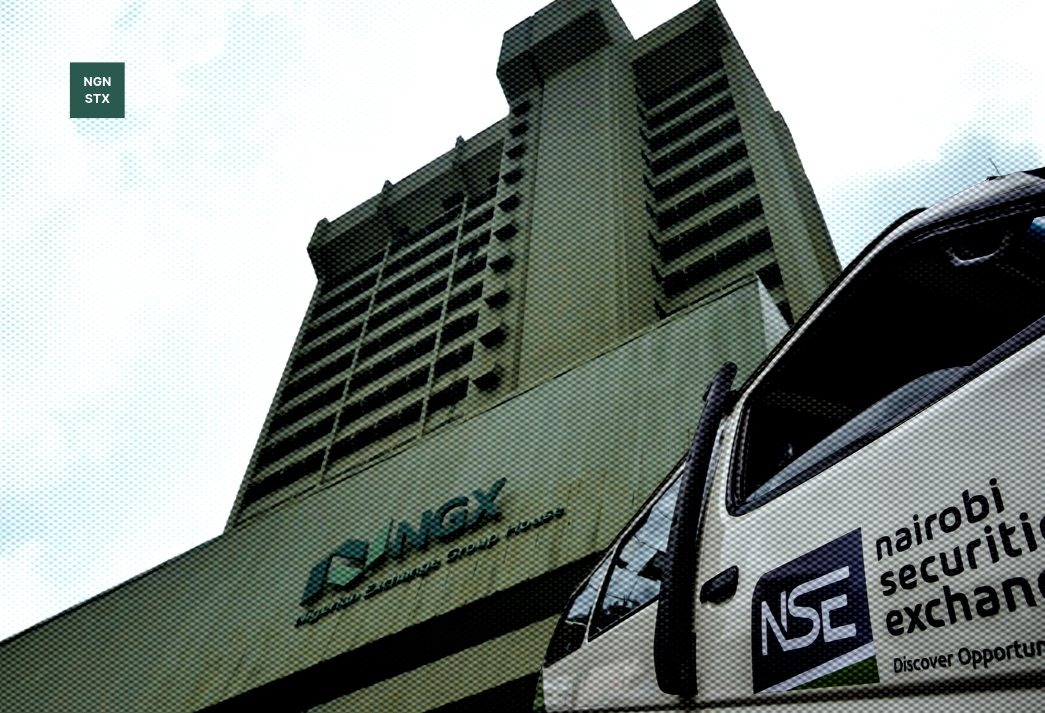
Nigerian Exchange Group Plc announced on 16 November that it has bought a 10% equity stake in the Nairobi Securities Exchange. The price was not disclosed.
That omission is the first thing worth noticing, because the market priced the deal anyway. NGX Group shares rose 10% to ₦182.60 on the day of the announcement. On roughly 1.96 billion shares outstanding, that is about ₦32 billion added to the company’s own value.
What 10% of the NSE actually costs
The Nairobi Securities Exchange is itself a listed company on the exchange it operates. At the end of October its shares traded at KSh33 with 259.5 million shares outstanding, giving it a market value of about KSh5.36 billion.
Ten per cent of that is roughly 26 million shares, worth in the region of KSh856 million — about $6.6 million, or ₦9 billion at current rates.
The exact figure is unknown and a negotiated block could carry a premium. But the order of magnitude holds, and it produces the arresting number in this story:
| Approximate value | |
|---|---|
| Estimated cost of the stake | ₦9bn |
| Value added to NGX Group on the day | ₦32bn |
NGX Group’s market value rose by roughly three and a half times what the stake is likely to have cost. The announcement was worth more than the asset.
The scale gap
It is easy to read this as Lagos acquiring a piece of Nairobi. The sizes are not close.
| Exchange | Equity market capitalisation |
|---|---|
| Nigerian Exchange | ₦164.15trn (about $118bn) |
| Nairobi Securities Exchange | KSh4.04trn (about $31bn) |
Nigeria’s market is close to four times larger by value. But the NSE lists 71 securities against Nigeria’s much broader board, and it has been profitable in a way the comparison does not capture: the Kenyan exchange’s net profit for the first half of 2026 rose 386% to about KSh737 million.
NGX Group is not buying size. It is buying a position in a smaller, faster-improving business.
The pattern this fits
This is the second such move, not the first. In April 2024 NGX Group took a stake in the Ethiopian Securities Exchange, which began trading in January 2025. Nairobi makes two African exchanges outside Nigeria.
Both are possible because of a structural change at home. The 2021 demutualisation turned the Nigerian Stock Exchange from a member-owned body into NGX Group Plc, a listed holding company with subsidiaries covering the exchange, regulation and real estate. A mutual association cannot buy equity in foreign exchanges. A holding company answerable to shareholders can, and must find places to put capital.
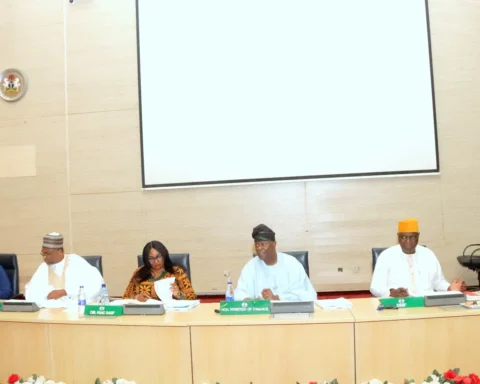
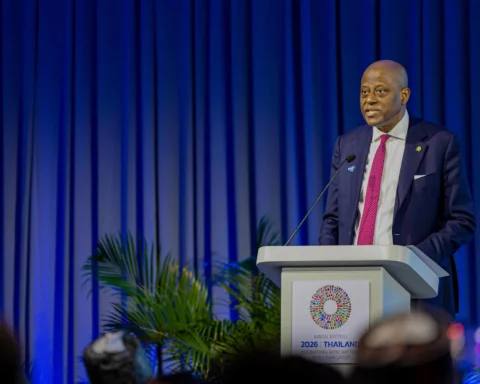
Chairman Umaru Kwairanga framed the investment around regional integration. Group chief executive Temi Popoola pointed to the equity partnership as a deepening of an existing relationship. Both are accurate. Neither explains the purchase on its own.
What it does not do
A 10% holding is not control, and it changes nothing immediate for investors on either side. A Nigerian with a Lagos brokerage account still cannot buy Safaricom. A Kenyan investor still cannot easily buy Dangote Cement. Cross-border equity trading in Africa is blocked by currency controls, settlement systems and separate regulators — not by a lack of goodwill between exchanges.
What a stake does buy is standing. It converts a memorandum of understanding into an interest that shows up on a share register, with the access that follows. If cross-listing between Lagos and Nairobi ever happens, the groundwork looks like this.
The thing underneath
There is a reason NGX Group has capital to deploy. Its shares are up roughly 496% this year, the best performer on the entire Nigerian Exchange. Exchange revenue scales with trading activity, and Nigerian trading activity has been extraordinary: the All-Share Index closed Monday at 252,809.78, up 62.46% for the year.
That boom is also narrow. Ten companies account for about 73% of the ₦165trn Nigerian market. An exchange whose earnings depend on activity concentrated in a handful of names has an obvious reason to look for revenue somewhere else.
Read that way, the Nairobi stake is less a pan-African statement than a hedge — a small, cheap position in a market that does not move when Dangote Cement does. The integration language is real. So is the diversification.