The Nigerian police have a documented history of rape, kidnapping, extortion, blackmail and murder of the youth population of Nigeria, whose youth demographic constitutes 54% of the population, the highest in Africa. The SARS unit in particular has been accused of numerous human rights violations. In a 2020 report, Amnesty International detailed 82 instances of human rights violations, ranging from extortion to extra-judicial murder between January 2017 to May 2020.
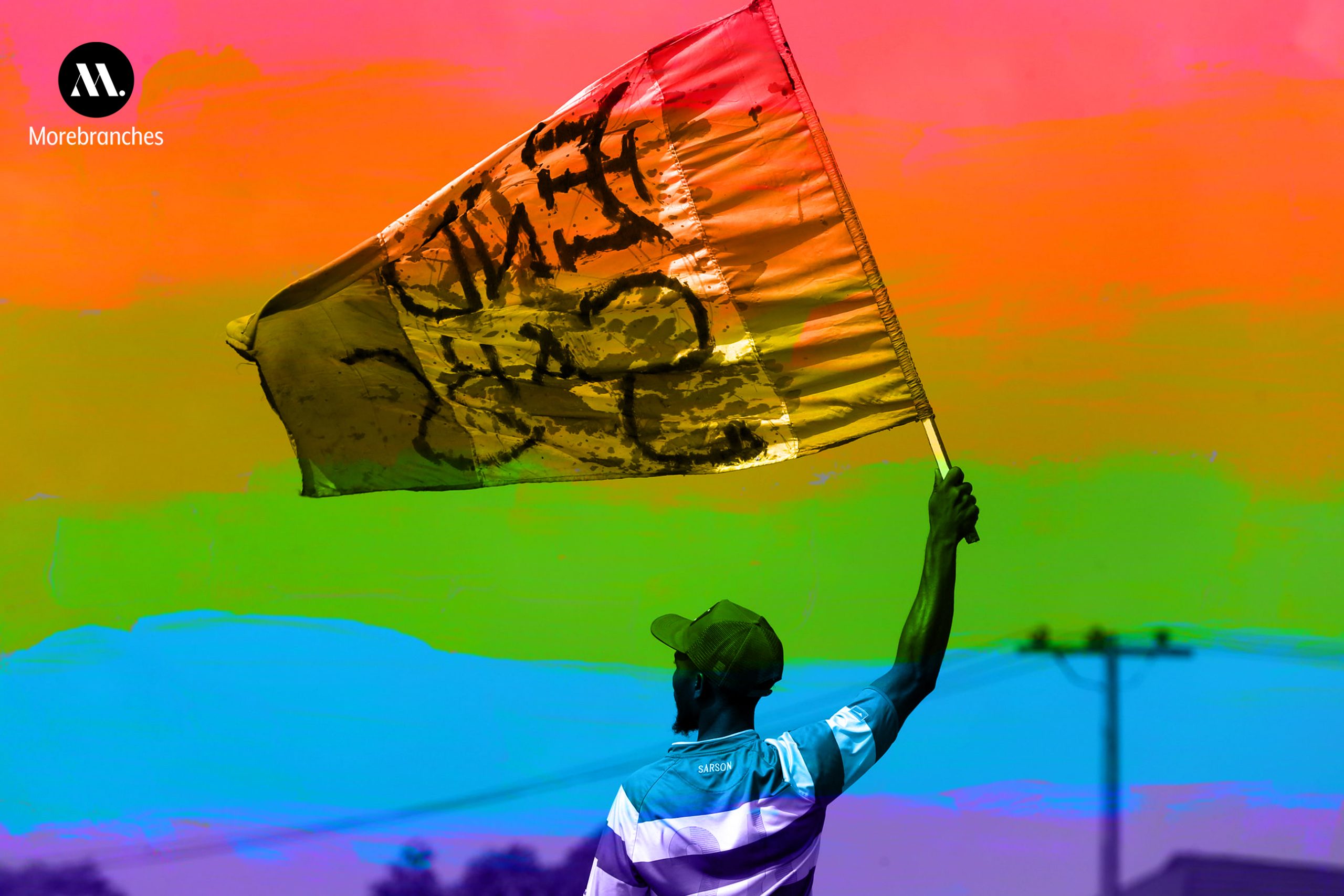
The #EndSARS movement in Nigeria ushered the nation into uncharted territory as thousands of youths across Africa’s most populous nation marched and protested in the biggest civil disobedience movement the country had seen in decades. Despite continued violence by the government against the unarmed protesters, protesters continue to demand for the disbandment of SARS.
As with many other places globally, members of minority groups such as women, disabled and queer Nigerians seem to suffer a double dose of every injustice other Nigerians suffer in the hands of Nigeria institutions, most especially the police. In a country where profiling is rife even among the civilian citizens, people who are perceived as queer often receive a higher level of high-handedness and harassment.
According to the Amnesty International report, SARS predominantly target men between the ages of 18 to 35. They also prey on young people who dress well, wore dreadlocks, piercings, jewellery or owned an iPhone. They often detained young people, accusing them of being internet fraudsters, commonly referred to as “yahoo boys.”
Predictably, the queer community often fall victim to the terror of SARS. Gay men who are perceived as “feminine”, masculine and trans people are disproportionately targeted. This is a reflection of the Nigerian society which remains largely homophobic.
In 2018, a party was raided by men of the police force, and the men at the party were accused of attending a “gay party.” The policemen were emboldened by anti-LGBT laws passed in 2014 under the former President Goodluck Jonathan.
The Same-Sex Marriage (Prohibition) Act, signed into by Nigeria’s largely strongly conservative government in 2013, does not explicitly prohibit homosexual relations. It, however, prescribes a sentence of 14 years to any “person who enters into a same-sex marriage contract or civil union”, leading to the popularity of the “14 years” mantra Nigerians yell, often playfully, when they suspect that someone around them is queer. Interestingly, the law does not prohibit homosexual relations but prohibits same-sex marriage, the open show of same-sex amorous relationships, and registering gay clubs and associations in Nigeria.
“He made snide comments about us ‘looking gay’ and ‘looking like yahoo boys’ and then seized our phones.”
The 57 men arrested at the party in Lagos, Nigeria received the usual treatment often meted to queer people in Nigeria. Derision, taunts, righteous indignation, physical assaults and oftentimes death threats. Till today, some of those men live in horror of that day.
Desmond, a journalist in Lagos, Nigeria, is no stranger to profiling by men of the Nigerian Police. He was on his way to a party he was planning when, at a red light, men of the Special Anti-Robbery Squad (SARS) suddenly boarded the taxi they were in. “They started asking us questions such as why we had piercings, why my nails were painted, etc. He then asked us to identify ourselves. He made snide comments about us ‘looking gay’ and ‘looking like yahoo boys’ and then seized our phones.”
The SARS officers then commandeered the taxi to ferry them all to the station on the Lagos mainland. “They forced us to open our phones and they proceeded to read all our text messages. Because we had been texting non-Nigerian numbers, they assumed we were fraudsters. They also saw some (gay) porn videos but thankfully we were able to pass it off as jokes,” Desmond says.
They managed to contact a lawyer with the aid of a hidden phone. Their solicitor managed to secure their release.
Others are not as lucky as Desmond.
“One day, on my way to the beach, five armed men with guns stopped me and asked why I was behaving like a woman”
Blaise, a 21-year old student, laughs when I ask how many times he’s been harassed by SARS and the police in general. “I can’t count.” Because he is femme-presenting, he is an easy target for the police.
“One day, on my way to the beach, five armed men with guns stopped me and asked why I was behaving like a woman. They dragged me into a van with my hair, slapping and hitting my face and thighs. They asked why I had a big ass and if I was gay.”
The policemen asked Blaise to unlock his phone. He refused. “They continued to pummel me while they drove me to an unknown location.” They continued to press him to open his phone. Blaise’s persistent refusal was borne of a need to protect other members of the queer community. SARS officials routinely harvest phone contacts of queer people from their victim’s phones, luring unsuspecting people into their traps.
“They threatened to lock me in the station and have inmates do unprintable things to me, boasting that nobody would help me because nobody knew that I had been abducted.”
Three hours later, he was released when it became clear he would not succumb. The policemen presumably did not want to go through the hassle of booking him in the cell. He could have met a worse fate. SARS officials are notorious for arresting victims on trumped-up charges, throwing them in prison and leaving them to languish for several years, unable to contact their families or to secure legal representation.
The populace’s endemic homophobia does not help matters. Queer people are profiled, arrested and brutalised without so much as a glance from the youth community. They are considered deviants and as such, cases of police brutality against them do not receive as much coverage. Queer people’s humanities are valid, and young Nigerian’s fight against oppression will not be truly united if it does not acknowledge queer realities.