Tag: Afrobeats

  • 8syn FKA One Acen is Redefining His Path, Embracing His Culture and Afrobeats

    8syn FKA One Acen is Redefining His Path, Embracing His Culture and Afrobeats

    There is a popular saying “no place like home” and this is the reality of Abdul-Azeez Dabiri a Nigerian/UK artist formally based in the UK. With an alluring musical career of 10 years, 8syn has explored different genres and as sound evolves, he has moved along while maintaining his originality. Just as a writer finds fulfillment in covering stories, 8syn derives his fulfillment in reinventing his style. He understands that music goes beyond combining lyrics and beats but feeling the pulse of his audience which he has kept active for the past 10 years of his career. 

    Amongst many hits, “GANGSTA” where he was featured by Darkoo in 2019 remains on the lips of so many including MoreBranches’s playlist. The Afro swing, Hip-hop track captured the hearts of many especially with 8syn FKA One Acen’s verse. Familiar with the Afro Swing, Grime genre where he started with the likes of Skepta, 8syn has no doubt experienced different seasons of music.

    After a successful run in the UK, he returns to Nigeria to delve into the infectious genre of Afrobeats with the sole aim to get closer to his roots and a step to embracing the melodies and storytelling of Afrobeats is a step further to actualizing this goal. 

    With our conversation based on exploring new sounds, he tells us his reasons why he has always chosen music and most importantly, we learnt the importance of embracing changes. 

    Let’s us know more about you 

    My name is 8SYN, formerly known as One Acen. I’m a UK/Nigerian artist who is currently making Afrobeats/ Afro swing music.

    How did you start your music journey? 

    My music journey started quite a while ago. I used to do Grime Music in London with the likes of Skepta, JME etc. That was our vibe in London. So I started doing Grime, I got my own studio, I started recording for people and helping other people record and mix their songs. And that’s kind of how I got into being more creative with making music. I ended up changing my style from Grime to rap kind of music then it turned into melody and that’s how I got here at the end.

    How has your music growth evolved since your 10 years experience in the industry? 

    I guess it kind of just got more melodic because like I said, I was already doing melodies/ freestyles on raps, and over time, it just got more melodic and I guess slower as well. Slower and just more vibey instead of rap and trap; so it kind of just got more chill and memorable.

    “Even when it wasn’t a career, I would have a job and then I would quit my job to make more music”-

    8SYN

    Doing music for 10 years , what has been your drive? 

    To be honest, I just don’t really see myself doing anything else. That’s the main thing. Even when it wasn’t a career, I would have a job and then I would quit my job to make more music and then I’ll get another job  but end up quitting the job again; so it’s something I keep going back to. I love creating music, making videos and anything to do with the creation of music. It’s just what interests me the most.

    How do you try to involve your audience outside the UK demography in your music? 

    Honestly, I feel like there’s a group of people that have followed me over my different styles because even on my Instagram now, there will be one or two people that still remember like a mixtape that I put out in 2014 or 2016. So I feel I just naturally evolved and whoever followed, followed and some people may have liked me to go back to my old style but most people I think they’re just happy that I keep putting out music and I keep evolving and I keep getting better.

    On your IG post, you said it’s time to redefine your creative path, what did you mean? 

    I wanted to change my name, my name was One Acen but now I’m changing it to just 8SYN (eight s y n) and that kind of signifies me jumping fully into Afrobeats because for the last couple years, I was doing what people in the UK called Afro swing; is kind of like Afro beats, but it’s kind of got a London feel to it. It’s just a natural progression for me, I like the idea of evolving and if you listen to a song from me from five years ago, it sounds like nothing that I’m doing now. So I just feel often you have to just reinvent yourself, to be honest.

    As an individual and as an artist, what are some things you are grateful for?

    My achievements. I’m grateful for everything I have achieved in London. I’m grateful for all the experiences I got to experience whether they were good or bad because you learn from them and you get better at things. Just being able to reinvent myself, there are endless possibilities. So I’m always looking forward to what could be next.

    Going back to your 10 years experience, what has been your favorite track/ some of your favorite and why? 

    I was actually listening to all my songs this morning but I would definitely say VICE VERSA from one of my mixtapes. BELONG with crayon; that’s one of my favorite songs. I just got so many so it’s hard to even remember. R U TIRED? with JME & Merky ACE.  There’s a long list, maybe 10 or 20.

    What are you currently working on? 

    Well, I didn’t know until this morning but as I was going through the tracks that I have been recording the last six months. I literally just decided that I want to do another project for next year. So I guess I’m working on a project now because I have got quite a few songs that I feel like are good enough to put together. I always want to make projects, not just singles because when it’s an EP or album, it’s easier to tell your audience the full story. Basically, some songs sound better with other songs so I’m working on a project. 

  • “Trench to Triumph” Review: Celebrating Growth With Crayon

    “Trench to Triumph” Review: Celebrating Growth With Crayon

    Crayon plots his growth as an artist and a person on Trench to Triumph, which isn’t really the branding you would expect from an Afropop vocalist. It is a common storyline for artists in Nigeria and beyond to have to surmount challenging circumstances of birth and numerous other economic hurdles. However, the artists who translate this into their music are more likely to be in the genres of hip-hop or Nigerian Street Pop, where coarse delivery and writing can match the streetwise attitude needed to effectively portray, and not just discuss, the streets from which they came. 

    But what happens when singers who operate chiefly in matters of the romantic and luscious, need to tell their own stories? Crayon uses Trench To Triumph as a scripting of the hard life, or trenches, he has endured, but it is in how he embeds this into his natural fun, happy personality that makes the album a sonic triumph and a true reflection of his real-life story.

    He says on Trench Kid, “Was a broken crayon, I still dey colour o”, speaking on how the darkness around him never obtunded his creativity, and his album reflects that, so that songs like these that speak on his journey sits beside “Ngozi” and “Ijo Laba Laba”, which showcase his fun side. 

    It is also a testament to his storytelling that the stories of the album are set in the past tense, he makes it very clear that those days are behind him now. It is why the album begins with the tracks, “Calvary Kid” and  “Trench Kid”, before he takes in songs like the grateful “Modupe” and ends with the triumphant “Good Day”. 

    His opening duo of songs, apart from contrasting his current life, also bear contrasts to one another in sonic approach. Both tracks make reference to the role played by God, but “Calvary kid” is decidedly more spiritual, especially because a back-up choir helps enunciate the message. 

    It is the more album opener material, but “Trench Kid”, with Ozedikus’ Street Pop production that beckons on the dancing feet to legwork, is more ‘trench-worthy’. These songs allow for a dual-faceted approach to his upbringing.

    Trench to Triumph

    But nearly every story, no matter how tenuous, can be helped by a romantic subplot, so Crayon intersperses this journey from trench to triumph with songs that are more his speed. Like “Ngozi”, where declares his woman a blessing in his life, “God don bless me Ngozi/ No deserve this kind loving”, before making known his intentions to spoil her accordingly. 

    A song like this works better with a female romantic foil to bounce lines off, and Crayon sharing a record label with a pop songstress like Ayra Starr made for an easy collaboration. 

    She slots in effortlessly, bringing all of her pop verve and vocal flair, but by limiting her contribution to the second verse, and not allowing her waft into the chorus that comes after, we are robbed of a proper duet between these stars, like she had with Magixx on the 2021 hit, “Love Don’t Cost A Dime”.

    Magixx is the only other Mavin label mate that appears here, and his contribution is on the similarly love-laced “You vs You”, where Crayon is once more the exultant partner—“You Vs You, you no get competition—while Magixx reiterates these sentiments in his rich vocal set. “Superwoman”, too, resonates this, but his message would’ve been lifted further with better writing.

    This trio of songs all bear different production credits, from Sarz through Baby Fresh to Blaise Beats, but they share a colourful, vivid soundscape, sliding into that narrow sonic space where they can be danced to without needing an exerting drum arrangement. A combination of this bright production with heartfelt, vulnerable writing is what makes Crayon who he is. 

    Trench to Triumph

    His romance is innocent, leaning away from the luscious, body-ogling material more likely to be found in Afropop. It was with these ingredients that he made his introduction to the mainstream four years ago—via “So Fine’’ and the tender feeling it carried. On Trench To Triumph these songs are side dishes rather than the main, but they are handled excellently. 

    When he isn’t scripting ballads in appreciation of a lover, he finds other ways to diversify from his message, and songs like “Ijo Laba Laba” and “Chop Life” were created for the dance floor. They carry imprints of Amapiano, South Africa’s bustling world-conquering genre, but to various extents; “Chop Life”, featuring DJ Tarico, Preck and Nelson Tivane, or the Yaba Buluku boys, is the more danceable affair. 

    As expected, DJ Tarico slots in behind the boards, and Crayon gives an insight into the life he now lives on the other side of the struggle—”Let’s make it rain/ More champagne/ Chop the life and forget the pain”

    The last lap of the album contains songs, like “L’eko”, a tribute to Lagos, the city of his birth, that do not live up to the standards of what came before. But even here he is able to tie into the overarching theme of the album. 

    He closes with the rejoicing “Wetin Go Be” and “Good Day”, a contrast to the bleakness of the past he began with, and it affirms the excellence of Crayon’s album arrangement and storytelling to be one of the major strengths of Trench To Triumph

    It was hard to fit in a lifetime’s journey into one album, and especially to make it work without losing the essence of who he is, but Crayon proves he can bring colour to every story.

  • Journey of a Billion Streams – Spotify’s newly launched site to house all things Afrobeats

    Journey of a Billion Streams – Spotify’s newly launched site to house all things Afrobeats

    Today Spotify announced  the launch of Afrobeats: Journey of a Billion Streams, a dedicated site that will track all things related to the genre. From its origins in Ghana, its popularisation in Nigeria, its fusion with other genres as well as how it has become one of the continent’s biggest cultural exports.

    Afrobeats is one of Africa’s biggest musical exports and is currently taking the world by storm. On Spotify, the genre has grown by 550% since 2017, and it was streamed more than 13 billion times in 2022, with its leading artists continuing to tick off giant milestones on the global music stage, across live events, awards and streaming. 

    The site will act as a repository for this cultural phenomenon housing text, infographics and visual elements, including Spotify streaming data and results from the Spotify commissioned April 2023 Afrobeats survey. The survey, conducted by research firm Kuvora, tracks the rise of Afrobeats and its cultural impact over decades. 

    The site will be updated on a biweekly basis for the next 8 weeks, but will remain active beyond this as an always-on resource, with frequent updates on new Afrobeats moments. It will also include an interactive experience for fans to discover and connect with new knowledge on Afrobeats. 

    “There is no doubt that Afrobeats as a genre is here to stay, and will only continue to shatter more ceilings. In 2023 alone, the genre has been played for more than 223 million hours with streams exceeding 7.1 billion on Spotify. We created this site for both new and longtime fans of the genre, who would like to have a better understanding of how and where this explosive sound came to be,”

    Jocelyne Muhutu-Remy, Spotify’s Managing Director for Sub-Saharan Africa.

    Afrobeats: Journey of a Billion Streams will have five key pillars; Origins, which explores the genres that acted as precursors of Afrobeats as we know it, including Afrobeat, Highlife and Juju among others. The second pillar will be Evolution, and which industry players contributed to the current Afrobeats sound that the whole world cannot seem to get enough of.

    The fusion of Afrobeats with genres such as Reggaeton, Amapiano and others and their impact on Afrobeats’ success story will be the third pillar. Cultural exportation, especially to countries outside Africa and Afrobeats’ role in this through music, food, language and fashion lenses will be the fourth pillar. The fifth pillar will focus on the Women of Afrobeats, shedding light on some of the key female figures whose contributions to the industry propelled the genre to its current status as a global sensation. 

    The site will also include key Afrobeats timelines over the years, interesting Spotify data, excerpts from interviews with industry experts and man on the street videos from key markets in Sub Saharan Africa. Origins, the first instalment of the Afrobeats journey is now live at afrobeats.byspotify.com.

  • As Afrobeats goes global, how can it be sustainably developed?

    As Afrobeats goes global, how can it be sustainably developed?

    Following the advancements of Afrobeats which was majorly inspired by the pioneer of Afrobeat, Fela Kuti in the late 1960’s has slowly made a name for itself in a somewhat incalculable list of recognitions it has received so far with its roots coming from Nigeria.

    Nigerians, creative as ever, who are constantly surviving the odds of the nation’s economy, have been firm believers in showcasing the parts of the country’s talents through the use of social media and for artists, constantly putting out more projects all with a plan to hit the international markets. With several success stories and refinement in the music industry, the dreams of an average Nigerian artist has become a reality. 

    Don Jazzy, P Squarem Wande Coal, D’banj, Kenny Ogungbe, Sound Sultan

    However, these dreams to hit the international markets and collaborate with other great minds have slowly become worrisome as we have the industry focusing more on the gratification that comes from foreign accolades than ours. Some may say that the sudden interest in expanding across the shores of Africa is as a result of the declining appreciation of these artists’ masterpieces.

    This reason may have some elements of truth in it but the fact remains that the admiration for foreign accolades started slowly and can date back to 2016 with Wizkid – Come Closer ft. Drake This feature with a multi award winning artist such as Drake led to comparisons which have always been there between the Wizkid FC and 30 Billion gang; all supporters of Wizkid and Davido

    This isn’t to say that before this international collaboration, there hadn’t been any feature of this sort because we can vividly remember the era of Psquare’s Beautiful Onyinye ft. Rick Ross. But with the connectedness of social media, it created another kind of relationship that birthed more features such as Omah Lay & Justin Bieber – Attention, Rema & Selena Gomez – Calm Down, Oxlade & Camila Cabello – KU LO SA Remix, Chris Brown ft Wizkid- Call Me Every Day and in recent times we have seen iconic collaborations such as Ayra Starr ft Kelly Rowland – Bloody Samaritan remix  and Rihanna ft Tems – Lift Me Up (From Black Panther: Wakanda Forever)

    The list once more is incalculable. Not just features leads to gratification but AWARDS. We have heard countless Nigerian artistes dreaming of performing at the O2 Arena, Madison Square Garden and other bigger stadiums. To what some may consider as leveraging our talents which undeniably has helped immensely, there is still a competition as to who gets to sell out a stadium quicker, whose single/album is on the Billboard Charts, who is nominated for a BET award and the most valuable, The Grammys.

    This competition can be seen as healthy as it inspires artists and their management to put in more work or unhealthy when they classify themselves as superior to others which can be heavily influenced by fans but with all these international growth, accolades and debates on the future of Afrobeats, we need to recognize the elephant in the room “How can we turn these accolades to sustainable development for us as a nation ?”

    As a country who is now stamped in the world’s music map, if there is any, it needs to invest more in reputation management. For an artist, this may have been sorted by their management but artists, music journalists, lawyers, critics, lovers and the government need to protect this genre of music.

    Other genres of music originated from Nigeria should stand their grounds to ensure that other creatives in the music industry recognize our music as ours, just as the Americans who have several documentaries on the discovery and evolution of Hip Hop like Origins of Hip Hop, more storytelling (documentaries) will help to protect our craft. Two good examples in our context are Ayo Shonaiaya and Obi Asika’s documentaries on Netflix and Showmax respectively.

    As much as we acknowledge reputation management as a key factor, there’s a need for music festivals which should be organized by unbiased governmental bodies, a festival with a solid plan for revenue generation, diligent security and well carved out marketing strategies should be highly invested in. Hosting events like Afrochella in Ghana, investing into Felabration (an annual music festival in honor of the pioneer of Afrobeat, Fela Kuti) builds more passion for a craft we worked hard for to reach the heights it’s at today. This will lead to unity by making more artists participate not only for their private concerts. 

    Afrochella

    AWARDS cannot be overemphasized enough when it comes to entertainment. The commitment to curb partisanship and create more categories that awards management of these artists who work tirelessly should be encouraged, and this can only be achievable when deliberate research is made into the new and existing professions and professionals that turn a beat into a charting hit. 

    Creating avenues to educate enthusiasts who are passionate about the industry. Reviewing talent shows who showcase creatives yet judge them by their abilities to capture the right tone of songs sourced from across the shores of Nigeria and even Africa. Seminars/Submits to refresh the minds of others. Programs to teach new uprising talents. So far, we have Music Business Africa who commit themselves yearly to educate fresh minds on different critical aspects of the music business. The Turntable Charts also provides an aggregated standard music chart in Nigeria.

    In a nutshell, looking at the future of Afrobeats solely on how to dominate the international music scene and acquire more platinums for your projects should be secondary. We need to look inward and make an intentional shift from gratification to building a sustainable development for our music keeping in mind that as the clock ticks every second, there is a new talent who is waiting to be discovered.

  • Kel P Interview: Taking the Leap From Producer to Recording Artist

    Kel P Interview: Taking the Leap From Producer to Recording Artist

    With Afrobeats springing up in the 2000s and 2010s undeniably has come a long way and this progress has been pioneered by music creatives who have worked tirelessly to ensure that our genre of music receives the attention it deserves. So many creatives have diversified into the Afrobeats genre and a notable position has to be Music Production. The likes of Kel P, who has been a team lead in the production of music projects which has launched Afrobeats worldwide, is one for the books.

    Born Udoma Peter Kelvin Amba, Kel-p is a Nigerian multi talented, Grammy nominated music producer who with his rhythmic sounds has found ways to promote the beauty of African music especially Afrobeats to Billboard charts and more by creating beats from his ever evolving dedication to his craft.

    Producing music albums such as Burna Boy’s “African Giant” in 2019 of which he got an international nomination, The Grammys, proved that Afrobeats has made an impact in people’s choice of music. We sat down with Kel P to give us insights about his career, the progress so far and most importantly, What’s Next?

    We Know Kel P as Grammy nominated producer but we want to know something different.

    My name is Kel P;Kelvin Udoma and like you said, I am a Grammy nominated music producer. I started producing music in 2017 but my career took off in 2018. Afterwards, I produced Burna Boy’s album in 2019 which took my career to the next level.

    At what point did you make up your mind to venture into music production?

    I have always wanted to go into music but my parents never wanted me to go into music production. It is a common African parent thing when they have a different plan for their child and the child tries to choose something different. Still, I found my way out and went for what I wanted.

    What’s a typical day for you when you have a project to work on? Do you have any ritual you practice before working on a job?

    First of all when I wake up, I listen to music, go through my phone, make some phone calls or check emails, workout and then go to the studio. Sometimes, I record at home. That’s pretty much it.

    How do you try to keep up with new updates in the music industry?

    To get updates with what’s happening in the scene, I watch what everyone is doing, especially those that inspire me. I watch comedy, listen to music and hang out with my friends, that’s how I keep up.

    What’s your view on Afrobeats impact in today’s music?

    Afrobeats has done a lot of good work. I remember then when it was hard to get others to listen to Afrobeats or to even penetrate the international scene but today, all that has changed and it’s all thanks to the OG’s who made this possible; they were consistent in getting our music out there and here we are today. Though I feel Afrobeats still has a lot to do. We still need to diversify our approach and by that I mean, we should have Afro-pop, Afro-Soul, Afro- Swing and many others. Regardless, It is a great feeling to be alive and to experience the progress Afrobeats has made so far.

    You recently released a single called, “One More Night”, what inspired you to take a shift from producing to singing?

    Being in the music industry inspired me to release my single. I have been singing for a long time so it’s not something I started today, I never just released any of the songs until now I just wanted to remain behind the scenes and produce music. I actually started working on this project in 2019. I sampled a couple old American songs just to try it out, then I went to my manager and friends and they said it was good to go so we decided to put a face to the Kel P brand.

    With your years of experience as a producer, what has been your major highlight and challenge?

    I have experienced a lot of things in the business and creative aspects especially in terms of business. I have been blessed to be in a position where I can make good choices in business and this comes from lessons learnt so far. It has been an enlightening journey so far.

    If there is someone you could collaborate with as a producer and as an artist, who would that be?

    I have so many people I would like to work with and I’m currently working with them. In the African scene for producers, I’m working with Sarz, Kriz beatz, Don Jazzy and many more. I’m working with all A-star producers. For artists in the African scene, I have always wanted to work with Bella Shmurda. He’s a creative that I look forward to working with.

    What’s next for Kel P?

    An EP is next. My EP drops on February 24th. I’m also working on an album but an EP first. In all, I plan to keep putting out more songs alongside producing songs.

    – – – – – – – – –

  • Seven Uplifting Moments in Afrobeats This Year

    Seven Uplifting Moments in Afrobeats This Year

    2021 was a rollercoaster for Afrobeats and a difficult year to top. It wasn’t just in the sonic shifts of the genres, but the number of releases, an afrobeats grammy album, and coming out of the pandemic with afrobeats truly going global from billboard charts appearances to sold-out shows and thrilling performances across the world.

    2022 is halfway done, and Afrobeats’ success isn’t slowing down; it’s moving at a dizzying speed. A lot has happened for a genre that started as copies of American songs. This year has seen Tems and Don Jazzy launch their shows on Apple Music, Larry Gaaga getting appointed Vice President of A&R at Def Jam, the death of legendary Nigerian musician Orlando Julius, and lots more. We look back at the biggest of this year and what they mean for Afrobeats.

    Mavin At 10 

    Without a doubt, Mavin is Nigeria’s biggest label. It has successfully been instrumental to two generations of Afrobeats stars, and it doesn’t seem to be slowing down. In a country where knowledge and experience don’t get institutionalized, Mavin’s success stands out for several reasons. It proves that labels are still essential in developing artists and creating stars. In a world where as Africans, we face the constant reminder of the need to gatekeep our culture, having a label that has been successful for ten years shows that we have the expertise, are the best talents in developing and pushing our culture, and ensures that we continue to play a major role in pushing our culture. Mavin’s success isn’t just the success of its investors, owners, employees, and artists, but a success for the Nigerian music industry.

    We’re Outside!

    There is probably no better metric for a song’s success than the number of people willing to pay to see it perform. This year, everyone wants to see and hear afrobeats outside. In the last six months, we’ve seen way more afrobeats artists than ever perform at their own sold-out shows and tours, appear on American T.V., and appear on every single festival or concert lineup this year. We’ve seen Pheelz transition from producer to artist, getting booked across the world off the success of one hit song. Adekunle Gold cemented his international pop star status -the last on his transition from highlife singer to pop icon- with a U.S. tour. Ckay having crowds across the world hum along to a 2019 sleeper hit. Tiwa Savage and Davido give out thrilling performances to crowds on their U.S. tour. Burna Boy selling out Madison Square Gardens, venues in countries that make you pause in surprise, and performing at Glastonbury. The star of them all; Tems, having her own sold-out U.S. tour, appearing on almost every festival lineup in the U.S. while having crowds passionately sing back to her and performing to over 200,000 people at Glastonbury Festival.

    The BETs

    From Pheelz performing at the red carpet show to Fireboy’s performance on the main stage and Tems stealing the night, 2022 BETs were a wonderful moment for Afrobeats. The BETs award night was the first time an afrobeats song/artist won a mainstream U.S. award outside of the international/world category. It shows how far we’ve come from being handed awards backstage. 

    Recording Academy

    On Tuesday, June 28, The Recording Academy (the organization behind the grammy awards) sent out invites to over 2,000 people to become voting members and over 600 additional people to become professional (non-voting) members. Of the 2600+ people invites were sent to, a number were afrobeats artists and professionals from Ghana (Moliy, Maxwell Adjavon, Elizabeth Ntiamoah-Quarshie, and Kwame “Kwaps” Obeng Kwapong), Nigeria (Bizzle Osikoya, Foza, Oxlade, and Praiz) and Empire’s marketing manager for Africa and the diaspora Stephanie Adamu.

    Getting invited to the highest American musical award body helps ensure that as our music breaks into America, our voices and perspectives are involved in the conversation and decision-making around defining and awarding it in the U.S.

    Certifications

    Ckay’s Love Nwantiti has been certified in over 11 countries, Essence in over four countries, and Peru in the U.S. and U.K. While these songs were not released this year, it has been great to see Afrobeats songs be more than just a passing wave, radio or streaming hit.

    TurnTable Announces a Top 100

    In March, TurnTable Charts made a couple of announcements about changes to their charts, partnerships, and plans. One of these was the launch of three aggregated music charts:

    TurnTable Top 100: an expanded Top 50 singles popularity-based chart 

    TurnTable Top 200: a consumption-based albums chart

    TurnTable Top Artiste 100: a performance-based artiste chart

    The most exciting of these charts is the TurnTable Top 100, which will launch on Monday, March 11. To make the chart fair and comprehensive, an advisory board made up of experienced stakeholders from different sectors of the music industry; tech, executives, journalists, law, data, and radio, will advise on the chart policies and changes to be made over time.

    TurnTables Top 100 would finally provide a standardized chart to track how well songs do within Nigeria.

    U.S. Afrobeats Songs Chart

    On March 29, the Billboard U.S. Afrobeats Songs chart went live. Billboard had previously announced it was partnering with Afro Nation to launch the first-ever Afrobeats chart in the U.S. The chart ranks the most popular 50 Afrobeats songs in the United States based on official streams and downloads. We’ve seen Ckay, Tems, Fireboy, and Wizkid top the chart in the four months since it launched.

    The chart proves how successful Afrobeat has become in the United States and how much growth potential Afrobeat has.

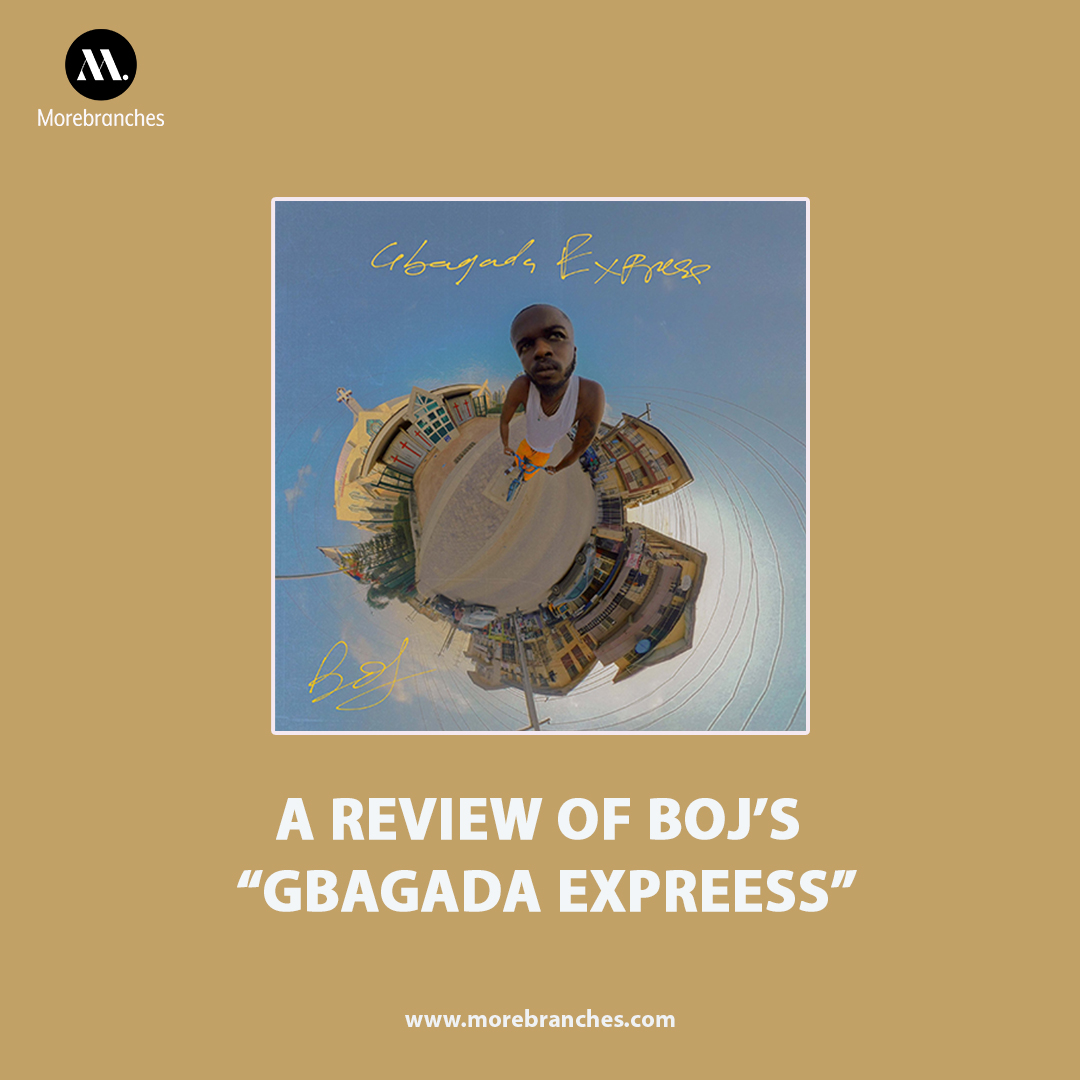
  • A Review of BOJ’s “Gbagada Express”

    A Review of BOJ’s “Gbagada Express”

    Five years after releasing his debut studio album “Magic,” Bolaji Odojukan, popularly known as BOJ, reels out his sophomore star studded LP “Gbagada Express” named after the place he grew up. The album not only served as a dispatch to his hometown, but also a vehicle for deeper connection to it. BOJ, has been anchoring the altè movement since 2010, alongside a slew of creators earmarked from the popular music group DRB Lasgidi, formed in 2007, and have been poised to exporting and have famed the altè subculture in the mainstream.

    “Gbagada Express” reflects a range of topics, drilled from a collection of sounds including afro-fusion & afro-pop, alongside a slew of spontaneous artistes from the Altè pioneers and Afrobeats Blockbusters. The power of this project is on its star-studded nature, it had 20 creators at its helm of affairs, meanwhile BOJ, had his solo space which was introduced on a triple track effort were he expansively explored his range with as much as every single collaboration on the album adds to its magic and supports the movement.

    The album is a golden offering that takes him back to his roots coupled with a plethora of experiences hinged, a track in form of an interlude influenced by Teezee, also one of the core altè pioneers on “Yarning Many,” is coined to story how the movement began and where it is currently approaching. While a track like the English rapper Enny assited — “Culture”, crowns BOJ as the prince of senrere (a Yoruba lingua to address one who does anyhow he/she wants), senator of jaiyé (enjoyment), and the governor of merriment.

    Fireboy DML’s Influenced “Owo Ni Koko” is the right opener. “In A Loop” featuring Ghanaian Moliy and Melissa strikes the chord specially by using watery piano and its progressive sonic experience which cuts across the thematic nature of the record “In A Loop” talks about a problematic and a cheating love interest that have gone stuck and is described as one in a loop.

    “Emotions,” Victony’s Influenced “Unconsciously”, Bnxn and Fresh L’s contribution on the mellow “Lekki Love”, alongside “Abracadabra” fortified by Davido & Mr Eazi, and Prettyboy D-O’s edgy assist on the Dancehall rhythmic “Confam”, are stand out records from the LP. Tiwa Savage and Afro Nation Influenced “Your Love (Mogbe)” closed the album on a quiet and proportional state by influsing afro-pop, and serene R&B fusion exquisitely.

    “Awolowo” remix featuring Wizkid and Darkovibes was good, however, I couldn’t help but wonder whether a Burna Boy assist could’ve put it on a higher pedestal. with a Burna Boy assist should have put the track on the best pedestal. While the feel good “Money & Laughter” assisted by Zamir and Amaarae talks about a love that piques the interest of BOJ, as he requested to know what she’s after either money or laughter and he proceeds to describe how he feels about her as much as he unveils his abundantly risque prospective intentions.

    Zamir and Amaarae are special to the core, they reflected their range alongside as Kofi Jamar and Joey B assisted “Get Out The Way,” coasts and expands the beauty of Brooklyn’s drill music with efforts of each act laid down respectively.

    “Gbagada Express” should be respected for several reasons as follows: first for a resounding qualitative LP that drives its way through 13 packed features which was successfully developed and strongly executed the idea of BOJ dispatching to the place he grew up. Secondly enhancing the alté movement by cherry picking the right selections. And apart from that, the album also cuts across several topics and sounds that fully stakes BOJ as the Daddy of the movement he proclaims.

  • Metaclay is a Fresh Intuitive Agency Redefining Imagery Within Nigerian Media

    Metaclay is a Fresh Intuitive Agency Redefining Imagery Within Nigerian Media

    Afrobeats is, without doubt, one of the fastest-growing genres of music in the world at the moment. 

    Afrobeats stars influence pop culture not only within Nigeria but across Africa with superstars such as Davido, Wizkid and Burna Boy amongst many others not only influencing everyday lingo but fashion, sound, and overall imagery. 

    Within Africa, only a few organisations are peculiar about imagery and emerging media frontier, Metaclay is coursing the path less travelled, freely altering perception of imagery within media and outside of it. 

    The creative franchise still in its infancy launched with a video on the 25th of November that stirred conversations and curiosity across social media platforms. 

    Days after, the company has announced the famous UK-based independent label and distribution company, Awal, as a client. If anything is clear by their initial strides, it is that Metaclay is peculiar about imagery and taking it to unimagined levels within Nigeria and beyond. 

    Follow Metaclay on socials @Metaclay_

  • Curtis J only wants “Sweeter Love.” Read our chat with the rising star

    Curtis J only wants “Sweeter Love.” Read our chat with the rising star

    Curtis J’s effortless ability to merge the Afro-swing style with UK culture, while simultaneously emphasising his Nigerian heritage, have firmly placed him on the UK Afrobeats map and caught the attention of key tastemakers across the scene. 

    Following the success of sleeper hit single ‘Check Your Balance’ & his last release ‘The Man’, Curtis J has cooked up a wholesome new single ‘Sweeter Love,’ accompanied with picturesque visuals. Curtis exhibits his versatility & prowess, gliding with silky vocals over the OluwaJBeats produced track. The video, directed by MRMTMMG, takes us back in time to witness the blossoming of a long-term romantic relationship.

    Curtis J also does not shy away from paying homage to his Nigerian heritage; we see him and his love interest donning traditional Nigerian wedding wear in the form of agbada and iro & buba, as well as an enviable white gown and suit ensemble as they celebrate with their nearest and dearest.

    “I was sleeping when the producer was making the track – I had a dream about getting married and when I woke up, I just said I had to make a song around it, and the track just made sense. The reason for going with the new sound. Well, who doesn’t like love?”

    Curtis J speaking on the inspiration behind ‘Sweeter Love’ and its visuals

    Sweeter Love’ continues a string of singles that cement Curtis J as a promising young Afrobeats star, and one to watch closely. With recent studio sightings with King Promise & Buju, and previous collaborations with Darkoo under his belt, we’re excited to see where his trajectory leads for Curtis J. We caught up with him to discuss his musical journey, artistic processes, and his latest single ‘Sweeter Love.’

    — —

    When did you first know you wanted to pursue a career in music?

    It was when I was pretty young, maybe 12 or 13 years old. I used to listen to music growing up – all types – then I found myself in the studio doing a bit of production, then laying vocals, and then it became clear that music was the only thing for me. It just made sense to me, and that’s why I’m here today.

    What are some of your favourite genres to explore whenever you get into the studio?

    I do a lot of Afrobeats, so the topics are open, but I have also explored Reggae, Dancehall, and I’ve got quite a few tracks that are even RnB. I love testing out different types of sound for my music.

    Curtis J
    Do you see yourself trying out different styles as your career goes on?

    To show that you are a talented artist it would make sense to try and explore different types of music. Me, myself, as an artist I have lots of different sounds in my music, and I really can’t wait for you to hear it! But variety in my sound is definitely something I’m interested in doing.

    What moved you to use a wedding concept for your “Sweeter Love” video?

    This was an amazing collab with OluwaJBeats – big shout out to him for the track! I’ve wanted to make a love song, and this was a perfect fit. I chose a wedding for the visuals ’cause there’s no ‘Sweeter Love’ than two people finding each other.

    Curtis J
    Can you tell us a bit about how your single “The Man” came together?

    I was in the studio with RELYT, shoutout to him, and he dropped a beat and it clicked! He played it, I went in the booth to drop a couple of verses freestyle, and I just didn’t stop – I kept going. Immediately after, I knew this song was going to be a hit!

    How do you intend to navigate the burgeoning Afrobeats space as a unique artist?

    The way I like to see things, I don’t have competition because every Afrobeats artist is doing their thing, and if people support me, then they will rock with me either way. I’m here to set my own lane and show people why they should listen to my music.

    Curtis J
    Why do you think listeners gravitated a lot to your 2021 single “Check Your Balance”?

    I would say social media played a big part in how “Check Your Balance” took off the way it took off, and because the sample behind it was a very big Ghanaian song that a lot of people know. So, when people heard the verse it had them guessing and wanting to know the song, but also because they heard something that they liked.

    Who are some of your biggest influences?

    I have a lot of influences but some of the main ones are Davido, Wizkid, Burna Boy – they are the pioneers of Afrobeats music, and it’s inspiring to see where the music has led them. Hopefully, I will be able to create the same effect soon.

    What can we expect from Curtis J in the near future?

    In the near future? Maybe an EP? Maybe more singles, you will have to stick around to find out!

  • Listen to ‘Rumba’ by South London Afrobeats Artist SKN

    Listen to ‘Rumba’ by South London Afrobeats Artist SKN

    SKN (pronounced /skin/) re-introduces himself back into the scene with his first release since 2016, the euphoric ‘RUMBA’ is a melodic, high tempo afrobeats song mixed with a tinge of highlife. The song combines Nigerian and contemporary London sounds to produce a feel-good vibe.

    SKN is open about his highlife influences which are Cardinal Rex Lawson, Magic System and Pat Thomas & The Kwashibu Area Band. Rumba was written and recorded in Lagos, Nigeria, because according to SKN, “It was important I went back home to get my soul back”. 

    The vibrant visualizer accompanying the track does well to put an imprint on an artist who is properly incubated and ready to be widely known. There is a lot more music from SKN on the way in 2020. For now, RUMBA is available on all platforms, you can stream the song below.

  • Dear Burna Boy, A Self-Appointed Nickname Doesn’t Make You a Giant.

    Dear Burna Boy, A Self-Appointed Nickname Doesn’t Make You a Giant.

    Nigerian Afro-pop singer Damini Ebunoluwa Ogulu, one you may know has Burna boy has certainly gone on to prove that it is what you call yourself you would be addressed by. From being called an underrated artist to self-acclaimed title as the ‘African Giant’, a clap-back at Coachella 2019’s official performance poster which had his name in smaller fonts led to this PR-positive decision, later earned him a successful crossover to the global stage. But is that really all it takes to become an unassailable African Giant?

    The past few days have been brisk in the Nigerian music industry after famous producers Sarz and Shizzi served us legendary moments with the battle of the hits, a friendly Instagram Live Versus with over 22K people in attendance. At the end of the two-hours face-off, twitter users were quick to start comparing their favourite artists, birthing more challenges even among artists themselves.

    A fan turned to #AskBurnaboy who he would go heads to heads with in a battle and he was quick to respond that he would go against ‘any worthy challenger. A statement some would refer to as a challenge to the three big names, ‘Wizkid, Olamide and Davido’’ and even Tiwa Savage. 

    While some people think Burna’s tweet seemingly juxtaposes his confidence, others have gone on to describe it rude and unnecessary. If we are to keep it real, Rekaado Banks is no match for Burna Boy’s long line of hits and achievements but a better response would have earned more respect from his fans and the audience.

    Burna Boy has been on the stage since 2012 after his first performance on the Calabar carnival stage, yet remained in the shadows of himself except the various controversies that came year-after-year until 2018, he was mostly referred to as a great hit out of the Nigerian Music industry right after his notable appearances.

    To compare himself to any of the big names we have always known would be rather disrespectful but not for Burna who says nobody paved the way for him in the music industry, in a tweet in which he has since deleted. 

    Lol. NOBODY paved shit for me. Everybody dey find them own. I bin Out here, if you knew the way they made us look weak by begging and paying the western world to like us you will see that no table was set and I’m the one that brought you the Respect you currently enjoy. — Burna Boy (@burnaboy) February 12, 2020

    Twitter users were quick to respond to what Burna Boy had said Joey Akan said ‘Burna Boy is disrespectful,’ he goes on to explain this in a Twitter thread. 

    https://twitter.com/DenolaGrey/status/1245297690340188160?s=20

    One thing remains clear regardless, In a space saturated by many versions of the same skinny-jeans-clad, hit-seeking singers, with the same dreadlocks, as if to suggest they came off a production line, there is only one Burna.


    Let us know if Burna Boy is really an ‘African Giant’ in the comment box below.

  • Voices of music: Surely, Tolani is rising to the occasion

    Voices of music: Surely, Tolani is rising to the occasion

    African music is becoming increasingly globalized, and while research and statistics argue that more people are consuming more music than ever before, rising markets in Africa, especially the distinct West African sound – Afrobeats is leading the explosive exportation and growing to be profitable and relevant in multifarious ways. For a commercial-centric market on the rise, only a few people are carving a niche for themselves, focused on appealing to consciousness and a different vibe from what characterizes music from this side; one of the many people leading this new sound is Tolani – a soulfully pleasing artist that prides herself in the art of making deep Afrobeats. It’s not hard to tell, in just a short time since she broke into the culture, Tolani’s music is beginning to mean much more to many people, her energy and grandstand dexterity is exigent to believe, she sure appears as someone who has a good mastery of her craft.

    Clearly a sound of Africa’s new age of music, the self-aware songstress is one of the many distinctive voices on the verge of putting African melody on the same pedestal with other genres. Arguably, the renewed self-belief of young Africans spurred the growth of homegrown pop music and they are not taking any chances when it comes to reforming the perception of the continent using their art and even making it more inclusive. Tolani appears to be aligning herself for the emergence of Afrobeats on the global music scene and as someone who cares about the energy she puts out when performing.

    Our publisher, Korede Ogundiya spent time documenting the ingress and growth of Tolani, as well as her recipe. For starters, you’ll be in awe for sure.


    How would you describe your music journey so far, has it always been your thing?

    Music has been an ever-present force to me. For as long as I can remember it has occupied a lot of my mind and time. I was a little bit shy growing up.. still am. And so a huge part of this journey has been growing a pair. Haha. Building the strength to match my desire and ambition.

    You studied Psychology and went on to pursue another degree, was it music related?

    Yes, it was. Even through my psychology degree, music stayed heavy on my mind and heart. It wouldn’t leave me alone! So it was a bit of a dream come true to get a chance to go on and study it at a higher level.

    Describe your kind of music. What influences your sound?

    I have an incredibly diverse taste in music. I wouldn’t even know where to start, it’s very feeling led – if it makes me feel good, and connects at an emotional level, I’m in. In terms of influences…hmm everything.

    Everything influences my sound. Inspiration can be everywhere you look, that’s the beauty of music, of art.

    The U.K is one of the buzziest places to be a creative right now, why did you choose to return back to Nigeria?

    Yeah the UK is a great place to live, particularly in London – so many different cultures and experiences in an incredible city, but so is Lagos. Lagos has a different energy –really inspiring in all its ways. I haven’t left England per se, at the moment I am between Lagos and London a lot – I find together they form a solid foundation for music of African origin.

    I watched you perform live at the last edition of GIDIFEST in Lagos and I was blown away by the energy. For you as an ‘industry fresher’, how have you been able to navigate an ecosystem that is man clustered?

    I don’t think that energy is exclusively a male trait. I’ve been training and working hard on my live performances. I think that male or female, as an artist it is your prerogative to commit and give it 100% on stage – if you look like you are having a good time, so will the audience.

    What do live performances mean to you?

    Live performances are an experience both for the audience and the artist. An artist is often locked away in the preparation phase, I live in that zone; creating, practicing, preparing, and so the opportunity to take that work and put it on some stage, whether big or small, is dope.

    What message do you want to give with your music?

    Sometimes I think it’s less about what message you put out, and more about what people get. Music has that magical ability to meet people where they are; if you are needing, feeling or looking for something you’ll probably find it in music, something completely different from what another human being experiences.

    My role in that exchange is just to make good music, its simple as that. If it means something to me, chances are it will mean something to someone else.

    Are you ever bothered about how people see or critic your art?

    I don’t know if I would say bothered, curious maybe. Putting out a piece of work you made with effort and care can sometimes be daunting, you want people to see and hear what you did, and feel what you felt. But I’ve learned that thinking like that can be a losing game. There comes a point where you have to remove emotions from the equation – if I was barista I couldn’t cry every time a customer didn’t like a coffee I made. I just have to continue making good cups of coffee, till that coffee is the best godamn coffee I can make. Some people still won’t like it sha.

    Since your Tenderoni hit with Skales, have you been thinking of more collaborations, and with who?

    I enjoy collaborations, getting to share in another artist’s creative process is something quite special I think. I have a fantasy list: Stephen Tyler, Sade, Florence and the Machine, a reanimated Fela Kuti! But more realistically and locally, TuFace, Nasty C, Wande Coal, Adekunle Gold, Niniola are a few that I would love to work with.’

    If not music, what else will you be doing?

    I’m pretty eclectic in my passions, and I mean that. There’s a loooong list. But at the moment I’m reading a lot of crime literature, at one point in my life I toyed with the idea of becoming a crime scene investigator, help catch the baddies with scientific evidence ya know. Lowkey superhero stuff.

    What do you like about African music? What’s the flavour you feel our sound has to offer the world as it goes global?

    I think African music (Nigerian music specifically as I can’t speak for all of Africa) is just really true. We don’t overcook it. We take basic everyday experiences and channel it with our own unique flavour – turning lyrics about lack of electricity into a club banger. Who else can do that?! Lol

    Tell us what your typical day like?

    I wake up, spend some time with God, go to the gym, eat. Go to the studio – if I’m working on something specific I focus on that, but if I’m not I practice my vocals, write et al. Then eat some more, lol. And go to bed. That’s a typical day. But there are many atypical days when you have a career in the arts. Some days just come out of left field and you have to take it in your stride.

    What’s next for you? More shows in Nigeria?

    This past month that I’ve spent here in Lagos, I have been focused on creating, honing my skill and building my repertoire. My first single “Tenderoni” had a good run but that was only the beginning, and I am laying the groundwork for what’s to come next. I would definitely love to do another show at some point. I’ve got a few shows lined up in London over the summer. But I haven’t got anything on books for Lagos just yet; you’ll know when I do.