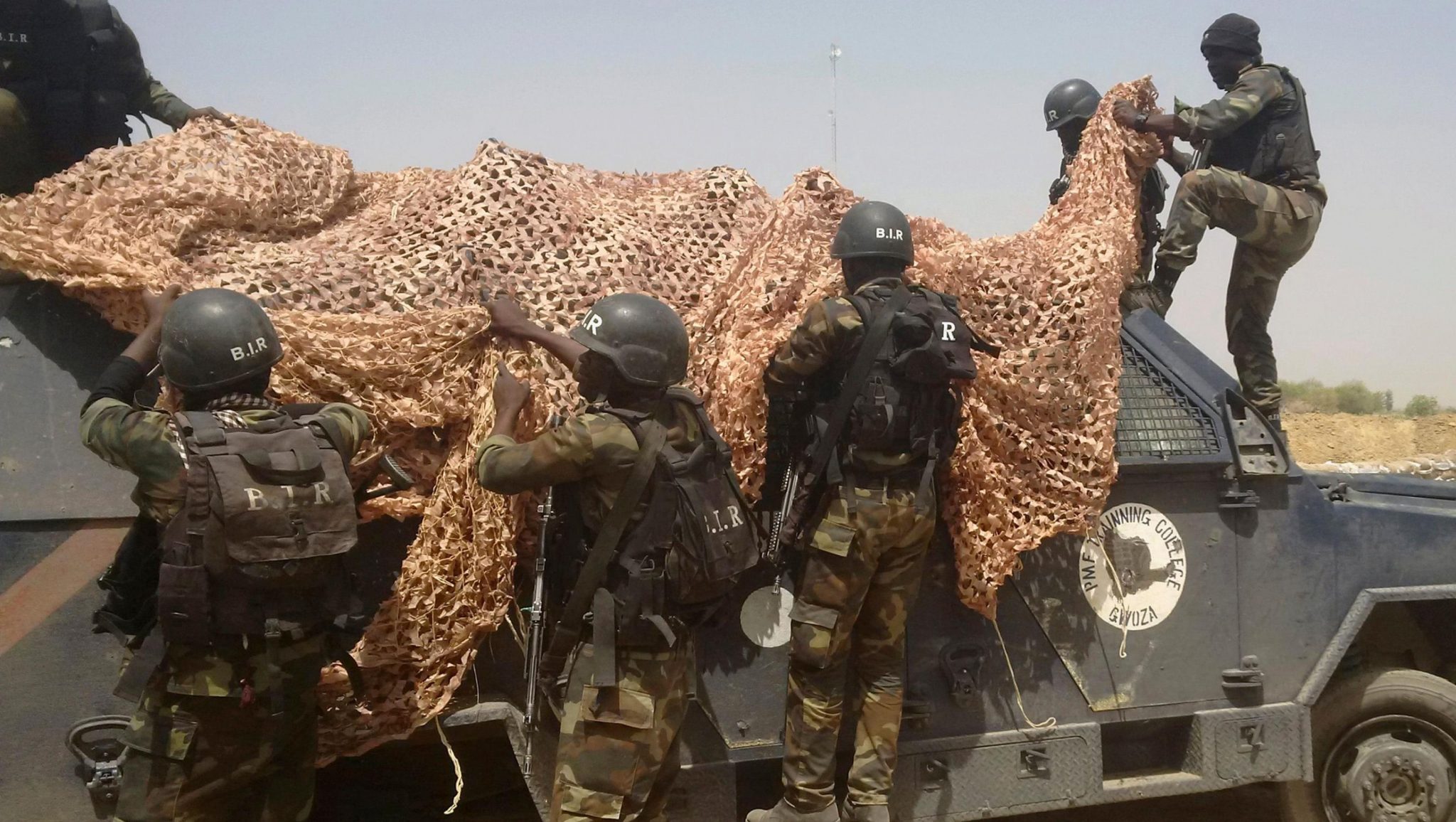
Sometime in July, a video depicting a woman carrying a baby on her back and another one holding a little girl by the hand, all blindfolded and escorted down an uninhabited area before being shot to the ground 22 times went viral and it got many people on the cyberspace asking many questions. Later that month, Issa Tchiroma Bakary, the Cameroonian government spokesman who initially described the video as “fake news” propagated to tarnish the image of Cameroon’s military, he returned a month later to announce the arrest of the seven soldiers suspected to have been involved in the killings. Bakary’s initial statement came in spite of investigations conducted earlier by Amnesty International identifying the location where the video was shot and matched the military fatigues and weapons in the video to those of the Cameroonian armed forces.
THREAD
In July 2018, a horrifying video began to circulate on social media.
2 women & 2 young children are led away by a group of soldiers. They are blindfolded, forced to the ground, and shot 22 times. #BBCAfricaEye investigated this atrocity. This is what we found… pic.twitter.com/oFEYnTLT6z
— BBC News Africa (@BBCAfrica) September 24, 2018
We suspected there was enough in the video to geolocate it, so we took a close look – David Adamson (Series Producer, African Eye in BBC)
This week, the BBC published a report of an investigation carried out with Amnesty International, online investigation site – Bellingcat, and other freelance investigators. According to the report, the investigators used satellite imagery from Google Earth to identify the location and time of the killings. The first thing they did was look at the background. In this case, there was a mountain range and a cluster of buildings nearby – that gave them something to go by. After searching Google Earth, the team received a tip to look near Zelevet, a small town in the far north of Cameroon, near the border with Nigeria. By using iMovie to slow down the video, they matched some of the details with those in satellite imagery from Sentinel Hub, confirming the location of the shooting. To find out when the video was shot, the investigators analyzed the shadows that each soldier cast. By using a simple equation powered by the tool Suncalc — the team was able to determine that the murder occurred between March 20 and April 5, 2015. The footage was analyzed with additional information from Facebook, identifying the profiles of three soldiers who they claim pulled the trigger. The soldiers identified were listed among the seven arrested by the Cameroonian government on August 10.
While many social media users claimed it took place in northwest Cameroon, some said it was actually in Mali.
Ilaria Allegrozzi, Lake Chad Researcher at Amnesty International, told Quartz that video evidence is often vital to prove human rights violations and it can definitely be a very powerful tool for human rights defenders, and researchers. She, however, noted that accountability cannot depend on video evidence; video documentation cannot become the minimum required evidence needed for concerned authorities to address human rights violations. Since the report from the forensic investigation was published, the Cameroonian government still hasn’t reacted or issued any statements.