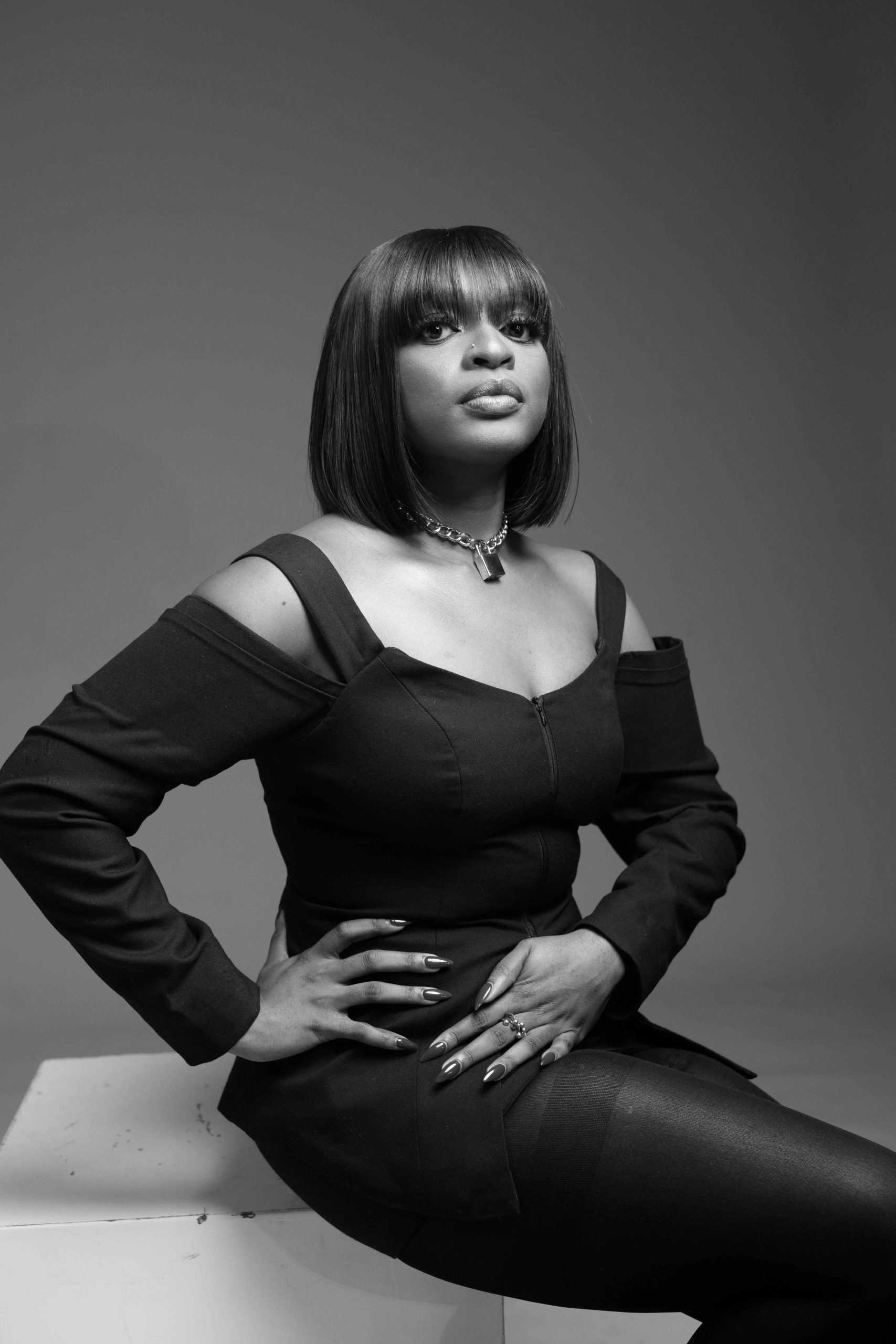

Some creators stand out not just for their craft but for their ability to capture worlds. Dafe Oboro is one of the latter, whose work spans film, casting direction and photojournalism. Raised in one of Nigeria’s biggest and most infamous slums, Ajegunle, his childhood not only influenced but sculpted his artistic abilities. Amidst the vibrant energy and raw grit of his environment, he learned to see stories where others saw only survival.
“If you have been in a space for so long, you will hear their stories even without you listening,” Dafe says. “It’s like you are in your room as Mama Nkechi is gossiping with Mama Nneka, Ikochukwu is fighting with Emeka, and Papa Chibuzor is quarreling with Papa Tomiwa. Those are the people I hear and see around me. Those are the people I put in the projects I develop and cast for especially if the stories allow for it.”
But there’s more to his journey than just his surroundings. His early years were marked by an insatiable curiosity and a hunger to showcase his eyes to the world. “My work is centered around my experiences and what’s going on around me,” Oboro says. “Not paying attention to those key elements will be doing a disservice to my art.”
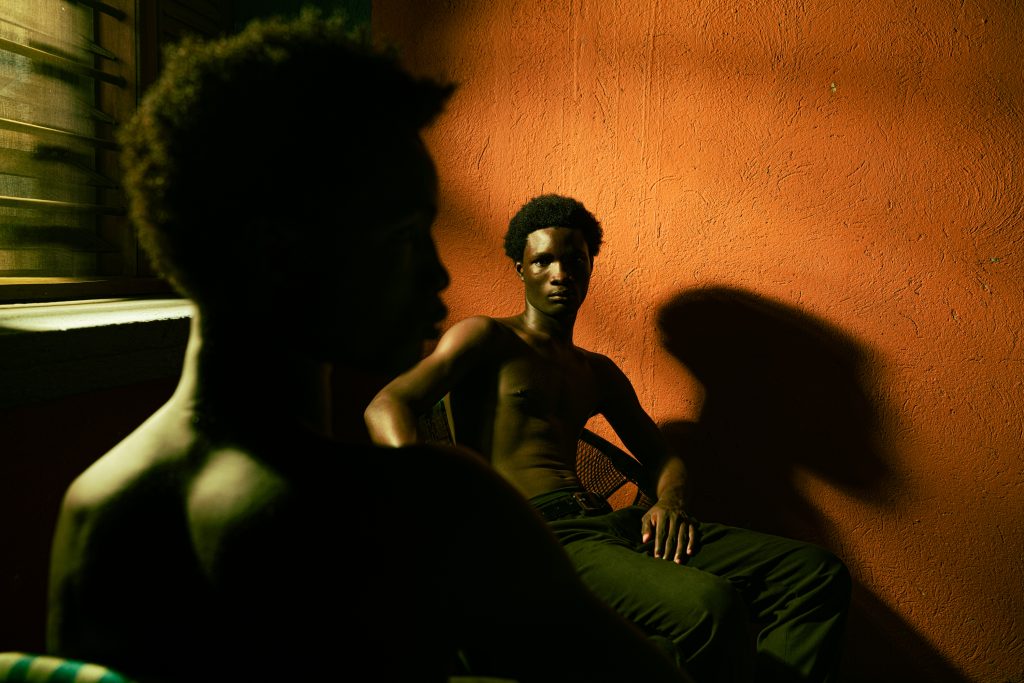
This unique lens has transformed him into one of the most compelling voices in contemporary storytelling. His work reflects this same ethos, faces and voices that speak to the truth of everyday existence—unvarnished, yet full of depth.
Beyond his neighborhood lies a deeper essence to his works; a desire to give voice to those often silenced by society. This perspective remains rooted in the authenticity of his upbringing. His ascent from the slums to a global stage is a testament to the power of perspective, and the ways that art can elevate even the most humble beginnings into something transformative.
At MoreBranches, we had the pleasure of talking to the visual storyteller on his journey, multifaceted approach to storytelling, and contributions to the art world.
Can you tell me about your background, childhood, and where it all began?
I was born in Lagos and curious about the world but never got to see so much of it. I came from a very strict and Christian background. This only allowed me access to school, church, and home. I only had the world of my family, extended family, church members, and neighbors to explore. As time became time, there was a burning sensation to study Mass communication. That’s what it’s called in Nigeria. I saw this presenter who is late now, Komla Dumor on BBC. I had never seen a Black person presenting news and wanted to be like this person. He had the same skin color and was an eloquent speaker. I told my Mum that I wanted to study Mass communication. Aside from that, I wanted to study abroad, which was the main thing I was pushing for. I knew that would allow me to experience the world in a whole different way. I wanted to experience life on my own terms.
Being the first to study abroad in my family, my mum did all that she could. I moved to England in January at the age of 18 to do my foundation degree. From there, I noticed it was called something different. It was more broad, you could study journalism, media, broadcasting, or even communications. I turned a lot of the offers down for this school, Nottingham Trent University. They had asked me to write an additional exam. I remember missing the cut-off mark so they turned me down. I called them, which was funny. I believe it’s the Nigerian in me. I told them how I had traveled from Nigeria to study broadcast journalism and turned other universities down for them. They never called me back but sent me an email where I got a conditional offer. I was so happy. I am still in search of that audacity so that I can apply it more to my life.
I went on to Nottingham Trent University to study broadcast journalism. This changed where I wanted to see myself in the future. I had previous dreams of wanting to be a fashion designer like my sister. When I was younger, I would sketch her designs. I wanted to change my course. However, I still wanted to make the experience worthwhile. I got into modeling and would travel to London and Birmingham for shows and editorials. From there, I was able to do part-time work as a student and modeling jobs. I bought my first camera. I started using it to take pictures of myself. I would merge them with texts that I would later upload on my website. It’s still the same domain name but a whole different experience, which is more of myself as an artist as opposed to a photographer and blogger.
I graduated in 2016 and did my thesis in documentary filmmaking. I did the film in Lagos, Nigeria. I knew I did not want to be a presenter but a filmmaker. I wanted to pursue this newfound love. I moved back to Nigeria and started my own production company. This made me start making films and photography in my own way.
Can you describe your journey from photography to becoming a multifaceted storyteller in film, sound, and other areas? How did you evolve your creative practice?
Coming from my educational background, we were trained to also be radio journalists. It was so intense that we were pushed to make our own news packages. All that you see on news channels, that’s what we were trained to do. Photography was what I was doing as a lifestyle blogger and modeling opened my eyes to the world of fashion. It’s not new to me. With these experiences, it was like a breeze.
What are some of the key themes or messages you hope to convey through your work?
There was a very strong perception coming from where I was born. That is Ajegunle. My family still lives there. Even when I started, there was a whole lot of talk about my work being dirty in my photographs and films. I always talk about this being my reality. My work is centered around my experiences and what’s going on around me. Not paying attention to those key elements will be doing a disservice to my art. The perception of Ajegunle generally negative. I’m telling the stories in a subtle way. I want my work to serve as a way to educate people who are not a part of that community. I also want to educate myself and my loved ones as I’m not just creating for a broader audience. This is to serve as a point of reference in the future.
How do you select and work with subjects in your photography and film projects? What qualities do you look for in them?
I cast people who I see and hear around me. If you have been in a space for so long, you will hear their stories even without you listening. It’s like you are in your room as Mama Nkechi is gossiping with Mama Nneka, Ikochukwu is fighting with Emeka, and Papa Chibuzor is quarreling with Papa Tomiwa. Those are the people I hear and see around me. Those are the people I put in the projects I develop and cast for especially if the stories allow for it. When it comes to casting, I don’t look for qualifications. I go on my streets and ask them if they want to be a part of it. I see this character beyond what everyone sees. I look out for people that are just living their lives. Those are the people that I see and who make Lagos as a whole.
What has been the most memorable project or collaboration for you?
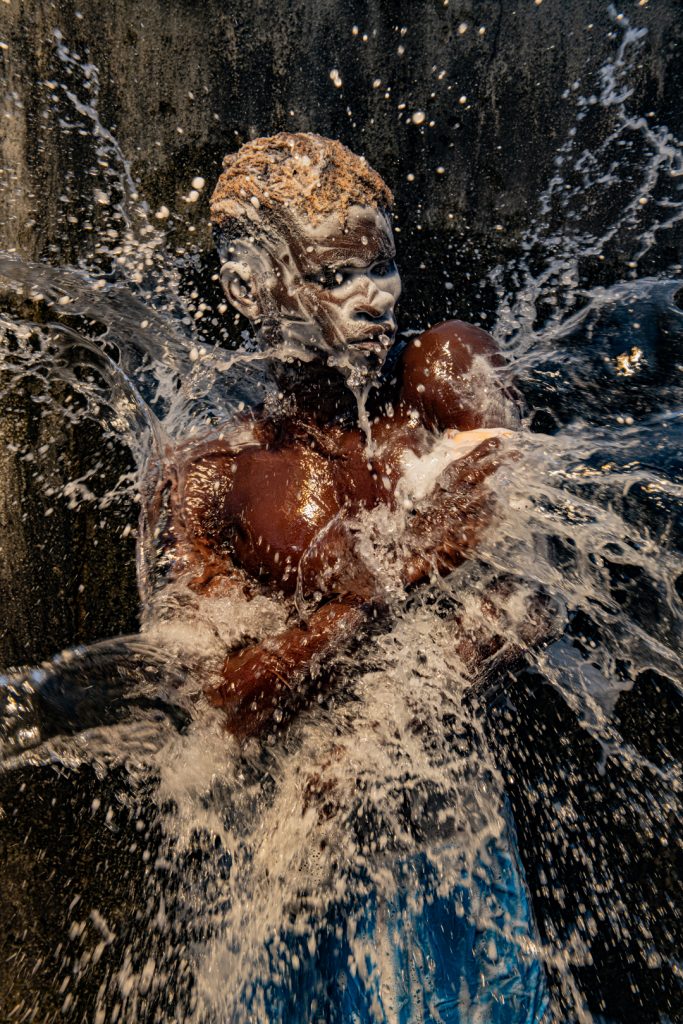
I think collaborating with Water Aid in 2020. It came at a time when every artist was questioning their career. COVID came and was threatening jobs and everyone was wondering if they would ever secure work. There were no gigs. Water AID commissioned me for a project and preferred I send a photo from my archive that covered the aspect of water. It was to mark their tenth anniversary of access to clean water. I looked through my archives. But knowing me, I created a new body of work. Two to three years later they have been featured in the Maritime museum in London. Recently, it was also featured at the October gallery in June. That is the most memorable moment because it serves as a full-circle moment. It’s a body of work that I did in 2020 which is still being talked about till today. It’s also exhibited and out for sale. That is the kind of work I want to keep creating which is timeless. The project is called “Pour Me Water, Pure Water”. It is a five-photo series in collaboration with Water AID in 2020.
As the founder of Dafe, a company that collaborates with high-profile artists and brands, what do you believe is the key to turning creative visions into successful projects?
I believe it is good communication. All of the clients I have worked with saw something. They know that my team and I are capable. That drives them to work with us. It does not just work with emails. There are meetings that involve constant communication to make sure the vision aligns. Aside from meetings and phone calls, there is the day of principal photography when sudden events can happen such as the weather, faulty equipment or a no-show. The ability to come together as collaborators to know what to do next is important. There are also times where clients want stuff in a particular way, we come up with solutions to make it that same way. To answer what you say, I think communication and trust is essential when it comes to this client work.
How do you envision the future of your creative company, Dafe, and what new projects are you most excited about?
I am looking at it as a creative media company that serves different needs. From production, photography, film, equipment rental to location and consultation. We have Dafe cafe which serves the community. We collaborate with brands who have a community-driven vision and take that collaboration to help emerging creatives, and those finding themselves in the industry. I am taking it back to my community to better the lives of young creatives or those who don’t consider themselves artists yet.
How do you ensure that your projects resonate with both local and global audiences while staying true to yourself?
I don’t necessarily think of making my work acceptable to a particular audience because that will be serving the market. When I started work, it was more of creating works I wanted to get out of my system and ears. Nothing has really changed. If not, my work would be glamourising. I would be shooting in my community but stripping it of its elements to serve a greater audience. It’s a take-it-or-leave-it kind of thing.
Funny enough, the international audiences connect with it more. I was telling my stories without my community as a backdrop as people felt they had seen all of Lagos. I don’t strip off or add to what I am seeing. I don’t add to things already there. I leave that space for people to dream and think as a viewer, listener, or consumer. You can see what you want to see as you look at these images. I make sure to give my audience an experience.
How was your first experience of ArtX in 2016
That’s a very interesting question. I found myself in a room with many artworks and unique people. This felt like a pinch-me moment.
Can you share your thoughts on the current state of the creative industry in Africa and where you see it heading in the next few years?
I feel that the time I moved back was the best time for African art, especially art coming from Nigeria, West Africa.
There was a high demand for photography especially to shoot l in Lagos with the texture and subject. I found myself producing for photographers who would come here. I also saw myself doing my own films and photography. I saw myself collaborating with Vlisco, a Dutch brand, Beyonce in 2019 which I never thought would be possible. There has been a huge demand for artists and creatives here. I cannot imagine how big it would be ten years from now. I know it will be positive because I have seen the good and the bad side of it. I know it will only get better. If you look at music, music videos, fashion, and modeling, a lot of these artists have come out in high demand. Because I have been in that mix myself.
What advice would you give to aspiring artists who aim to bring a unique perspective to mainstream media and popular culture?
I would say just do it. Even when I first started, I was using an outdated phone and camera to start with. I know it still comes from a place of privilege, but I still did it. Whatever you think, you can still do it. I remember taking my camera to the set for Mowalola where she was looking at my outdated camera. I also remember another photographer in that same set who is now a friend came with a massive camera wondering how I would shoot with that. However, when the film came out, he was stunned and so was Mowalola. It’s not about the materials you work with but the vision and the attitude to just start. It might be a different type of vibe going on where you could still call it your aesthetics. At some point, you can rent or borrow, shoot what you want. Get that idea out of you and the conditions will definitely change.