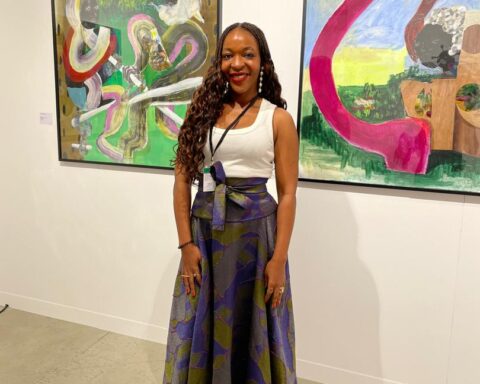
Pan-Atlantic University houses one of Africa’s most prominent educational museums. The Yemisi Shyllon Museum of Arts (YSMA), launched in 2019, was named after art collector and educationist Prince Yemisi Shyllon. It was founded by Niyi Adenubi and supported by Prince Yemisi Adedoyin Shyllon, who donated a substantial amount of funding and about 1,000 art pieces from his personal collection for the museum’s sustenance.
Since its inception, the museum has become a gallery for art exhibitions, a befitting home to a myriad of collected artworks, archival materials, and a center for cultural preservation and artistic expression.
In the spirit of preserving and providing visibility for African contemporary art, the museum held its first showcase of collectors’ pieces, Collecting Now: Perspectives on Contemporary Art Collecting in Nigeria, in October 2024. It featured pieces from art collectors –Yemisi Shyllon, Aisha Oyebode, Kola Aina, Niyi Adenubi, Gbenga Oyebode, Dotun Sulaiman, and Eyamba Dafinone.
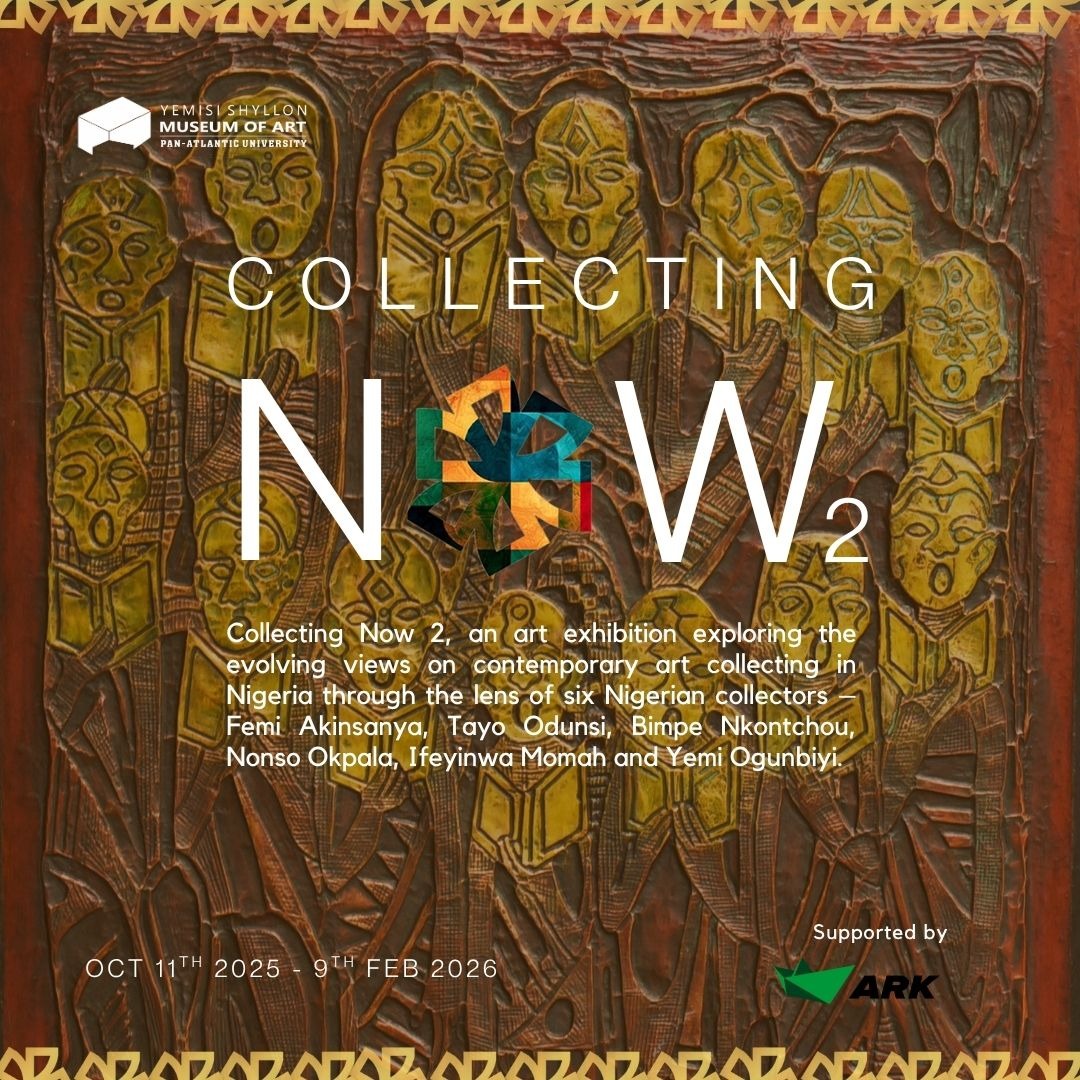
Following the success of the first collectors’ exhibition, the Collecting Now series returned with a sequel. Collecting Now 2 hosted artwork from six Nigerian collectors —Nonso Okpala, Tayo Odunsi, Yemi Ogunbiyi, Femi Akinsanya, Bimpe Nkontchou, and Ifeyinwa Momah. The displayed pieces portrayed the current evolution in the collection of modern African art.
More Branches spoke to these collectors on their guiding principles on collecting contemporary African art, and Charles Nwabundo Udeh on curating Collecting Now 2.
Charles Nwabundo Udeh
Charles Nwabundo Udeh has been curating art professionally for six years. He curated the first Collecting Now exhibition and also serves as the museum educator at the Yemisi Shyllon Museum.
On the Collecting Now series, he said he was inspired by the need to underscore the culture of art collecting in Nigeria over the past decade. “Art collecting in Nigeria is gradually becoming vast. While most artworks appear mostly once during their debut exhibitions, the purchase of such works may mean their status as being open to the public has been limited. This spurs the need to show these works in a private collection.”
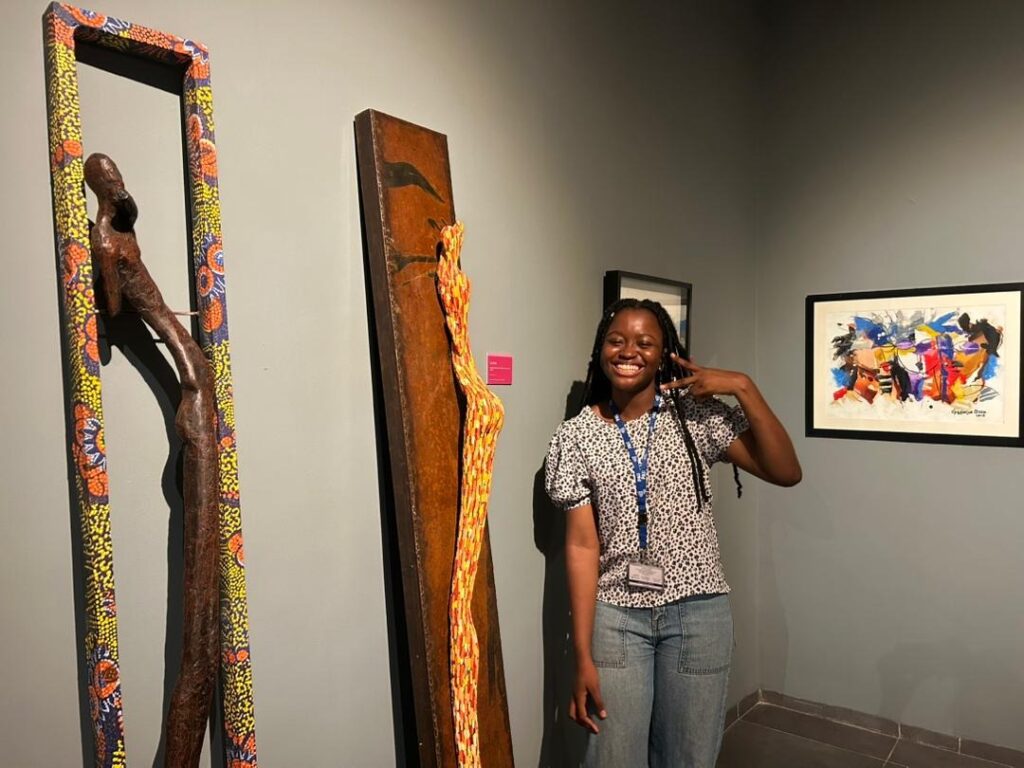
The Collecting Now series has a unique twist: it is a showcase of specific curations by collectors from their collections. Charles referred to the collectors as the “first curators” as they specially handpicked art pieces from their collections for consideration. Afterwards, he went on to curate from their submissions. A total of 29 art pieces were displayed at the show.
“Criteria differ by collectors, but I personally worked on expression, concept, execution, and craftsmanship, with the need for a work to have at least three of the criteria raised or all of it”, Charles said. “While aesthetics is important, it is a result of the combination of at least two of the above; therefore, it was not necessarily a central criterion for choosing.”
He noted that each collector’s section had a guiding theme. With the displayed art chosen according to their individual tastes, the viewing lens shifted from the artists to the collectors.
“This is what makes the exhibition exceptional”, Charles told More Branches, “there is no bias that holds the viewers’ mind to ransom, but rather the audience is to engage from a more pragmatic and not dogmatic style of engagement. This means all the artworks are not forced to voice out a single theme or message, other than the idea of ‘what is in the art market now?’”
He answers this with an excerpt from his curator’s statement for the exhibition: Private Passions, Public Legacies: A Decade of Nigerian Art Collecting. “Visitors are invited to enter the layered stories these works carry; stories of memory, belonging, advocacy, and heritage that chart the evolving landscape of Nigerian art and its collecting culture”.
Nonso Okpala
Nonso Okpala started collecting art eleven years ago. It started as a personal hobby, and later he progressed to studying the place of Black artists, particularly Nigerian artists, within global conversations. He founded Artsplit, a Lagos-based gallery, and has hosted several exhibitions and supported artists through residencies and funding.
“For me, collecting is not just about acquiring works. It is about cultivating dialogue, honoring legacy, and investing in emerging visions that challenge and expand our collective understanding”, Nonso said.
His collection focuses on Black art and artists across the diaspora, with a particular focus on those rooted in Africa. He collects paintings, bronze, ceramics, and sculpture; art pieces from Nigerian contemporary artists fluent across various media, Ozioma Onuzuluike, Kofi Agorsor, and Gedepresunpre Agorsor.
Nonso’s stance on private collection is unshakeable. “I believe private collectors play a critical role in shaping and telling the story of African art. Beyond preservation, collecting functions almost as an anthropological study: a way of tracing who we were, who we are, and who we are becoming. This is why my vision for collecting in Nigeria is to create a timestamp for the future, a record that says ‘we were here, and we contributed’”.
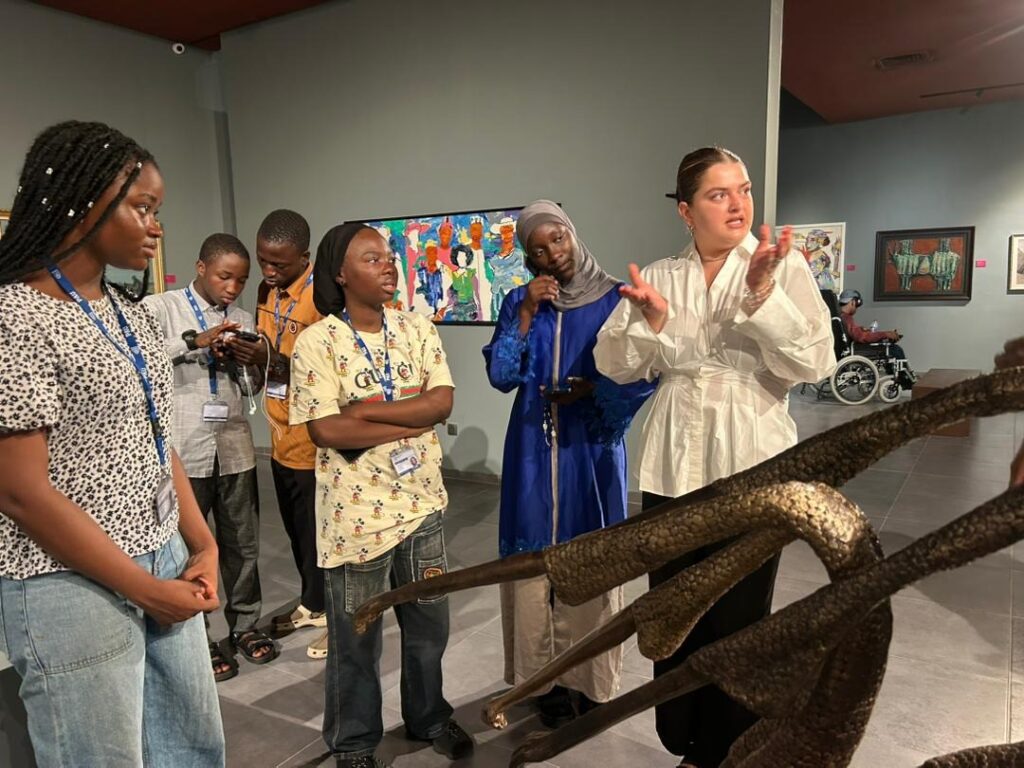
On Collecting Now 2, Nonso says his participation is a meaningful venture. “Art is central to telling the story of a people. Our ancestors were artists and collectors long before us, leaving behind works that were often looted and stripped of their context by colonial powers. Today, we carry the responsibility of reclaiming that narrative, of showing who we have always been, and ensuring that future generations inherit a richer, truer record of our artistic legacy.”
He advises new collectors to visit galleries and choose art with their personal conviction, as opposed to chasing trends and seeking quick investment schemes. His vision for art collection is to witness Nigerians grow to appreciate art and artists beyond exhibitions and museums.
Olufemi Akinsanya
Olufemi Akinsanya started collecting in 1979. His interest in art was largely influenced by his childhood in Ibadan, where he experienced Yoruba cultural history and heritage. He collects Nigerian, African, and Black diaspora art, with a focus on underrepresented groups across the globe.
Femi improves knowledge on art by regularly visiting museums and galleries, reading, and engaging with master pieces. “I have been deliberate in pursuing art with cultural meaning and intellectual substance, works that speak with conviction to the continuing dynamism of African creativity”, he said.
“While my taste is eclectic, the guiding principle of my collecting has always been quality. I am instinctively drawn to beauty, beauty not as superficial charm, but as originality, craftsmanship, and depth of narrative”, Femi told More Branches. His passion for art collection stems from cultural duty and intellectual curiosity.
Assuming the role of a steward, he believes his responsibility is to preserve his private collection for public viewing and posterity. “My vision is for a more structured and transparent art ecosystem in Nigeria, one supported by strong institutions, archives, and museums, where collectors, artists, and scholars collaborate intentionally. Through such collaboration, I believe Nigerian and African artists will not only deepen their practices but also attain credibility and relevance”.
Femi hopes to improve the quality and diversity of his collection, while making it available as an educational and research resource for cultural and art research purposes, with an ultimate goal to “leave behind a truly world-class Black diaspora-focused collection”.
This goal reflects in his participation in Collecting Now 2. “Art should not remain hidden in private homes. It must breathe, spark dialogue, and enrich the public. This exhibition offers a space for my works to be seen, appreciated, and placed within the broader narrative of Nigerian and African art history”.
For those new to art collection, Femi has a simple piece of advice. “Start with passion, pursue quality, and educate your eye. Work with the artists of your time, collect within your means, and let your choices be guided by conviction rather than speculation. Collecting should never be about possession alone; it should serve a higher purpose, enriching society, uplifting the spirit, and leaving behind a legacy of beauty and meaning for future generations.”
Bimpe Nkontchou
Bimpe Nkontchou, head of W8 Advisory, began collecting art in the late 1990s in the United Kingdom, where she became conscious of the role of art as a counter-narrative. She feels particularly drawn to underrepresented voices with African leanings, mostly female artists, collecting photography, sculpture, paintings, engravings, and prints.
Over time, she has supported artists by establishing and supporting institutions like the GAS Foundation and Artists Residency, Yinka Shonibare Foundation, the James Barnor Foundation, the Whitechapel Gallery, and Centre Pompidou Museum.
Ms. Nkontchou has never sold any of her collected pieces. “My collection today reflects this balance of intuition and advocacy. I buy what resonates with me deeply, but I am also intentional about shining a light on lesser-known or emerging artists alongside established names. For me, collecting has never been about speculation or resale. Each work carried meaning, memory, and personal resonance. Yet, I acknowledge that African art has become a powerful asset class on a global stage. I take comfort in knowing that my collection, primarily a personal passion and legacy, also represents a store of wealth for the next generation”.
The second exhibition of Collecting Now represents a path of reconnection for Bimpe. “Living outside Nigeria for the past thirty years, this exhibition reconnects me to a community of collectors on the continent. It also offers the public, especially younger collectors, an opportunity to see that collecting is not only about financial value but about surrounding oneself with works that spark joy, tell stories, and preserve heritage. In a context where public access to art is limited, exhibitions like this open doors to works usually held in private homes”.
She states that maintaining a good relationship with artists is central to her journey as a collector and advises collectors to see as much art as possible to make authentic choices before purchase.
Ifeyinwa Momoh
Ifeyinwa Momoh defines art collection as “a deliberate, systematic pursuit of value”, suggesting it is a serious business, which does not align with her current collecting practices.
“I hesitate to call myself a ‘collector,’ she said. “Art, for me, is more of a rhythm woven into daily life, rather than a formal pursuit of collecting. It is the framed print of Van Gogh’s Cafe Terrace at Night that once anchored my childhood mornings, the Cubist echoes of African form reimagined through European eyes, the statues of Easter Island whispering histories across oceans. Art has always been less about possession and more about encounter, about what colours, form, and ideas awaken in the heart”.
Ifeyinwa chooses art pieces mostly by emotional connection, and less by investment value. “I respond instinctively to what seizes my breath, sometimes a configuration of colour, sometimes a title. The German word Sehnsucht, a yearning for something undefined and ideal, best describes this feeling. I see art as a dialogue between artist and viewer, where my response becomes part of the composition, even if my brushstrokes remain invisible. Each piece is less an acquisition than an extension of memory, a dialogue between my inner life and the artist’s hand.”
Ms. Momoh keeps herself updated in the art world by visiting museums and galleries across continents. This practice has built the foundation of her disposition towards art collection. “Exposure to museums and galleries across continents has refined my sense of what art must bring: originality, courage, integrity, execution. I ask to be startled, to be surprised, to see with new eyes. Yet taste, no matter how refined, is bounded by pocket and space. My disposition to collecting is informed by the ethics of ownership. There are works I once treasured that I would now gladly part with, just as there are pieces I lend to friends so they might find their moment in the sun”, she said.
Her views on art collection and private art repositories are multi-layered. “I recognise the paradox of collecting: art is deeply personal, yet it belongs to a larger cultural story. Private collectors sustain artists, serve as patrons, and ensure that the prophets of our time, the artists, continue to create. Even when I cannot acquire, I still invest in the vitality of the Nigerian and African art scene, following with admiration the energy and beauty flowing from Lagos to Dakar, from Accra to Johannesburg. It is heartening to see African art claiming its rightful space today. It has indigenous champions who understand its languages and symbols, while also navigating the international markets that confer visibility and value. This moment is exhilarating and overdue”.
Ifeyinwa advises new collectors to “educate your eye, follow your heart, and resist reducing art to its financial value”.
Tayo Odunsi
Tayo Odunsi started collecting art in 2011. His first purchases were two paintings from Mydrim Gallery: an acrylic on canvas painting by Damola Adepoju and a watercolor piece by Ini Brown. He notes that these pieces were small but remarkable, marking the beginning of his continued interest in art and design. Although Tayo’s professional background in real estate and finance sharply contrasts with his art and design interests, they informed his perception of value and investment.
Tayo collects mostly African art, with a preference for artists from Nigeria, Ghana, Kenya, and South Africa. “This geographic specificity isn’t born from limitation but from intention. African art, particularly Nigerian art, represents more than aesthetic beauty to me—it embodies our stories, our struggles, our triumphs, and our evolving identity as a people”, he said.
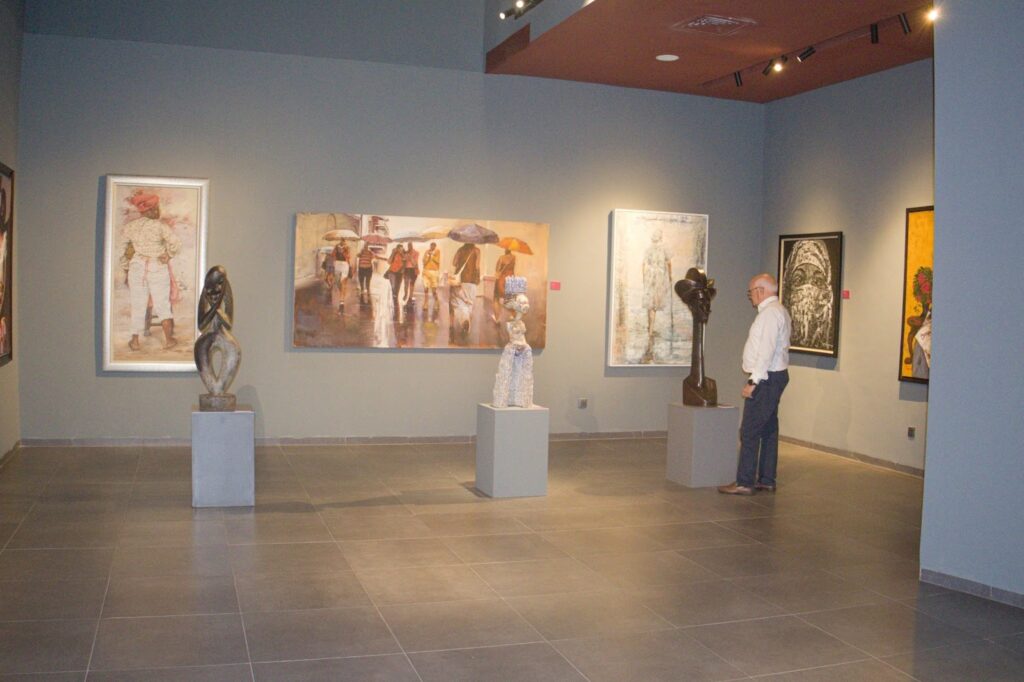
Collecting Now 2 is the first public viewing of commissioned works by Mr Odunsi. “These commissioned pieces are deeply personal portraits of my immediate family from my childhood, my father, and my children. Through these works, art becomes more than decoration or investment; it transforms into documentation. Each piece captures not just the physical likeness of my loved ones, but the artist’s impression of them, our society at that moment in time, our culture, and our heritage. Art, in this sense, becomes a living archive of what matters most”.
His collection is a masterful mix of art pieces from emerging and established artists. It reflects his support for younger artists with potential and cultural preservation with pieces from artists like Bruce Onabrakpeya and Dejo Fakeye.
Over his years of collecting and engaging with the art community, Tayo has made some observations. “People who truly love art and commit to collecting tend to be strong patriots with deep pride in their culture. Despite any challenges or negatives that may exist in Nigeria or across Africa, my love for my country runs deep, and my affection for our continent runs even deeper. As a young man, I’m acutely aware of what I’ve sacrificed for my country and how, in my own small way, I’ve contributed to its development and positive reputation on the global stage”.
The collected pieces on display at Collecting Now 2 are from artists Ozioma Onuzuluike, Modupeola Fadugba, Chijioke Anyacho, Taiye Idahor, Uche Okeke, Peju Alatise, Bruce Onobrakpeya, Ben Enwonwu, Lamidi Fakeye, Uthman Wahab, Ben Osawe, Emmanuel Adiamah, Bummi Babatunde, Gerard Sekoto, Yinka Shonibare, Aboodun Olaku, Victor Ehikamenor, REWA, Alimi Adewale, Malick Sidibé, and Bumi Agusto.