Author: Richard Ogundiya

  • THE LEMON CURD EXPERIENCE.

    THE LEMON CURD EXPERIENCE.

    It’s really a great thing that festivals, shows, exhibitions and other urbane elements are growing cultures across African societies. Not only are such happenings essential to an ecosystem’s growth and public engagement, they also strike senses of unity and consciousness within the pool of people involved.

    Saturday, the 5th of August 2017, Lucid Lemon’s ‘Lemon Curd’ was happening and nothing could stop me from getting a feel of the new age. Everyone that stopped to get a sight of how Ms Tomisin and her team designed the event irrespective of the clear odds, will definitely have been sure about what to expect.

    It was a 12:00 PM affair but understand that Africans never disappoint when it comes to the urge to make a grand entrance. Because of the kind of person I am (my sleep, it’s important), I strolled into Muri Okunola Park at exactly 4:50 PM, but research and side talks. reassured me about my plans of having a fun time. ‘After all, the show hasn’t started’, a friend called out.

    Maybe it had, but people probably didn’t get the point of segmenting an event, making the extreme newcomers/performers take the centre stage for hours by themselves, it wasn’t the right plugin.

    The guys at Lucid Lemons should definitely put this into consideration in their next event; try to balance main performances with upcoming acts at proper intervals just so the attendees don’t tire out. Trust me, it was a lot of stress because people knew exactly what they came for.

    Another thing, because of the complexity of the event, other activities like live exhibitions were done in front of the main stage, a decision that I believe wasn’t well thought out, you shouldn’t leave the crowd with too many haphazard options, Muri Okunola Park is quite spacious and also allows room for divisions so if I get tired of watching guys stroll around the stage, I should be able to move to an art arena, a photo stand or a book hub.

    Back to the festival mood. It’s few minutes after 5 PM and things just got really lit.

    ‘Who’s the Guy?’

    ‘Barelyankhook’ I replied *on top of my voice*

    And then two other ladies who weren’t involved in the discussion hopped over and shouted ‘oh my god, barelyankhook!!’

    I remember seeing Yinka Bernie get on the stage, the vibe started making sense here. As we earlier envisaged, we were in for the best time of our lives.


    Yinka Bernie.

    By now, a rejuvenated crowd was already gathered at the prime, phones were up and hands went higher. Felt like everyone just got the freedom they were expecting.

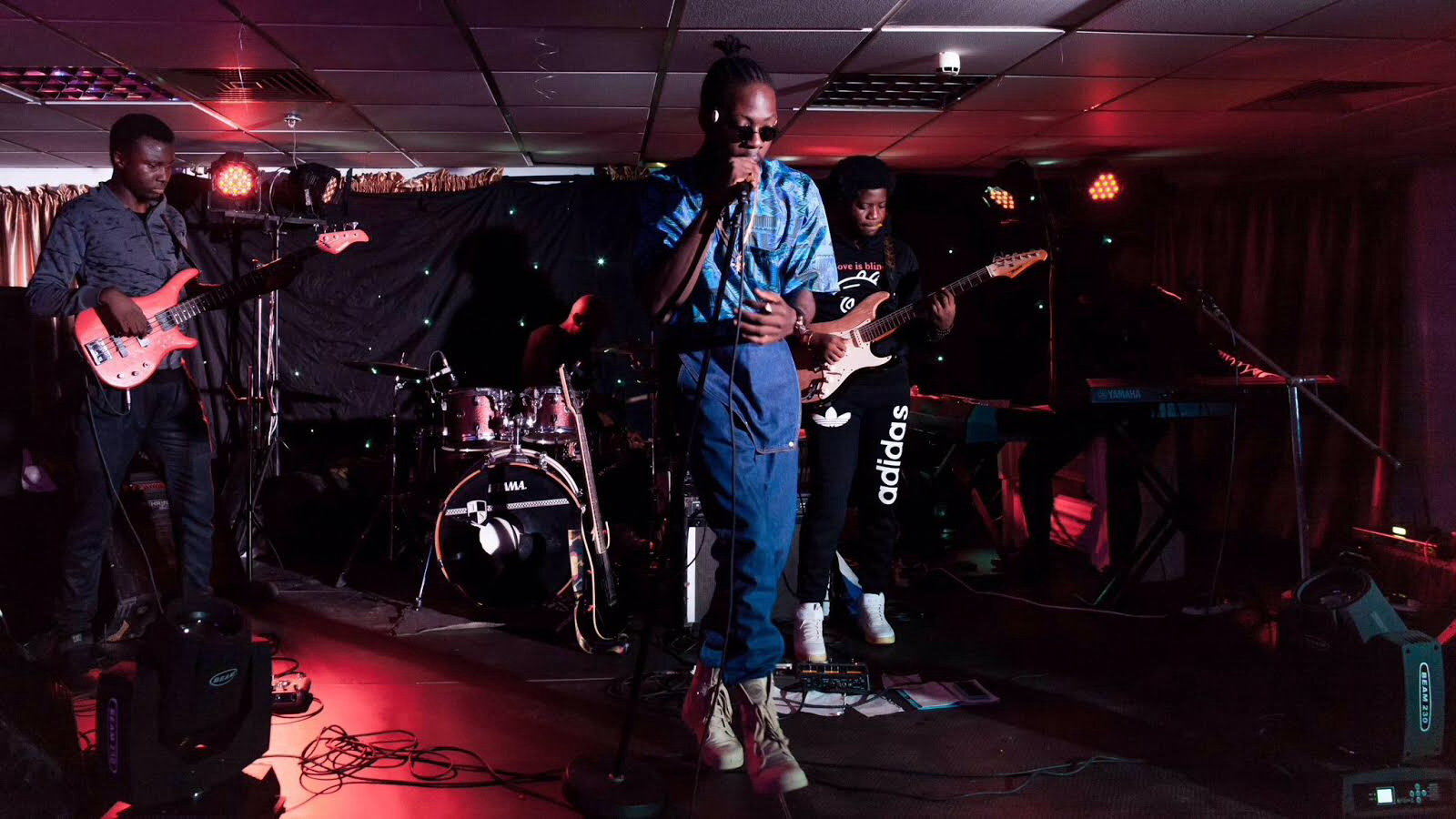
    From OmaMahmud to the exemplary display Fasina and GMK pulled up performing ADARA and then Prettyboy DO.


    PrettyBoi D-O


    Dami Oniru

    Dami Oniru and Remy Baggins also put the crowd on a trippy-kind of the cruise. Jazzz Atta didn’t fail to do the usual too.

    At this time, even though many already exited the premises, a radical congregation had built up, chanting and jumping to every song, word for word.

    Idris King did sing the national anthem [obviously I’m talking about SQUAD]; the highlight of that performance was when he got off the stage and made sure we all formed a chain.


    Idris King.

    Now, we were going to take a break, one or two after the other, people swayed around to reactivate, it was the best time to do so. Booths, vendors, fashion, more vendors and more food booths than I knew what to do with LL did a great job with the vendors, so many options; I got lime juiceShawarma & fries, I had enough trees to blow so we headed to a corner to catch up on ourselves.


    Famous Bobson

    Not taking anything away from the organizers, I must add that the stage was almost at perfection, there were an awesome band and great lighting except that I’ve been arguing about the correlation between a stage’s size and its effect on the performers. Face it, there are only a few great acts who know damn well what to do on a stage; for many, it was probably their first time doing this, so you could see vacancy, maybe confusion in their eyes. Nevertheless, one could take from it a positive sign of the shoes to be filled.


    Lanaire during her Spoken Word Performance

    Lanaire’s spoken words session was mind blowing, happy I met such a gem. Now groups were forming, everyone was talking. Hydrate and refuel, my biggest regret was coming for this show without a protein shake. You were either borrowing a lighter or screaming, simply because Lady Donli was about to be unveiled somewhere in the commercial capital city of Lagos, she was probably the reason why many came. The Rendition of ICECREAMwhich also saw Tomi Thomas come on stage took the show unto a whole new realm, for some reasons not known, I like to reiterate that I’m in love with Tomi’s dreads, like goals.


    Tomi Thomas


    Lady Donli

    If there was one thing to regret about missing TheLemonCurd, best bet it was the reunion of LOS, yes it happened! I could almost feel the tears roll down my eyes, it’s crazy to see how deep the culture has grown, most interestingly, the organic margins involved.

                                      LOS Reunion

    From King MufasaLOSOdunsi, to Wavy the creatorShowdemcampBOJand then Santi, things went spiritual because of the connection between the performers and the crowd.

    If there was something to take home that day, it was the experience that stuck with me.

    I saw strong, black, loud, unapologetic, free, honest, and loving youth. Regardless of where we found ourselves, devoid all forms of negative energy internally and externally, there was a strong force of coloured kids coming together, defying the norm and getting ready to take over the world, to fix Africa on a global scale. Kids that will stay outdoors until a life changing euphoria ended at 12:30 AM.

    I saw power, I saw energy.

    Despite the flaws, I really still look forward to another edition of The LemonCurd. It gets better, so they say.

    Another highlight of the day was when a 16-year-old boy walked up to me and said: “How can you get me to perform at the next lemon curd?” — This alone was fulfilment, moments like this is what we fight for, to give the kids of the generation Z a somewhat defined path to follow on the way to their dreams, pierced somewhere around purpose and our need to regenerate the weak blocks that make up Africa.

    Even as we grow together, as one voice whether at home or in the diaspora; we must realize that our unity is entrenched in love and peace as though we understand that our strength is in our diversity, and then we’ll see our Africa tick every box on the wishlist.

    It’s wonderful events as such are popping around, the scene in Ghana is one I admire, also South Africa, Kenya and Tanzania, to name a few.


    Fasina


    GMK

    We need to build more, we need to spark more conversations and build network bridges with our events. These things reinforce that doing it out, loud and happy is a great way to live. The future is about making boys and girls realize that they can be free, radical and liberal, from today.

    Cheers to the guys at Lucid Lemons for pulling a great show amidst all the circumstances. Once you’ve given to the culture, the culture will always give back.

    Finally, I would like to use this medium (no pun intended) to spill the beans on a specimen we’ve been incubating from our home studio. The team is planning to put together an extreme dance festival/rave for December, we call it FEEL THE MUSIC FESTIVAL, we really feel the need to invent a multicultural experience unifying the bridges of Africa and Africans through music, youth power, radicalism and freedom.

    So, wait for it.

    Profound networks and bridges that develop our structure… I’ll drink to that.

    [ALL OTHER IMAGES SHOT BY AND1KAN]

  • Really, how connected are we?

    Really, how connected are we?

    In the beginning, there was nothing except for our own unique styles of doing things until the internet came and disrupted every sphere. It could easily pass as the most notable revolution since Oduduwa’s entry to planet earth.

    One thing that everyone is aware of is the increased availability of internet in Africa and how it is positioning the continent towards a paradigm shift. The African telecommunications market is growing at a faster rate than the rest of the world, there’s, even more, internet growth than mobile telephony in spite of the high tariffs. I guess this doesn’t bother you much because the classification of the internet either as a luxury or a basic commodity, essential to our everyday life is still a question that is unfixed.

    The development of the internet in Africa has made great progress since the mid-1990s, and especially in the 2000s which have affected changes in policies and regulations. If there’s one obvious thing, it’s the fact that the internet has been influential across cultures and has also transformed the way we do things. Do not get me wrong, there are challenges around infrastructure and a major lack of access; in fact, many communities in Africa are still unconnected. Nevertheless, the internet and advancements in technology are playing a pivotal role in bridging these infrastructural gaps — gaps that its governments and other powerhouses are aware of. The bloom is obvious and day after day, privileged Africans are taking advantage of the connection to replacing traditional methods with innovative and efficient approaches to fashionmusiclifestylefoodnewspoliticshealthcare and other facets of life.

    Although the dominant use for internet in Africa is to access social media, innovation around the technology is growing. Asides poor access, some say the absence of substantial talents is a fault to hold on to, but with the birth of startups like Andela, increased numbers of developers’ ecosystems and funding from the big guns, it’s safe to strike a wiper across the narrative.


    Image from Google Africa

    The influx of companies like FacebookMicrosoftGoogle & Alibaba into the region with a plot motto to connect the unconnected have been essential in the development of stronger ecosystems and creation of Afrocentric smart brands. Good thing is, Africans are also pulling forces through findings and collaborations to grow their own internet infrastructure and they’re doing it using fairly rudimentary methods: by trenching pipes and building cell towers. They have a long way to go, but they’re already proving remarkably successful. Companies like MainOne are laying cables, OneWeb — a company backed by Richard Branson’s Virgin Galactic and SpaceX are also taking a different approach towards satellite internet; these companies say they can provide access that is faster than the traditional satellite internet with less latency by simply placing satellites in low earth orbits — roughly 100 to 1250 miles overhead. The lower orbit satellites can’t cover as much area as traditional geosynchronous orbit satellites at an altitude of about 22,000 miles; simply means that these companies will have to launch hundreds of satellites in order to cover the planet with their wireless signals.

    In 2016, 77 African tech startups raised a total of $366.8M in fundings which seem to me a good thing but let’s pause for a minute and talk about the realities, the African realities.

    What products are they building? Why are they building what they are building? Who are they building for?

    Ask and you’ll be sure to receive answers about how they want to ‘leverage’ on the 250 million smartphone connections that are only active on charts and graphs. Yes, I said what I said. The real beneficiaries of the internet are the urbanites, the people who know how to hail a taxi two streets away from the confines of their homes, the entrepreneur who understands that online payments yield faster and better productivity for her business or that college student who is aware of the endless possibilities of the depth of information filtered across the web. These people only cover 40% of the graph under analysis.

    Sometime this week, I vibed with my friend Asher Lienad who is of the belief that there’s been a massive improvement in recent years in technology around the African space but he also explains that it can get better. He cited the 2015 Nigerian presidential elections and the use of internet in the build-up of nonstop excellent media campaigns.

    “Yes I believe we are connected now more than ever before. Take a look at political relations. Nigeria received largely favorable reviews in the build up to the 2015 elections due to non stop excellent media campaigns. Another thing to point out is the ousting of Yahaya Jammeh.”

    Prior to the golden social media age, people barely knew what was going on in other countries except by watching the news, he emphasizedBut with internet connectivity, a lot of people were able to stay updated on events in real time, Asher continued.

    Amidst these developments; the real deal is that no matter what happens, no matter the price or accessibility of the internet, many Africans will still remain unconnected.

    The reason is short and simple: It’s who we are.


    Image by Bayo Omoboriowo

    People who take a closer look at the cultures — the way of life and our approach to things will understand better. The majority still perceive the internet as a luxury, traditional Africans will even tell you it’s a satanic instrumentation. Sounds funny and baseless but these people cannot be neglected, their rationales will still reflect in the statistics.

    Not every African will order stuff online. Not every African will use management tools to make operations efficient and effective. Not every African will save or send money online. In fact, ‘not every’ means ‘majority’.

    Data available shows that only ten countries in the region have mobile cellular prices that are at least as affordable as the average in other parts of the world. Mobile broadband is the only de facto option for accessing broadband Internet services for most of the population in developing countries, given the limited capacity and reach of fixed infrastructure, but it is expensive.

    This doesn’t discredit anything, the reasonable percentage of Africa’spopulation willing to be conscious and conversant with the internet will keep rising, we will see eruptions of companies building high-end products to solve everyday problems, things will change but mindsets need to evolve.

    The bone of contention now; how are we going to plug the rest of our continent to the pool of consciousness?

    How will we be able to manipulate the system to create a new connection that is appealing to our people?

    It may sound random, but the usefulness of the internet is spontaneous processing of information and interconnection of interactions.

    Can we design these things to fit the life of the typical African, enlighten minds about the conversations happening, basically bringing the internet offline? Touching deep on roots and bridging gaps just because we belong; we understand our culture and what being African feels like. Simply means, can we educate first? before we start dreaming of e-Africa.

    If we can go grassroots with the level of information and transformation happening, we’re reaching out to millions of Africans who need the knowledge of how the world works, the millennial who needs to believe in her potential and then, dares to dream.

    The internet coming offline is a wave that can play out and also achieve its purpose.

    We believe in Africa, we believe that 1billion informed populace can be conscious enough to take on a reshape and revolution of the most powerful tool, the web.

    Maybe we should just dare to imagine the impossible, let’s do Africa 2.0.

    Let us connect the dots first.

    Show your support
  • We write about Social issues and Advocacy in Africa with The Social Advocates.

    We write about Social issues and Advocacy in Africa with The Social Advocates.

    One of the mandates of social work is to advance the interests of social justice, particularly on behalf of populations or groups that have been disadvantaged, disempowered or discriminated against. Advocacy promotes equality, social justice and social inclusion. It informs people of their own rights, allows them to exercise these rights, be involved in and influence decisions that are being made about their future.

    In Africa today, we can only say that social advocacy is still under construction due to many obvious reasons but we cannot ignore efforts being made by corporations, individuals and groups to change the narrative. Days ago, I spoke with the amazing Tomiwa, of The Social Advocates — a nonprofit aimed at influencing social policy and advancing the public interest in social justice by undertaking activities that promote equality, justice and inclusion. They’re speaking out on issues from women rights, medical care child welfare and education.

    Get inspired!


    Okay, for you Tomiwa, why did you choose social work?

    Tomiwa: I’ve always been interested in development and the social sector. I think for me it’s about ensuring everyone has the same level of opportunity and there is enough for everyone to compete.

    Hmmm okay, how’ve you been able to evangelize this ‘gospel’ in your own community?

    Tomiwa: Well, I started off trying to start a non-profit to cater to some of the problems before my final year in the university (i had chosen child nutrition). The plan was to go back to university, finish and then come and do that.. but then, I went to do a masters instead, social entrepreneurship I discovered it during my final year and thought it was in line with my goal; then during my masters, i found that the issues were larger than I thought, that there are almost always negative effects to even the good intention things like non-profits and charity work so I thought it might be best to find a way to ensure efficiency within the non-profit sector rather than adding my own to the pile competing for donor money and so I started talking to a few people, Hamidah and I decided to start a social advocacy website that concentrates on social issues in Nigeria, the best ways to solve them and who is presently solving them.


    By: Stephen Tayo
                   

    I remember when I teamed up with friends to be community impact agents (CIA), we started well, washed all the cars in our estate, organized yard sales and donated books but after a short time, energy died because a lot of people found it hard to take these problems upon themselves or perhaps, because it wasn’t a ‘startup’ that could move on to be a money machine, have there been challenges?

    Tomiwa: Yeah, honestly i think the biggest challenge has been finding the right structure. But started off as trying to promote non-profit work by focusing on what they’re doing and trying to raise funds for them but we found it couldn’t work for various reasons, so now we’re focusing on highlighting social issues, basically like focusing on social advocacy with the problems being the focus rather than the organizations.

    Amazing! so now let’s talk about The Social Advocates, and the issues the organization is particularly interested in tackling?

    Tomiwa: We’re not focused on anything in particular. Our goal is to discuss and shed light on any issues that hinder economic and social development and also support the various organizations and individuals taking action.

    What are the changes you hope for? and is this a Pan-African movement?

    Tomiwa: we’re hoping to get more people to take action, to create an opportunity for people to do more than just talk; with our support.

    This sounds like work and fun at the same time! Anything we should be looking forward to?

    Tomiwa: we plan to get active with more social events. That’s something to look out for.

    So for the guys out there who are willing to be part of this initiative, how can they be family?

    Tomiwa: Reach out! we’re willing to work with anyone who has any ideas on how we can be better. They can send us a message on how they’d like to contribute or fill out the volunteer form on the website. We also accept article/write-up contributions.

  • People of color & the internet of things. What not to learn from Airbnb

    People of color & the internet of things. What not to learn from Airbnb

    I’m writing this post with a sole focus on Airbnb just so you know. It’s not even news that ‘Airbed & Breakfast’ has a race problem even if they like to say ‘racism has no place here’.

    The truth is; online businesses are taking advantage of loopholes to look the other way when discrimination against Black folks is real. Reports have been coming in for years that Black people who use Airbnb are being discriminated against, being charged higher prices or outrightly denied service based on their race. Black hosts offering rentals on Airbnb get lower offers than white hosts, even if they live in the same neighborhood. [Remember J’cole’s song?]

    Over the weekend, South African artist and photographer, Zanele Muholi posted a video of her filmmaker friend, Sibhale Nkumbi getting violently pushed down the stairs by a man who is identified as the husband to the owner of their Airbnb rental. This incident took me back to how Cherry and Grant [Founders of Noirbnb] started their platform to shield the POC community from discrimination. The two were in their Airbnb rental in Georgia working on a music festival when neighbours spotted them and called the police with a case that they were robbing the place, far from crazy!

    I couldn’t help my emotions while I watched zanele’s video, it’s 2017 and we still have people of color being treated badly over services they paid for.. cruel world!

    Sibalhe was in Amsterdam to review a friend’s art exhibition, she was checking out of Airbnb late when the host lost his temper and threw her down the stairs. In the video, he can be heard shouting, “Out, out”, before pushing her down the stairs.

    “We knew we were late,” she said in a video posted to YouTube, having been discharged from the hospital. “We heard the bell ring. The lady was clearly upset… she said this is not acceptable, you need to pack and leave now. I apologized profusely for us being late.”

    Nkumbi says she and her companions were in the middle of leaving when the woman returned with her husband, who was visibly angry and, she says, abusive.

    “I remembered asking, ‘Why are you being so emotional, we are leaving,” she says.

    She says that he called them “you people” and said “you are not the queen you think you are… this is not Africa. Oh wow!

    “If this had been a white person, I can guarantee you this would have turned out differently”, she added. Meanwhile, Airbnb CEO Brian Chesky, was quoted by a South African entertainment website — KWESEfied saying, “Appalling and unconscionable behavior against members of our community runs counter to everything Airbnb stands for.”

    Really? What else were we expecting to get?

    Even though the man who assaulted Sibalhe Nkumbi has been arrested and charged with attempted manslaughter, we all still agree that many ‘white’ businesses have a color problem. From “pattern matching” to geek aversion, racial inequity is still coded into the new economy.

    People of color are the fastest growing users of everything from smartphones to social media, and according to researchers, people of color are more likely than whites to use that technology to keep up with what’s happening in their neighbourhoods. But not only do they not have a seat at the table when those products are being developed, the table is in a different room entirely.

    The question now is how to develop tech communities of people who don’t just consume media, but who create it and can then use it to solve problems in their communities?

    Let’s look at a place that’s as racially diverse as New York City and how municipal leaders engage communities of color — could be a roadmap for the rest of the clan.

    What many people fail to understand is that diversity in the technological space is not only critical to our economic future, it is critical to the sector itself. Bruce Lincoln, a black entrepreneur once said; “It’s not simply about making sure everyone has opportunities when it comes to developing companies,” he says. “But, also, how that development creates jobs (or services) for those people who are not going to be the technology company developer.”

    The thing is, racism isn’t just supported by old ideas, it is based on privilege; how opportunities are shared and hoarded. This brings us to the truth- If we choose to continue the myth of being the chosen few — of being somehow more progressive and enlightened than everyone else — then right now is how we can live up to that, how we prove our ability to be better human beings.

    There’s no better time than now destroy this unity pest, we must pressure our leaders to do the right things and also establish rules to protect people of color from racial harassment, for now, and for the future. We must build an inclusive environment and also realize that our strengths lie in our diversity and that we can have a world of ordinary people, doing extraordinary things.

    So hi, please don’t be racist.

    Use whatever tool you have, the right way.

  • More Branches talks to Fasina.

    More Branches talks to Fasina.

    We talk To Fasina about his music, his style and his hopes for the African youth here.

    Richard: For you Fasina, has music always been your thing? Or did you just jump on it along the way?

    Fasina: I’ve always been into music for as long as I can remember. I was always making bars from young days, the culture in the south east (all parts of London tbh) was that guys kinda just spat bars all the time. My friends and I would form a circle & spit quick 8 or 16 bars. It was sick.

    Richard: Oh, wow. What was the influence? Who did you listen to while growing up?

    Fasina: That’s hella general. I listen/listened to a lot while growing up, I’d say the artists that have a major influence on me are Fela, Coldplay, Biggie, Eminem, Tyler the Creator, Giggs, Sinatra, Sade Adu to mention a few.
    Growing up I listened to a lot of like Eminem, Biggie, Giggs. I probably shouldn’t have been listening to them during my young age but I was drawn to their persona etc.

    Richard: Truth is, there’s still a fight for Africa’s new generation creatives as regards awareness, what are your hopes for the future?

    Fasina: I don’t know, I feel like there’s a lot of mediocrity out there that are being tolerated and promoted so I just kinda stick to my own people & make GOOD music. The current artists at the moment that I support and hold dear are legit visionaries who inspire me daily. Not even just the music but the creativity, the time put in for their cover arts/ pictures. Some guys I’ve met on twitter I legit hold in such high regard not just from their work, anyone can make good music, anyone can take great pictures. It’s just the drive & story behind it. The way in which they strike their differences makes them as good as they are now. If I mention names, I’d be here all day. Timing is everything, everyone is being recognised, all just for different reasons. If you’re average in your works, you’d receive average reception. But as for me, the plan is just to keep doing what I’m doing now, progress from it. I’m in this for the long run.

    Richard: Yesssss, I’m so happy to hear this!
    You’d agree with me that there’s this synergy between creatives here in Nigeria or Africa at large and those over in the U.K, can you explain it?

    Fasina: Yeah of course. In the UK, Especially London where I’m from, there’s a HUGE Afro-Brit community here as well as the Caribbean, hence why you have the Nottinghill Carnival etc. So like in music, fashion, art in general; there’s a connection between us and the homeland. I’ve been fortunate enough to experience both worlds & its sick to see whats happening presently.
    Being from the UK and obviously very much from Nigeria, I feel like with music I kinda have a duty to draw that connection from the homeland over here. It’s evident with my sound. Africa means the world to me and I’m just letting the world know.

    Richard: I’ve to agree, there’s so much good stuff happening at the same time and it’s pretty awesome for us as a people, it’s a path to a whole new Africa that we should all be excited about.
    Now let’s talk about more music; Adara, 5 star (my anthem for days!)
    What inspires you to do this kind of music? You’re unique, I must add.

    Fasina: A lot of things inspire the music, experiences majorly. I kinda explained 5 star on Femi’s Reprezent interview, it’s on her Soundcloud page if anyone wants to like find out what drove it. But yeah, like most artists I guess my experiences drive the music. And thank you so much, bro!

    Richard: I’m definitely going to look for it!
    Where do you see your creative space/power in the next few years?

    Fasina: No idea but I’m looking to be one of the legends. Like GREAT. Still, don’t know how it’s gonna happen but it’s gonna happen.

    Richard: Definitely going to happen, man!
    I must say, it’s been really nice vibing with you. I mean, I’ve seen another side of Fasina and it’s great. Lastly, what’s your advice to Africa’s youth?

    Fasina: My advice for the youth? Just keep positive, stay happy and be radical. The industry is changing a lot and it’s for the better, things are handled differently than before & you can kinda do things yourself without having to give into the powers that be. Stay true to yourself & just remain the cool man.
    I’m really digging waffles & cream by the way. Those guys are amazing & I can’t wait to get to Lagos and tell them that personally.

    Richard: This indeed, is the truth for the African boy and girl.
    I’m so glad you’ve been watching, they had a skate jam a few weeks ago and it was amazing!!
    We really can’t wait to have you in Lagos 5 star guy.

    Fasina: Yeah I know I’ve been on social media observing the whole thing. Love it. And I also can’t wait to there!