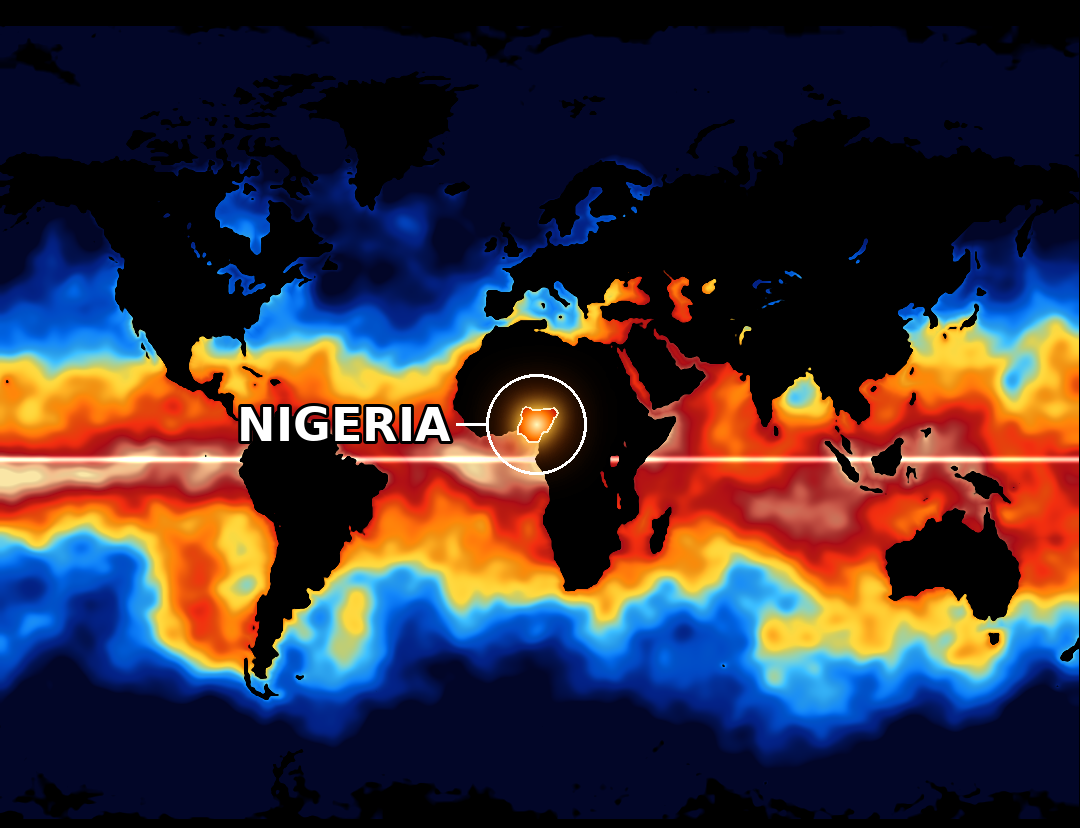
El Niño heat could cause as many as 451,000 more deaths around the world than a normal year between June 2026 and the end of February 2027, according to a report from the Climate Impact Lab, a research group based at the University of Chicago. The report projects the highest national toll in Nigeria, where it estimates 31,400 extra heat deaths between September and the end of February.
The figures are projections, not counts. The researchers compared forecast temperatures with the 1996–2025 average and estimated how many more people would die than in a typical year. The report was released on 23 September 2026. The authors say the methods will be published in a peer-reviewed journal, and I could not confirm whether that has happened yet.
What the report found
The report projects 239,000 extra deaths worldwide over the next six months, with the full nine-month toll reaching 451,000. It expects global land temperatures to run about 1.2°C above normal in the coming months, and about 44% more extremely hot days than in a normal year.
Nigeria’s 31,400 is the largest national figure in the report. It is nearly half of the 66,800 projected across four Sahel countries, where Sudan is projected at 17,500, Niger at 10,000 and Chad at 8,000. About 15,400 of Nigeria’s deaths are projected between December and February. The Sahel figure includes Nigeria, so the country numbers should not be added to it.
Outside Africa, the report projects 19,300 extra deaths in Indonesia, 19,400 across the Philippines, Vietnam, Thailand and Cambodia combined, 15,800 in India and 13,300 in Brazil.
Why Nigeria
The authors point to large temperature anomalies across the Sahel, a large population, and limited protection from heat. Nigeria has 237.5 million people, according to the research team, and more than 60% were estimated to live below the national poverty line in 2025. Many homes with electricity still face power cuts, and many people depend on farming, which keeps them outdoors in the heat.
The people most at risk are those over 65, children aged 0 to 4, people with chronic health conditions, outdoor workers and people with no way to cool their homes.
What forecasters say about El Niño
The Nigerian Meteorological Agency said in its 13 August update that ocean observations confirm the onset of a strong El Niño event in 2026. On 9 October, the World Meteorological Organization said El Niño was “firmly established and strengthening rapidly.” It gave a near-100% chance that it lasts through February 2027 and said it could be one of the strongest since at least 1950. It expects a peak in December, with Pacific sea-surface temperatures forecast to reach record levels between October and December.
More deaths after February
The report’s authors expect El Niño conditions to continue into spring 2027 and the death toll to keep rising through mid-2027. They say heat deaths in India and Pakistan are expected to keep climbing into those countries’ summer. The 451,000 figure also counts only heat deaths. Tom Burke, a cofounder of the research group E3G, told Al Jazeera that it is likely conservative because it excludes deaths from fires, floods and food price rises.
What the researchers say could save lives
The report lists measures it says could prevent deaths:
- Early heat warnings and heat action plans
- Health outreach to older and vulnerable people
- Cooling centres and hydration stations in high-risk areas
- Protection for outdoor workers during the hottest hours
- Extra hospital staff and supplies ready for heatstroke cases
Michael Greenstone, a University of Chicago economist and cofounder of the Climate Impact Lab, said the report “allows decision-makers to see exactly where emergency actions can be taken now.”
Caveats
Akshay Deoras, a research scientist at the University of Reading, called the report’s figures subjective and said he is sceptical about how deaths are spread between regions. He said the India number is not convincing because the period does not include India’s summer. He also noted that scientists have not seen an El Niño like this one before, so surprises are possible.
Sources: Climate Impact Lab, Al Jazeera, Gavi VaccinesWork, Arise, Okay Africa, News On AIR on the WMO update, NiMet.