Author: Nasir Ahmed Achile

  • Inside Dangote Refinery’s $5 Billion ‘People’s IPO’ Plan for October

    Inside Dangote Refinery’s $5 Billion ‘People’s IPO’ Plan for October

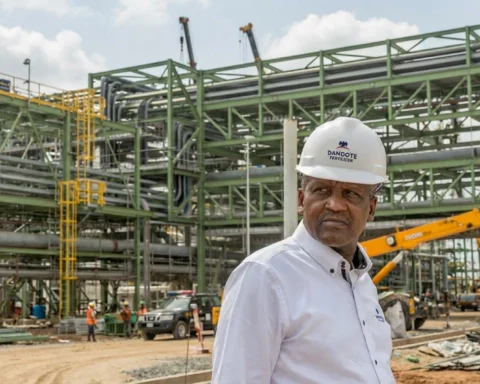
    Dangote Petroleum Refinery is preparing for a massive October initial public offering (IPO) aimed primarily at Nigerian retail investors. Chief Executive Officer David Bird stated that the company is prioritizing local participation over an immediate foreign listing. The refinery submitted an application to Nigeria’s Securities and Exchange Commission for a $5 billion offering.

    The decision puts local ownership at the forefront of what could become the largest stock debut in African history. Bird described the move as a “people’s IPO” designed to allow everyday citizens to share directly in the refinery’s financial growth.

    Despite long-standing industry rumors targeting a prompt listing in London, the company will delay international listings for at least three years. Executives stated that the refinery must establish a clear track record of performance before approaching foreign capital markets.

    This strategic pause follows a successful $2.5 billion private placement completed in July. That private investment round valued the Lagos-based facility at approximately $40 billion.

    Operational momentum continues to build across domestic and international markets. The facility currently supplies the majority of Nigeria’s domestic gasoline and diesel demand. Furthermore, the refinery expanded its regional reach by becoming Europe’s largest supplier of jet fuel during the summer of 2026.

    Looking ahead, leadership plans to double current production capacity to 1.4 million barrels per day over the next three years. The expansion effort will draw funding from corporate debt and equity raised through the October offering.

  • 5 Platforms Documenting Nigerian Music

    5 Platforms Documenting Nigerian Music

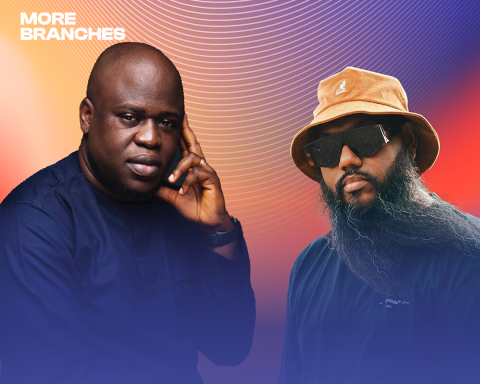
    In Nigerian music, the story is no longer told by sound alone. It is constructed in real time by platforms that track, interpret, and give it language. As Afrobeats expands globally and the local ecosystem grows more complex, a new kind of power has emerged, one held by publications that sit between the music and its audience. They do more than report. They validate success, frame narratives, and, increasingly, define what matters.

    Five platforms in particular illustrate how this media layer is evolving.

    TurnTable Charts

    When TurnTable Charts launched in 2020, it did something deceptively simple. It counted. In an industry long driven by perception, it introduced a system that measures performance across streaming, radio, and television, aligning Nigeria more closely with global chart standards. Its Top 100 quickly became a reference point, not just for fans but for labels, managers, and artists seeking clarity in a crowded market.

    But its real contribution lies in what it makes possible over time. By standardizing data and publishing it consistently, TurnTable is building an archive, one that documents the evolution of Nigerian music with precision. Success is no longer anecdotal; it is recorded, ranked, and revisited. In doing so, the platform has shifted the conversation from who feels big to who is demonstrably impactful.

    49th Street

    If TurnTable is about measurement, 49th Street is about meaning. Positioned as a professional publication at the intersection of music and culture, it approaches Nigerian music with a level of editorial care that resists the speed of the internet. Its work is less concerned with immediacy and more with interpretation, situating artists within broader cultural, aesthetic, and social contexts.

    Profiles read with intention, essays unfold with clarity, and emerging acts are given the same critical attention as established names. This consistency has allowed 49th Street to carve out a distinct voice, one that values documentation as much as discovery. In a landscape saturated with updates, it offers something rarer: perspective. The result is a body of work that feels less like content and more like a record.

    Pulse Nigeria

    Where 49th Street slows things down, Pulse Nigeria accelerates them. As one of the country’s largest digital media platforms, it operates at the speed of conversation, translating moments into headlines and headlines into trends. Its reach is expansive, and its output constant, making it a central node in how music news travels.

    Pulse thrives on immediacy, but its influence goes beyond speed. Consistently spotlighting certain stories, artists, and angles helps shape public attention at scale. It is where narratives gain traction, where casual listeners encounter industry developments, and where momentum often becomes visible. In that sense, Pulse does not just reflect the culture; it amplifies and, at times, directs it.

    NotJustOk

    Before streaming platforms and algorithmic discovery, there was NotJustOk. Emerging in the late 2000s, it became a crucial online distribution hub for Nigerian music, offering artists a direct line to audiences at a time when infrastructure was limited. Its influence in that formative period cannot be overstated.

    What distinguishes NotJustOk today is the weight of that history. It has evolved into a broader platform, incorporating editorial content and curated rankings, but it still carries the authority of having been there early. Many of the industry’s defining moments passed through it first. As the ecosystem has professionalized, NotJustOk remains a reminder of the digital groundwork that made the current boom possible.

    Volume9ine

    At the edges of the mainstream, platforms like Volume9ine are redefining how discovery happens. Smaller in scale but sharper in focus, it reflects a shift toward curation over aggregation. Its attention is directed at emerging artists, alternative sounds, and the micro-scenes that often escape larger platforms.

    This positioning gives it a different kind of relevance. It is less concerned with documenting dominance and more interested in identifying movement. In a fragmented musical landscape, where audiences are increasingly segmented, that role becomes critical. Volume9ine captures the early signals, the subtle shifts that later shape the center. It is, in many ways, a publication built for what comes next.

    Taken together, these platforms map the contours of Nigerian music media today. Data brings structure, editorial brings depth, scale brings visibility, legacy brings context, and curation brings foresight. None operates in isolation. Instead, they form an ecosystem, one that not only reflects the industry’s growth but actively participates in it.

  • How Camillo Doregos & Mark Mac are Building a Sustainable Future for African Talent Through DC Talent Agency

    How Camillo Doregos & Mark Mac are Building a Sustainable Future for African Talent Through DC Talent Agency

    Talent agencies play a crucial role in various industries, serving as intermediaries between talent and talent buyers, employers or contractors. It is often more ideal for skilled people to focus on honing their crafts, than spending time trying to be on top of every single detail of the business side of things.

    And particularly as African music is on the up right now, many artists require proper representation that keeps their business clean so that the music can continue to grow from an enabling environment, which will in turn equip African music with the structures it needs to be exported in an auspicious manner.

    That’s where DC Talent Agency comes in; as an agency in the heart of African music’s international movement, it provides talent development, promotion, and management services to its clients in the music and entertainment industries. They work with storytellers, trendsetters, icons, and thought leaders who shape pop culture. With a goal of creating bespoke infrastructure, they employ distinct strategies that have helped Africa’s big stars grow bigger.

    Founders Camillo Doregos and Mark Mac met by a chance encounter on the road at a festival in Belgium in 2019, and instantly clicked over a conversation about the sustainable growth of African music on the continent, which made them aware of their shared values, as well as their unique positions at the nexus of music movements in Western and Southern Africa.

    They joined forces to form DC talent agency, which has since then, grown the careers of some of Afrobeats’ and Amapiano’s biggest stars like Pheelz, Uncle Waffles, etc. Breaking out new stars like, TxC, and through the agency, they have been able to build sustainable touring structures for artists in their roster as well as establish best practices with promoters and talent buyers across the continent.

    I caught up with Doregos and Mark to discuss the vision of DC Talent Agency, how they met and continue to make things work, watershed moments in Pheelz’s and Uncle Waffles’ growth, as well as building sustainable structures for African talents on the continent as they export globally.

    Why did you guys feel the need to start this agency when you did? And what was the major push or motivation at that time?

    Doregos: One of the major reasons we decided to start this agency was that we noticed that in Africa, or with a lot of African talents, there was a lack of agency work in terms of talent, booking live shows, and representation.

    And even actually creating a structure for them to tour, for them to even do live shows. And also, there was also distrust between the talent buyers, the promoters, and the talents themselves. Because most of the time, you find out that people, back then would be like “oh we paid this artist and this artist didn’t turn up,” or they pay a third party and the third party didn’t pay the artist so the artist didn’t turn up.

    So there was a lot of distrust and that was actually killing the culture in African music, and in traveling globally. So we saw that there was a loophole there and we decided to create a solution to solve that problem. So that’s one of the major reasons why we started DC, to be able to solve these problems.

    And so far we’ve done a very good job.

    Camillo Doregos

    Mark: It’s about being able to conduct business in a professional way because before, I don’t think, before DC Talent, I don’t know of any agency that’s able to do the kind of bookings that we’re doing with the kind of artists that we are doing for.

    To create the space so that we could create the platform for artists to actually tour Africa first and then obviously outside. I think it’s also important to understand that we have set up the tour circuit in Africa. So we have partners in each of these countries.

    We’re able to say, listen, this is my artist. They’re able to book them and then we can create, for example, an East African tour and a West African tour. So I think that’s also very important to mention.

    For many years, there’s been this phenomenon where everyone is doing a world tour, but it’s Europe, North America, basically. What are things that could be done to produce better shows for African stars, and in what ways can more African stops be inserted into the world tour plans of global stars.

    Doregos: Africa has the capacity to basically produce quality shows, now, the most important thing about Africa is finding the right balance, and understanding that it’s a business, not a hustle.

    You have to find the right promoter that understands the business, and understands that I’m investing X amount to basically make profit as well. And not to run out of business. One of our key things that we do is, we don’t work just for the artist, basically putting our talents into venues, shows, concerts.

    We also look after the promoters as well, to be able to find a fine balance to be able to keep them in business. To keep doing more and more quality shows over and over again. So sometimes with touring in Africa, one of the challenges is basically the artists not understanding their will to sacrifice on their fees, in order to create the proper circuits.

    Because you go to Europe, you go to the US, you go to places like that, they pay you peanuts, or basically you have a split sheet, you have a performance offer sheet, you know how much this venue is going to sell, most of the time you walk home with negative. But that’s you taking the time to invest in yourself. But when it comes to Africa, most of the time they look at it as a cash cow, basically, without wanting to invest.

    There are a good lot of promoters and partners that we have in East Africa, Southern Africa and West Africa, that we’ve done loads of concerts with and helped talents to build. So one of the main focuses right now for us is, or for African talents, is to be able to collaborate. The same way you would go to a Live Nation or whatever promoter outside and do a performance offer sheet, it’s the same thing you can do.

    And now that you have a lot of systems in place, right, there are Fintech companies like Paystack, Flutterwave, all these other guys that payment solutions can be easily tracked through, everything can be digitalized everything can go online, there are ticketing platforms that sell tickets.

    There’s Bushfire Festival in Swaziland, that’s a big festival where you even pay for your food and drinks with your wristbands, they’ve taken that technology into Uganda as well and other countries. You have Ticket Sasa in Kenya.

    So there are loads of platforms like Ticketmaster that people have created solutions for, that you can actually now track where your money is with ease.

    Then now pairing up with the right promoter at the right fee for yourself as well investing knowing that in the long run you’re gonna actually have a proper touring circuit and then make more money in the long run.

    Mark: I still think that we’re not where we should be because obviously we can do small and medium venues but we still struggle slightly with larger venues. So I think it’s still a challenge for us to be able to get the right large-sized venues. But I think it’s important to understand that the trust element between us and the promoters is vital. Because if you think about it, we actually work for both sides, we work for the artist and the promoter. Like Doregos said, we have to understand what the promoter’s trying to do.

    In some of the countries we’ve worked with developers, I’ll give you an example, in Tanzania, we’ve taken a venue called Elements, where you would see that most of the South African, African acts have been… even during COVID when nothing was happening in South Africa. We were able to still tour and people were still being able to feed their families.

    During COVID, even though South Africa was shut down, we were able to take people outside. But what we’ve done with our specific venues also helped them with saying, “hey listen guys, if you want to do this properly, this is what you have to do. This is the kind of sound that we need.” So we help them with the sound. “This is the sort of promo you need to do.”

    “This is the the flavor, you know, the feel of the event. This is how you should make it.” “So if you want to make it a South African night, this is what the elements should add.”

    So I think we worked with them for a few months, maybe three or four months, and now they understand what must happen. It’s almost like we have a certain standard within which we work. So for example, if you’re booking our artists, you know you have to book the right flights. You can’t book them from South Africa to Ethiopia then back to Tanzania. You know the flight has to be right.

    Mark Mac

    You know that the transportation has to be a decent SUV so you can’t just say you’re gonna send an Uber. You know that the accommodation has to be five stars as proper. We’ve created those standards in each country so now it’s easy for us we don’t have to ask all these questions you know, like if we booking, we already know okay this is what’s gonna happen here. The sound is gonna be amazing.

    We know that the the rider for the sound is correct. We know that they’re gonna have the drinks rider, for example. We know that the hotels are gonna be taken care of. We know that the transportation is the transportation we want. So that’s also very important.

    I mean, I think that it’s a trust element as well. Like when you know you’re booking with us, so even the artist knows if we are booking them in a certain place, this is the sort of treatment that they’re gonna get. It’s not gonna be, you know, like halfway. It’s always gonna be the full way. So yeah, I think that’s also very important to understand that, you know, so we are now able to say, listen guys, this is the show, this is what we’re doing, and once you do the first show with us, you understand how we work as well. And then you’ll always want us to book the show for you.

    Doregos: And just to add to that, to give an experiment in terms of when I was talking about how we work. In terms of right pricing. In December 2021, we did an NSG show in Nigeria, at the Ultima Studio, NSG wanted to come to Nigeria to do a show and they came to us and we said, we can help you produce the show and partner with you on the show.

    But we were able to price the show at the right price point that was able to allow them to build and pull out a thousand people to their venue, and sold out the show.

    And this is just based of them understanding that yes they’re the UK and they’re hot right, and they take maybe X amount, but coming to a new market right they are willing to invest their time and their money in this, and basically we did that and got a successful show.

    So it’s those kinds like things we try to do across the continent as well, whereby we’re able to tell acts that “Trust us, we will deliver you a quality show, you get to meet your audience, grow your brand and at the end of the day we get to do good business.

    I found that Mark, you were a former head of international live division at UMG and also, Doregos you were the manager for Mr. Eazi. How did you two meet? How did you two sync? And how do your expertises continue to sync on a day to day and the bigger picture as well?

    Mark: Initially, the business that I was in, was we were bringing talents or artists into Africa, if you think about the South African landscape, the culture events, we did Migos, French Montana, Chris Brown, Lil Yatchy, Gunna, Meek Mill, all the urban guys that came to South Africa, that was our main focus and business.

    I met Doregos because I had a booking with Mr. Eazi in Dubai, in 2019 if I’m not mistaken, we did the Mr. Eazi show, and then I had a show in Belgium called Oh My! Fest, which he was also booked on, and then they’d also come to Belgium for that, and then we spent some time together because we drove from Brussels to Amsterdam for the next show, which was in Amsterdam I think, but Doregos had Mr Eazi, King Promise and a few others on the line up as well for that show. So that’s when we kind of met and we were like, okay, there’s a lot of synergy. So Doregos is basically in West Africa, what I am in the South of Africa.

    He’s linked with all of the artists, he has these personal relationships, basically with anyone, you know? He was there from the start, like, he has an issue, he can pick up the phone and literally call and say, yo, can you help us with this? This is the issue, you know?

    Same for me, I have this relationship with every single artist, a personal relationship, I can say, in South Africa with any artist, because we’re always booking them on these that we’re doing.

    The synergy was just there bro, it just makes sense now during the time, to create a new business model to take people from Africa into Africa you know and literally Doregos is me, not just like in terms of the connections and the contacts and being able to walk into these rooms, but literally like personality wise.

    And I think the most important thing is that we do what we do because we love it and not for the money. We never ever do anything for money. Doregos and I would sit and talk about things, we’ll have offers for some people, we’ll literally turn down a show with more money if it doesn’t make sense for the artist. We’re not trying to just make a quick buck.

    We’re making sure that the artist is strategically placed in the right way so that we have more opportunities in the future as well. We literally turned down like a 80,000 pound show or 50,000 pound show. Imagine we get less money just because we want them to make sure that the artist is positioned in the right way.

    So bro, it’s very, very seldom that you will find the booking agents or promoters who will always think of the artist first, you know, and not just doing it for money. I think the fact that we love what we’re doing is the most important thing, so everything else is just a byproduct.

    We feel like, do your best and love what you’re doing and then the money will come. That’s just a byproduct of you loving what you’re doing. I think we have the same philosophy in life. And that’s the synergy was just there. It was just like a marriage of two people that it was always meant to be. It’s just that we took, you know, they say we took a long time to find each other, but that’s literally what it is.

    Pheelz’s “Finesse” was a special moment for Afrobeats, And I think what was very interesting about that was how that moment was able to live longer than the moment. How were you guys able to engineer that moment into more sustainably becoming a viable long-term product and not just flaring up and burning out very quickly?

    Doregos: In terms of “Finesse,” firstly credit to Pheelz because he’s been an artist from forever but never just came out to showcase his talent fully. He’s been doing it subtly with writing for artists, with producing, doing backing vocals, there’s a lot of songs that top charts that if you listen properly you’ll probably hear Pheelz’s backing vocals.

    When the moment happened, I think for us it was already time. Even before then in 2020, Pheelz dropped a project called “Hear Me Out.” And a couple of people didn’t believe in him, they were like, just stick to production, you’re not an artist.

    And when “Finesse” popped up, it was like a shock to them, it was in their faces, and then followed by “Electricity,” then followed by “Pheelz Good,” then followed by “Stand By You” and it’s been going on back to back because this is this new journey and the new phase of his career and us as well, like taking in this, right?

    Because you get to the point in time, where I feel like sometimes you just have to do like what makes you happy and have new challenges in life or else you’ll be there. You’ll be there just staying still on the same thing for a long time. Taking on this new challenge, trying to do this on a different scale, actually bringing someone’s dream to life is one of our passions. And that’s what helps keep the sustainability and the drive of making things happen.

    Keeping dreams alive is what keeps us going every single day and that’s what keeps us making us making music. The way we see music is like a spirit whereby you just connect and just put out that quality material that has always been embedded in you and just putting it out there for the world to hear and let the world decide how they use your music whether to heal, whether for fun, whether for laughter, whether to mourn.

    Something Mark said earlier about how when you guys were connecting and you thought of this vision of taking African artists into Africa. Why was that the goal from the jump?

    Mark: This is also very important to also mention, in terms of culture, I think this is the first time, because I’m South African based in South Africa and Doregos is Nigerian. I don’t think there’s ever been a connection of South and West like this in terms of in the music space.

    You know, people have always tried to do it if you think about it. Burna Boy and A.K.A. lots of them that tried to do something in the music space, trying to connect the different parts cause it’s one Africa but we’re always segragated. They were able to see each other as Africans.

    For me, it’s important that we understand that we are all Africans, and Africa is for Africans. Instead of us trying to start doing things in the UK where people don’t really understand what we’re trying to do, or in the US, where they don’t really understand, you know, what’s the difference between Afrobeats or Amapiano, we decided as a strategy to first touch Africa.

    Once we touch Africa, we understand the diaspora… so exactly what has happened, I’ll give you an example which will speak to your point. Let’s take Uncle Waffles.

    We first broke her in Africa, I did the first six shows in Africa, personally myself, I went to every one of her shows and we were able to connect the dots in each of these places, and the diaspora was looking at this and be like, yo, this is amazing. What is this Amapiano thing. And then they go back to the UK. And then they start asking for this in the UK.

    The demand starts getting greater, then there’s some guys in the diaspora that live in the US that go back to the US and say like, “yo, tell your friends, yo, have you heard about this? You know, you should bring this to America. You should bring the sound here.” And that’s literally what’s been happening.

    We were able to, I want to say maybe not so much for Afrobeats but for Amapiano, even though you know Doregos is West African, for Amapiano bro what we’ve done, DC talent, we’ve literally exploded this thing called Amapiano into the world.

    Because we’ve taken people to Africa and we’ve made people notice, well, what is this? We love the sound. Let’s take it back home. So we created demand in the UK. We created demand in the US. In fact, anywhere in the world. If you think about in December in Ghana, people are coming to visit Ghana and they go back to their homes. And be like ‘yo this sound was crazy. We should bring it here.’

    So we even helped people to start up their own companies, you know, in the UK, to start doing this kind of thing. They would never give us credit for it, but we’ve been able to do that, and that was the reason why. It was just so that we were able to take the talent, take the music… because it’s all about the music bro, take it into Africa and explode it into the world from Africa.

    And right now, I’ve said for the last 12 months, there’s no place that’s buzzing more than Africa. Look at everything that’s happening, everybody’s looking here, you know, everybody’s trying to look here and see what’s the trends, what’s the latest sound. If you think about the music, this song, “Tshwala Bam,” when you think about that song where it has billions of TikToks, billions. Like every single person in the US knows the song and knows the trend.

    Like that’s just crazy for me as a South African, as someone that’s trying to export the music. Look at Tyla for example. You know what I mean? So it’s all about the sound. It’s us being able to go to Africa but eventually expanding the sound into the world. So that was why it was important for us or for me and Doregos to be able to say okay this is what we have to do.

    Read More: Tyla Interview: “I make dance music. When it comes to Amapiano, you have to dance”

    I think that’s a very key, it’s a great way to look at it and to approach it I believe because I think it’s always better to build that value from your home base as opposed to always trying to look outside for validation.

    Mark: People always think the grass is greener on the other side, you know. So they always want to go and try to do things outside. But literally, bro, Africa is where it’s at. Like literally, Africa is where it’s at.

    Doregos: I always say something that the definition of going global to me right now is you’ve been able to play to your audience back in Africa and your audience in diaspora, which is over a billion globally. And so for you to be able to play to them, for them to hear your music, that is global.

    So if we are able to keep delivering quality music and quality talent to our people back home and in diaspora, then I think then we’ve made a very big landmark. We’ve made a very big achievement.

    Is there a particular quality, that you see that makes you believe, this is star power or potential from someone that can do a good job at representing the scenes globally?

    Mark: I think it’s a combination, but I would say it’s that kind of star power. And I’ve never ever worked with any artist that I don’t believe in. For me it’s about also how much the artist actually wants themselves.

    I remember all the things that Waffles is talking about or has now, even three years ago when she started. It’s what she wanted. So she also had a vision for herself. You know, sometimes you get these kind of artists that will just go wherever the wind blows. But for me it’s important that the artists themselves understand their journey and what needs to happen.

    So I think it’s a combination of talent, star power, also luck, to be honest. Because you need everything to work together, you know? We help you with putting you in the right spaces, with music and music strategy, and then the rest is up to you, and also, obviously, you know, luck doesn’t not help.

    That’s it for myself. Every single artist that we work with has star power. We would have 10 artists coming to us saying, yo, can you take over our bookings, please? And I’ll be like, no. We have a boutique agency, and we want to work closely with the number of people that we already have. And I’ve turned down quite a few, actually. And Doregos the same.

    It’s almost a kind of a feeling, you know? You need to feel something, so I can’t tangibly define it more than just that it’s a feeling that you get. I remember when Doregos played me “Finesse,” the first time I was like, bro, this one is going to do things. No, this one is the one. Literally, the first time you played it for me.

    And then, like I think maybe like a week or two weeks later, Pheelz was performing the song with Davido at the O2 Arena. So you need to understand, like, you have to feel it. I don’t know if it’s something that everybody has, but I have it and Doregos has it, it’s a feeling. That’s what I can attest it to be.

    Doregos: As Mark said, like luck. So for example, the moment that actually even helped break “Finesse” beyond everything was the performance at David’s show. I think, two weeks before then, I just made, we didn’t even know we were dropping “Finesse.” I just made Pheelz apply for a UK visa, just to go for a session in the UK. His visa literally came out on Thursday before David’s show on Friday.

    And that emphasized luck and also like faith, basically just playing into that. His visa came out on Thursday evening, he picked up the visa, went to W Bar, Friday morning he was on a flight, landed in London by 4 p.m, didn’t even have clothes, Adekunle (Gold) had to give him clothes to wear to style him.

    And him going out there to perform with David and the song just came out three days before, and everybody was singing the song, just created that affirmation that this song is a hit, right? And that just helped. So luck also plays a part in everything you do.

    Mark: Or some people say the grace of God. So you can call it luck or you can call it blessings. It’s just how you define it.

    From your website, I’ve seen that you guys have facilitated some brand partnerships. How do you know something is a good fit in a way for a brand partnership between an artist and a brand?

    Mark: I think it’s understanding the business and also understanding the artist. We have this thing called a roadmap. If you sign to our agency, we give you the roadmap, and the roadmap has a whole lot of questions in it that asks these questions about who do you want to work with, like in terms of music, also in terms of partnerships and brand partnerships. Where do you see yourself?

    If it’s like a fashion brand, which of these fashion brands do you want to work with? That’s kind of the foot that we would normally look at, but we also understand the industry quite well. We would suggest even to people, like I think Doregos has done these BoohooMan deals very well. I think he’s done like seven products.

    But I mean we understand the sort of what the industry needs. Like what the client needs, because we understand our clients intimately too, as well as the others. So we know, okay, this one works here, this one works there.

    Doregos: And also, it just boils down to our fundamental principle, right? We just don’t work for the talent, we work for both the talent and both the talent buyer or the partner. So that way we can stay in business longer and it’s a win-win situation for every single one of us.

    Yeah, that makes sense. And I feel like there’s a lot of finesse, if I may, that comes over time of years of building that business acumen to just kind of know, what might work and what might not work.

    Mark: 100%. I think the fundamental thing is people always say you’re in the music business. No, it’s not the music business. It’s a relationship business. Everything that we do is based on relationships and trust.

    I can talk on the Sprite deal with Omah Lay, and the big corporate couldn’t get it done. And then, you know, it was two phone calls. We were able to get Omah Lay on the Sprite deal. You know, he made a packet of money on that deal, for example.

    But it’s just being able to also get to the root. You know what I mean? Like, the NBA, for example, was trying to get some of these artists to do these watch parties, and they waited for three weeks to get an answer. We got an answer the same day from three of the four artists that they wanted. So they couldn’t understand like how are you guys able to actually this thing so quick. It’s because of the relationships that’s what it is.

    I also saw that you guys are working with creators/influencers. I saw one particularly on your website. Why did you guys choose to venture into that as well?

    Doregos: One of the reasons why is because we feel like we just need to diversify our portfolio and give more opportunities to a lot of talents out there. I see them as talent, I don’t see them as creators basically.

    I say if you can peel orange, you can peel the orange very well, you’re bookable. And we can book you, we can represent you. There are loads of talents out there in Africa, the same situation is happening, a lot of them can’t find the right partners to work with, right brands to work with, and even do good business or even look after their best interests to a standard quality that is expected worldwide.

    To be able to take them on and help them structure their business and actually help them to make enough income to be able to take care of themselves and their family.

    It’s a project that Tomiwa on the team is really passionate about and so basically he leads the front on the creator side, so I’ll let him add something to it if he wants to.

    Tomiwa: I think the line between being a creator and being an artist, especially right now with TikTok and social media, the line just continues to blur every day. So you find artists that are becoming content creators, content creators that are becoming artists and all that. And because basically what were before creating the creator division is that we were connecting artists with global opportunities.

    So it’s like, why can’t we do that for African creators as well? So yeah, connect them with global brands like House of CB, I mean, brands that they typically won’t be able to reach on their own.

    What new frontier is you guys’ mind in terms of the agency and after everything that you guys have been able to do up until now, what do you envision that could be a next phase?

    Mark: I think in terms of territory, because I think we’ve broken East and West Africa, but North is still, is something, I think I did one show in Morocco, but there’s, you know, there’s the North side, there’s Egypt, there’s Tunisia, there’s Morocco, these places that we’re still trying to get into.

    For me, the new frontier would be the north as well as the east of the world. So I’m talking about places like Tokyo, Japan, China, just to be able to break into those kind of markets.

    We’ve had a very rich conversation and if there’s anything that might be left wanting, I’d like to open the floor for you guys to have the opportunity to say any other thing you would like to say

    Doregos: I think the only thing is just making people understand our talents and our standard. You have to believe in your own because at the end of the day, one thing we’re trying to be very careful about or we’re noticing about is that yes, with African music, Afrobeats, Amapiano, everything, actually African music basically, is growing tremendously and it’s creating a lot of opportunities,

    But we also have to be careful and kind of like kind of gatekeep it a bit in terms of how we work and partner with people across the world, because if we’re not careful what has happened to other genres from Caribbean music to Latin music can actually happened to us again, and this has been happening in terms of like now, the A-list are very big and we kind of don’t have any B-list acts in the middle and the rest of the acts that we have are at the bottom.

    Now a lot of a lot of promoters, whether it be small promoters that always push the culture cannot even afford to book an act anymore, because of pricing, and of politics in the agency game in the global space,

    You might be with an agency that doesn’t want to work with an African promoter that does good quality business, but will rather give it to someone else that is his friend because it feels like they can make it buck.

    There’s trickery and politics that goes on in this and that way that would also kind of like start diminishing the value that African music has and we’re already seeing that people are less booking artists and now just booking DJs, and now you have an influx of DJs, now you can go to an R&B party, you can go to an Afrobeats party, Afrobeats and brunch, and it’s going on, so very soon, it’ll be like, what’s the point of actually booking an artist anymore?

    Right, and so that connection between the fans, to be able to see talent, to see the acts in real time, will then diminish, and before you know it, we’re back to, oh, where’s Afrobeats today? And we just hope that in the next couple of years we don’t get to that stage we should be able to keep it for a much longer time and actually let it stay

    Because I feel like African music is the one genre that is all about love, energy and vibes and inshallah, party, it’s all about enjoyment, feel good music, that’s what that’s what African music is.

    Mark: From my side, just to let people know that DC Talent agency, we’re not just here for the money, we actually care about what we’re doing. Fundamentally, we care about our artists and we care about the music getting out there. That’s really my two cents.

    Doregos: And the last thing that came to mind is that in terms of like traveling in Africa, people experience difficulty traveling across Africa, transportation, visa… all those things are things that we’ve been able to navigate, even with our talents then going to the US, Europe, Africa, we actually do beyond bookings, we are actually involved in making sure we help them, put them with immigration lawyers, not visa agents that can actually give them the best advice.

    To get them the right document and the right visa to play in the right territories. Connect them with tax advisors to help them. We go beyond just booking and actually care about the full ecosystem that surrounds the talent.

  • Nigerian Military Rescues 350 Hostages from Boko Haram in Sambisa Forest

    Nigerian Military Rescues 350 Hostages from Boko Haram in Sambisa Forest

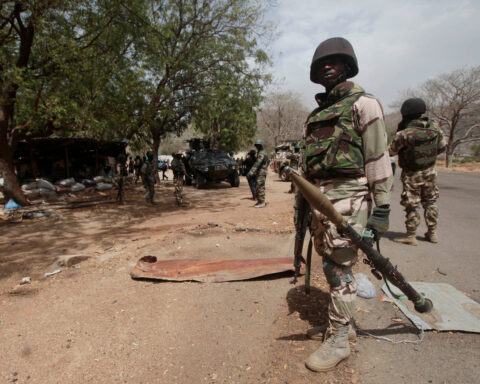
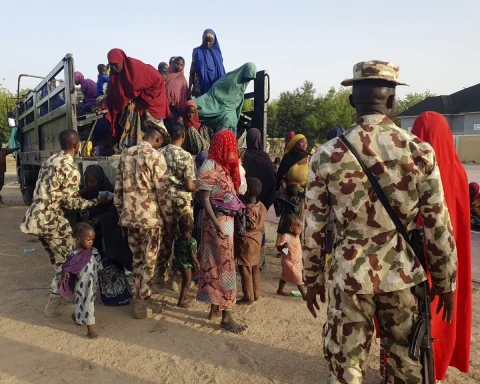
    In a major operation, the Nigerian military freed 350 hostages, mostly women and children, who had been held captive for months or years by Boko Haram extremists in the northeastern Borno state.

    The hostages were found in the Sambisa Forest, a longtime Boko Haram stronghold, during a days-long military operation, according to Major General Ken Chigbu, a senior Nigerian army officer. He presented the rescued individuals to authorities in Maiduguri on Monday.

    The group comprised 209 children, 135 women, and six men. Many appeared exhausted and bore signs of prolonged hardship. Some of the women were accompanied by young children, believed to be born during captivity from forced marriages, a tactic Boko Haram has employed against female hostages.

    One rescued woman, Hajara Umara, spoke of the fear that kept them captive. “The thought of escape was always there, but impossible with the children,” she said. “Escape attempts were met with torture and indefinite imprisonment.”

    The military operation targeted Boko Haram hideouts within the Sambisa Forest, a former wildlife reserve that has become a launchpad for attacks by the group and its splinter factions. The operation reportedly resulted in the deaths of some extremists and the destruction of their makeshift camps.

    The freed hostages were transported to the Borno state government house, where they will receive care and assistance as they prepare to return home.

    Boko Haram, a violent extremist group seeking to establish Islamic rule in Nigeria, has been responsible for widespread terror since its insurgency began in 2009. The United Nations estimates the conflict has displaced over 2 million people and claimed at least 35,000 lives. The group’s kidnapping of 276 schoolgirls in Chibok in 2014 drew international condemnation. While school abductions have become less frequent, kidnappings for ransom remain a serious threat in Nigeria’s restive northwest and central regions.

  • At Least 40 People Killed by Armed Gunmen in Plateau State

    At Least 40 People Killed by Armed Gunmen in Plateau State

    Armed men on motorcycles launched a deadly raid on villages in northcentral Nigeria on Monday night, leaving at least a dozen villagers confirmed dead, according to authorities. Local sources, however, reported at least 40 casualties.

    No group has claimed responsibility for the attack, which bears resemblance to the ongoing violence in the region fueled by competition for land and water between nomadic herders and settled farmers. These conflicts have claimed hundreds of lives over the years.

    Officials in Plateau state, where the attack occurred, confirmed 12 fatalities in Wase district’s Zurak community. Eyewitness accounts, however, placed the death toll at a much higher 40. Discrepancies between official figures and witness reports are not uncommon in such incidents.

    “Security forces are combing the area to determine if there are additional casualties or individuals with gunshot wounds,” said Musa Ashoms, Plateau’s information commissioner, following reports of villagers fleeing into nearby bushes.

    The attack comes on the heels of a security operation targeting hideouts used by the assailants, according to Idris Wase, a federal legislator representing Wase district. The operation reportedly aimed to “wipe out” the gunmen from the area.

  • Ghanaian-American Ohemaa Nyanin appointed General Manager of WNBA Golden State

    Ghanaian-American Ohemaa Nyanin appointed General Manager of WNBA Golden State

    WNBA Golden State has appointed Ohemaa Nyanin as its new general manager, the team announced on Monday. Nyanin’s responsibilities will encompass all aspects of basketball operations, including roster management, team development, and player growth. She will be reporting directly to Joe Lacob, the co-executive chairman and CEO of the Warriors, and is set to assume her new role next week.

    “I am truly honored to be chosen as the first general manager of WNBA Golden State. Throughout the interview process, it was clear that bringing a WNBA team to the Bay Area was meticulously thought out and those involved are motivated changemakers who will be proactive in growing the league. I look forward to joining this franchise and building a competitive basketball team that the fans deserve.”

    Ohemaa Nyanin

    Nyanin joins WNBA Golden State from the New York Liberty, where she served in various roles for over five years, most recently as the team’s assistant general manager.

    Prior to her time with the Liberty, Nyanin spent five years at USA Basketball as the assistant director of the women’s national team. In this role, she guided youth national teams to international competitions, managed delegation logistics, and provided translation services in Spanish-speaking countries.

    Nyanin played a pivotal role in the USA Basketball Women’s National Team’s gold medal victories at the 2016 Rio de Janeiro Olympics and the 2018 World Cup in Spain.

  • The African Artists Foundation in Lagos calls for justice after unlawful occupation by Keystone bank

    The African Artists Foundation in Lagos calls for justice after unlawful occupation by Keystone bank

    The African Artists’ Foundation (AAF), a Lagos-based non-profit dedicated to promoting African art for nearly two decades, has encountered significant obstacles.

    Known for the Lagos Photo Festival, West Africa’s first international photography event, the AAF has held 14 successful editions, solidifying its position as a leading force in the African art scene. However, the organization’s work has been disrupted.

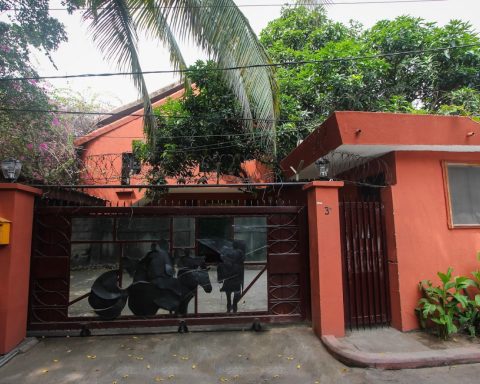
    Keystone Bank’s takeover of AAF’s office in Lagos, following a dispute with the late landlord’s estate, has prevented the organization from accessing its premises and valuable equipment, including donated artworks.

    “Sometime in October 2020, we were evicted by Keystone Bank in the most embarrassing and humiliating manner. Claiming ownership through a court order.

    They claimed several properties belonging to the Umanah family, our landlords, claiming they were owed money by the late patriarch of the Umanah family”.

    According to AAF’s founder and director, Azu Nwagbogu, the organization secured N600 million through donors to acquire the property but says the bank has neither completed the purchase nor returned the funds.

    “The court learnt of an earlier suit on the same subject matter, where the court had determined after due and necessary determination of issues that the Umanah family not only didn’t owe the bank, but were in excess credit with the bank.”

    “After careful consideration, the court dismissed the suit and sternly admonished the lawyers of Keystone bank for abuse of the court process.

    Based on this, we approached the bank for a refund of the purchase price of N600m, reminding them of the indemnity clause and letter signed by the bank management. The bank instead through its lawyer’s blatantly refused to refund the purchase price.”

    In response to this situation, AAF will be shifting its focus to intellectual development and training, particularly for young curators, operating from Cotonou, Benin Republic, for the time being.

    AAF has also urged the Nigerian president to intervene and prevent similar incidents from damaging the country’s image and hindering the efforts of dedicated organizations like theirs.

  • Universal Music Group is acquiring a majority stake in Mavin Global

    Universal Music Group is acquiring a majority stake in Mavin Global

    Universal Music Group (UMG) announced on Monday it has acquired a majority stake in Lagos-based music company Mavin Global (Mavin), known for shaping the careers of many prominent Afrobeats artists.

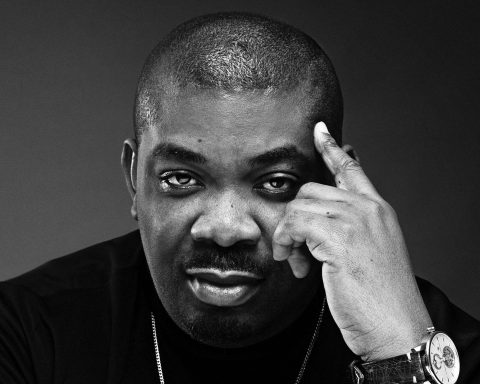
    Founded in 2012 by Michael Collins Ajereh, professionally known as Don Jazzy, Mavin has played a key role in propelling Afrobeats artists to domestic and international success. The move comes five years after Mavin secured investment from Kupanda Holdings, with TPG Growth exiting the business and Kupanda Capital remaining a minority investor and advisor.

    UMG emphasized that Mavin will retain autonomy over its strategy and artist development, with Don Jazzy and Tega Oghenejobo continuing as CEO and COO, respectively. The deal, subject to regulatory approval, is expected to close by the end of the third quarter of 2024.

    Mavin boasts a roster of top Afrobeats artists, including Rema, whose collaboration with Selena Gomez, “Calm Down,” reached number three on the US Billboard Hot 100, a major milestone for the genre. Additionally, Ayra Starr’s “Rush” earned a Grammy nomination, and her music video holds the record for most views by a female Nigerian artist on YouTube.

    UMG’s global network is expected to amplify Mavin’s operations in Nigeria. While Virgin Music Group currently handles international distribution outside Africa for artists like Rema, UMG highlighted existing collaborations with Mavin artists, including Ayra Starr’s partnership with Republic Records and Lifesize Teddy’s with Interscope.

    The partnership aims to accelerate Mavin’s growth and expand the reach of its artists globally. UMG sees this as a step towards establishing Mavin as a “super-serving, pan-African entertainment company.” This vision is anchored in Mavin’s Artist Academy, which trains new talent, and their executive leadership program, which fosters the next generation of music industry leaders in Africa.

  • BlackRock is acquiring Adebayo Ogunlesi’s Global Infrastructure Partners for $12.5 billion

    BlackRock is acquiring Adebayo Ogunlesi’s Global Infrastructure Partners for $12.5 billion

    BlackRock, the world’s largest asset manager, has announced its acquisition of Global Infrastructure Partners (GIP) for about $12 billion in cash and stock. The acquisition is part of BlackRock’s increased focus on infrastructure, which CEO Larry Fink described as “one of the most exciting long-term investment opportunities”.

    As part of the deal, GIP’s management team will lead a combined infrastructure private markets investment platform at BlackRock. The platform aims to be the preeminent, one-stop infrastructure solutions provider for global corporates and the public sector, mobilizing long-term private capital through long-standing firm relationships

    The acquisition is expected to close in the third quarter of this year. BlackRock will pay $3 billion in cash and 12 million of its own shares, worth about $9.5 billion based on the closing price of the shares on Thursday.

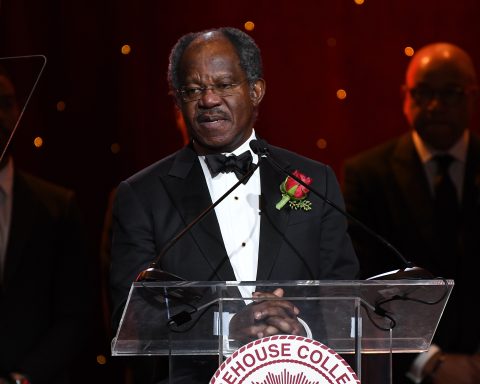
    GIP, founded in 2006 by prominent Nigerian lawyer and investment banker Adebayo Ogunlesi, manages more than $100 billion in client assets across infrastructure equity and debt, with a focus on energy, transport, water and waste, and digital sectors.

    Ogunlesi has had a remarkable career, having previously served as the head of global investment banking at Credit Suisse First Boston. He is also known for his academic achievements, having graduated from Oxford University, Harvard Law School, and Harvard Business School.

    Ogunlesi’s work has earned him recognition and accolades, including being appointed as a member of former U.S. President Donald Trump’s Strategic and Policy Forum. His success and leadership in the global business arena make him an inspiring figure for young people, especially in Nigeria and across Africa. Adedayo Ogunlesi was referenced in Burnaboy’s 2020 hit single ‘Wonderful’ where he praised the businessman for his hardwork and success.

  • Show Dem Camp’s Palmwine Music Festival Will Take over Summerstage in Central Park, New York on August 27

    Show Dem Camp’s Palmwine Music Festival Will Take over Summerstage in Central Park, New York on August 27

    Alte’ originators and leading Nigerian Hip-Hop duo Show Dem Camp expand their Palmwine Music Festival to North America. Making it the first African Music Festival to takeover the iconic Central Park in New York City, as part of the 2023 SummerStage series.

    The original African music festival, Palmwine Festival makes its American debut on 27th August 2023. The festival, launched by Show Dem Camp in Lagos, held its fifth edition in December 2022, with over five thousand people in attendance. Since its inaugural event in 2017 it has become an annual event staple in Lagos and London, with New York set to follow suit.

    Show Dem Camp founded the festival as an extension of their Palmwine Music releases. SDC have had the best of the best from African music join their Palmwine series. From Oscar Nominated Tems to Grammy winning Burna Boy. The duo have always had their ear to the ground and have been the home to some of the best Afropop artists, early in their ccareers.

    London and Lagos editions saw Oxlade, Amaarae, BNXN fka BUJU, Lojay and Ladipoe grace its stage. 2023 is set to be even bigger. 

    Palmwine Music Festival NYC will see Show Dem Camp and friends perform Palmwine classics with familiar friends and new faces. 

  • Audio Girl Foundation Launches Fundraising Campaign to Support African Women in Music Technology and Business

    Audio Girl Foundation Launches Fundraising Campaign to Support African Women in Music Technology and Business

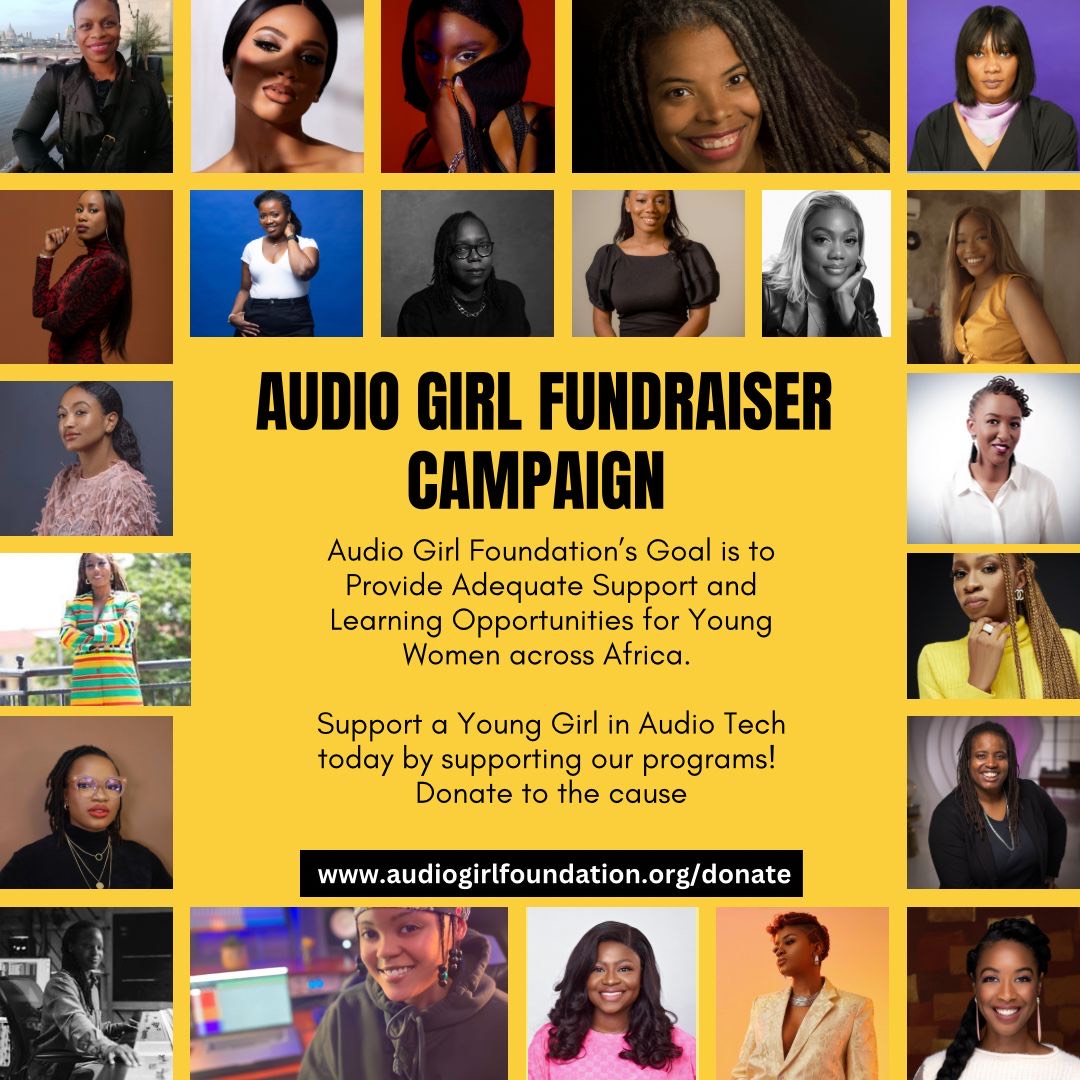
    Audio Girl Foundation is proud to announce the launch of its fundraising campaign aimed at raising $10,000 (5 million naira) to support young African women who aspire to work as professionals in the music and audio industry. With less than 1% of professionals in the music and audio industry being women, Audio Girl Foundation recognizes the importance of creating access to quality opportunities and training for young African girls. 

    Audio Girl Foundation is committed to bridging the gap and providing adequate support and learning opportunities for young African women. Through its initiatives, the organization hopes to increase the number of African women working as producers, engineers, and music executives. 

    “We understand that the lack of female representation in the music and audio industry is not due to a lack of interest from women, but rather a problem of access to opportunities and quality training that are also affordable for the average African girl,” say’s Febe, the founder of Audio Girl Foundation. 

    To support this mission, interested parties can donate to the campaign and support any of the initiatives aimed at empowering young African women in the music and audio industry. 

    “Through our fundraising campaign, we hope to address this issue and make a significant difference in the lives of young African women who aspire to work in the music and audio industry.” 

    Fact Sheet

    Goal: To raise $10,000 (5 million naira) to support young African women who aspire to work as professionals in the music and audio industry. 

    Purpose: To create access to quality opportunities and training for young African girls, and increase the number of African women working as producers, engineers, and music executives. 

    Initiatives: Audio Girl Workshop, Courses & Programs. 

    Key Statistics: Less than 1% of professionals in the music and audio industry are women in Africa.

    Link to Donate: Include relevant contact information for your organization. https://flutterwave.com/donate/c9m4g5yv5zli 

    FAQs

    Q: What is the fundraising campaign about? 

    A: The fundraising campaign aims to raise $10,000 (5 million naira) to support young African women who aspire to work as professionals in the music and audio industry. 

    Q: What initiatives will the funds support? 

    A: The funds will support various initiatives aimed at empowering young African women in the music and audio industry, such as mentorship programs, training workshops, and networking events. 

    Q: Why is this campaign important? 

    A: The campaign is important because it aims to address the lack of female representation in the music and audio industry by creating access to quality opportunities and training for young African girls. 

    Q: How can I support the campaign? 

    A: Interested parties can donate to the campaign and support any of the initiatives aimed at empowering young African women in the music and audio industry. 

    Contact Information: 

    Audio Girl Foundation 

    Website – www.audiogirlfoundation.org 

    For enquiries contact admin@audiogirlfoundation.org

  • The US asks its embassy officials to evacuate Abuja amidst a terror threat

    The US asks its embassy officials to evacuate Abuja amidst a terror threat

    In a statement released on the 23rd of October, the US embassy in Nigeria warned its officials of an elevated risk of terror attacks in the country’s capital.

    There is an elevated risk of terror attacks in Nigeria, specifically in Abuja. Targets may include, but are not limited to, government buildings, places of worship, schools, markets, shopping malls, hotels, bars, restaurants, athletic gatherings, transport terminals, law enforcement facilities, and international organizations.  The U.S. Embassy will offer reduced services until further notice.

    A number of US embassy staff and American citizens were captured leaving Nigeria which brought more attention to the situation on social media. Nigeria’s Department of State Services (DSS) released a statement calling for Nigerians to remain calm amid the debacle.

    “The service calls for calm as it works with other law enforcement agencies and stakeholders to maintain peace and order in and beyond Abuja.” 

    Nigerian Department of State Services

    Lai Mohammed, Nigeria’s infamous Minister of Information, complained that US embassy’s statement and actions merely created “panic.”

    “I can assure all that our military and other security agencies have continued to do everything possible to secure and protect Nigerians and foreigners living in Nigeria,”

    Lai Mohammed

    The US embassy in South Africa also released a similar statement

  • Cheque Interview: People say Hip-Hop is dead, I’m tired of hearing it

    Cheque Interview: People say Hip-Hop is dead, I’m tired of hearing it

    Many have used the phrase “Hip-Hop is dead” in different areas and contexts, in the Nigerian context, I’d much rather say it’s taking shape in a different form. In the midst of Lockdown 2020, while there was an appeal for slower R&B leaning sounds, came one snappy hit rap song called “Zoom” by Cheque.

    The entirety of his debut body of work “Razor” went on to establish Cheque as one of the new guard of Hip-Hop artists bent on taking the genre to a new frontier in Nigeria. Following an amazing breakout year, he signed a deal with Empire, and continues to move in an upward trajectory. 

    Cheque’s most recent project “Bravo”––titled to signify self-applause––was one of the more acclaimed Hip-Hop projects of 2021. It features standout tracks “Dangerous” with Ayra Starr, “History” with Fireboy DML, and “LOML” with Olamide, coming together to make a bumper project.

    I spoke with Cheque shortly after his release last year about his journey, the contemporary evolution of rap, and how “Bravo” came to be.

    After catching the music industry’s attention in 2020 with “Zoom” did you face any pressures to change your style to remain relevant?

    Cheque: I’m very big on following the process, I’m not adamantly in the pursuit of A-list artist packaging. I never believed that an artist would find persevering love from one song. I’ve always been about dropping bodies of work, ‘cause you don’t own this world and nobody is obliged to love you from one song, you have to keep coming so the trust gradually strengthens. I never really faced pressure, I felt like, this song is good, imma drop the next one, and the next, and so on. So basically, no pressure, being consistent is what I’m really after. 

    You were inspired to start music from a creative community in your Uni, how do you see community and collaboration now? 

    Cheque: It’s fantastic! two heads are better than one, as they say, definitely it’s always cool to mix up and make music with people with the right energy. I have to be with the right energy, it’s very easy to make music with Fireboy DML, Blaqbonez, people that I’ve been coming with for ages, if the energy is right, I’m down any time. Otherwise, I have to try to adjust myself to situations. 

    On “Bravo,” you showed your versatility again by channeling multiple sounds, it seems like you have many things in your bag?

    Cheque: Yeah, it’s kind of like one of my favorite things to do, explore. That’s one thing I can’t stop doing, on every project I’m gonna be exploring different sounds and stuff, so yeah that’s definitely my thing. 

    What’s most important to you when making a song?

    Cheque: When I’m making music, the most important thing is the feeling, the message that I’m trying to pass across, I’m big on messages. It’s my life right now, the songs are how I feel at that time, mostly at this point, it’s the message and putting myself in the music. 

    Were there any specific reasons you had for naming the project “Bravo”?

    Cheque: I did it because of the sound that I was trying to put out. ‘Cause I knew that it wasn’t a very popular sound, so putting it out and determining to do it, it made me feel like I have to do what I have to do because I don’t really want to totally bend to what everyone feels like all artists should do, to really put out myself despite everybody saying don’t do it. So that’s it, I had to applause myself, ‘cause it took a lot for me to stay on that ground and decide that I would take this route for now. 

    I want to reference something you tweeted some time ago about the state of rap, about how now melodies play a big part, do you think rappers to move with the times?

    Cheque: 100% that tweet was a big fact. A lot of people would not like to hear that because of the age that I am right now, 25, a little bit old school, you’d been listening to Lil’ Wayne, Eminem, so it’ll be hard to accept something different but the tweet is 1000% facts. Everybody’s not gonna like it, but when you check the trends, the origin of Hip-Hop in America, they always set the trend. The biggest rapper in the US determines the sound. 

    People like Drake and Eminem were the defining sounds, but now they’re kinda like OGs, and the biggest rapper right now is Lil’ Baby, and when you’re listening to Lil’ Baby you hear flows, he mumbles, nobody’s gonna readily agree because people are finding it difficult to go along with the new sound. But it always affects every other place in the world, because the major songs they’re listening to are the Lil’ Babys, even Drake had to feature Lil’ Baby. When you listen to Lil’ Wayne, you want to quote his lyrics, if you want to quote Lil’ Baby you’ll be quoting his mumbles and melodies. That’s why I said this. Change is very hard to move with. 

    People say Hip-Hop is dead, I’m tired of hearing it, you can say it from now to a million years, eventually you have to move with time. The listeners of Hip-Hop in Nigeria have not changed a bit. They just listen to Lil’ Baby, Roddy Rich, Lil’ Durk, they don’t listen to you. These guys chart here unfailingly, people listen, but why don’t they listen to us like that? Because we’re stuck in our old ways. Even Wizkid is changing, he doesn’t sound like 2010, so why would a rapper want to sound like 2010 right now?

    Cheque
    Cheque

    Your music has an international and local appeal, why do you think your work cuts across audiences the way it does?

    Cheque: First of all, I grew up listening to majorly international music, before I delved in locally, listening and loving it. It started from watching American movies, listening to American music from there, so when I started music, you definitely already know what’s in my head. You’re a product of what you listen to most times, so when I make this music, it sounds a bit foreign, but as I grew up to know my environment and what it needs, the lyrics started to sound more like Nigerian lyrics. That’s how I think that balance came. 

    Where would you say your heart lies musically?

    My heart is like a man who’s not yet ready to marry. It’s not ready to settle down. My heart is like a young boy who loves to enjoy the world, who’s not ready to choose. I just want to make music, I don’t want to be in a place, I don’t want to be in a box. When I make any kind of music my element is always there, it doesn’t matter what genre it is, my listeners will hear me in it. 

    Can you tell us a bit about how the song “Dangerous” with Ayra Starr came together?

    After I made “Dangerous” I kept listening back, and I knew that I wanted a female voice on the song. A few days later I stumbled on Ayra Starr’s “Away” video and she was doing choreography, and I called to feature her because of the dance, it felt like effort was being put into her work, like she meant business. I texted her and she was happy to be on the song. And I never knew her album would be called “19 & Dangerous” so that just felt nice.

    How about “LOML” with Olamide, how did that come out to be what it is?

    The same way I made “Dangerous.” all the songs are completed before they have artists on them. “LOML” has my first and second verse so I just said Baddo is an OG, and to have him on it felt good. And I messaged him and asked if he could be on the song, and he welcomed it with open arms, gave me a nice verse, then I rearranged what I had before and made it what it is today. 

    I came across your promo for “Call Me Baby” where it seemed like you had a baby. A lot of people seemed to fall for that. How did that pan out while the joke was still on?

    A lot of people thought it was real, a lot. Unbelievably. People calling me and all that. I’m just like why do you think I have a baby, I mean, I love babies but not now, I’m not ready for that. So it was crazy for the first two days because some people were really on my back about it, trying to figure out why I didn’t tell them. It was not my initial idea to play out like that, I have crazy ideas but it cannot be as crazy as that, I just have crazy friends who thought it’d be a great move. I don’t think i’ll do that again. 

    There were quite a number of songs on this project that were produced by BeatsbyJayy. What’s special about your artist-producer relationship that makes you two work so frequently?

    BeatsbyJayy worked very late into the album. The relationship we have is something I’ll cherish forever. Honestly, to this particular point, one of my biggest issues is that I’ve not come to realize a Hip-Hop producer like that, a Hip-Hop of now producer like that. ‘Cause like I said about the sound changing, I like to study what’s happening and see where I can come on top of things. So when I studied the sound and I felt like I knew what I could do now that’d also be fresh, I couldn’t easily find a producer on that wave, ‘cause when I came to Lagos I didn’t know a lot of people, even now I still don’t know a lot of people, so I was not really in tune with the Hip-Hop producers, the two people I can tell you I know at this point are Sess and BeatsbyJayy. Because of what he did on Blaqbonez’s album, I felt like I had to hit him up, so I went to his place and we made a lot of songs but about 2 or 3 made the album. Of course definitely, my next album he’s on it. He’s a producer I’ll always go back to. 

    What are you most excited about in the near future?

    I take every day one at a time, but one of the things I’m excited about in my life above everything, is my unpredictability, I’m very unpredictable with my music and in my life. I’m happy that when I go to the studio, I don’t know what might come out. If you start to hear the songs that’ll come out in the next 1 to 2 years is when you’ll understand. At this point, I’m restricting the sound that I’m putting out because I need to create a niche for myself first, but it’s always exciting when I do things just to see the output that I can get at that time. 

  • #BestNewMusic: Davido’s “Champion Sound” is a certified club banger. Ice Prince & Ckay link up + a psychedelic Odunsi & more

    #BestNewMusic: Davido’s “Champion Sound” is a certified club banger. Ice Prince & Ckay link up + a psychedelic Odunsi & more

    Davido & Focalistic have been teasing “Champion Sound” for months, catching on to speakers with its infectious vibe. Its official drop comes in especially hot, in the middle of Davido making the news for a birthday fundraising drive of close to 200 million Naira. Ice Prince dropped a harmonic single “Shakara,” with global emo-afrobeat sensation Ckay. And Odunsi (The Engine) returns with psychedelia-infused single “Half A Tab,” a precursor to his forthcoming project.

    Some more notable releases this week came from; M.anifest, Kiddblack, Falz, WANI, Tim Lyre, Kizz Daniel, Smallgod, R2bees, Gemini Major & Ayra Starr, RnB Princess, Marv OTM, Kiiwii, Caleb Awiti, MisterKay & EgarBoi, Shane Eagle, Mojo and Joyce Olong.

    Friday has become the de-facto release day in the music industry, a plethora of tracks vie to become the soundtrack of that weekend and beyond. Sifting through it all every Friday morning can be overwhelming for many listeners, so every week we compile some highlights.

    Listen to the songs below on Spotify & Apple Music.

  • Efe Oraka’s “Live Rounds In The Dark” performance soulfully remembers Black Tuesday. Watch here

    Efe Oraka’s “Live Rounds In The Dark” performance soulfully remembers Black Tuesday. Watch here

    To commemorate the tragic events of October 20, 2020, also known as “Black Tuesday” in Nigeria, Efe Oraka released a sorrowful ballad titled “Live Rounds In The Dark.” This song was composed in the thick of the collective emotional turmoil suffered by young Nigerians as a result of the unlawful detention and brutal murders perpetrated by the Nigerian government during the #EndSARS protests.

    Live Rounds In The Dark” succinctly and poetically paints a picture of what we all lost in the fire, wielding the power to reignite the spirits of young Nigerians from a place of collective grief to one of collective healing. 

    Efe Oraka is a 22-year-old Nigerian singer, songwriter, and instrumentalist who strongly believes in utilizing her platform to create art that connects with people and enriches their experiences, by driving critical narratives that initiate as well as propagate social justice and change. We chatted briefly with Efe about “Live Rounds In The Dark” and the very real feelings still attached to it.

    How would you describe your headspace while you were recording this song?

    I think I was mostly angry and in disbelief when I wrote the song. I started writing the song when the protests period had just begun and I had a feeling that thing would get a little crazy. However, nothing prepared me for the events at the toll gate. It was a turn for the worst. Seeing blood and bullets on an Instagram Live is not something that is supposed to happen. The pain I felt in those moments where I was watching the Live and refreshing my timeline — seeing everyone go through the same emotions as me — was so palpable that the music just came out of me. Those were very heavy emotions to work through, so the song definitely came from a place of needing release. 

    Efe Oraka
    Efe Oraka

    What would you like people to take the most from this track?

    I would like people to remember a lot of things. I would want everyone to remember the sense of community, unity, transparency and cooperation we shared during the protest period. How we organized and upheld one another. How we protected each other dearly because nothing else mattered but the cause we were fighting for. I’d like people to remember the lives lost in the fire. Both the open fire on the 20th and the fires that have been raging since the inception of this country. I want us to remember these things not to be in pain but rather to give us perspective on what needs to be done to heal and move forward. I hope that the song helps everyone process their feelings about the protest period, the event at the toll gate and everything that happened afterwards.          

    A year after Black Tuesday, how do you feel about the situations that young Nigerians still find themselves living through?

    I feel very angry still. Every day we have one security challenge or the other. I think I’ve lost count of how many kidnappings there have been. It’s crazy to think that the youth are supposed to be the leaders of tomorrow but we’re not even getting to live to see today. It makes me feel vulnerable in the worst way. The lack of stability really factors into every single thing you do and it’s not fair that young Nigerians have to live this way. It’s not right that people have to uproot their lives and move to foreign places because their country might just kill them. It doesn’t make sense that people lose their lives by fighting to keep it and I hope that one day all this madness finally stops.

    Stream “Live Rounds In The Dark” below
  • T’neeya Interview: I want listeners to feel healed and free through my music

    T’neeya Interview: I want listeners to feel healed and free through my music

    German-Cameroonian singer/songwriter, T’neeya, born Jennifer Tania Takoh, is an Afro-Soul/R&B artiste with a distinctively captivating voice, and lyrics to match. Having spent most of her early years in Cameroon, she moved to Berlin, Germany to further her studies in Fashion Design. Her passion for creating music inspired her to visit Ghana, a hub for African music, to explore the culture and connect with the recording and performing artiste within. 

    Since then, T’neeya has frequented Ghana, Cameroon, Nigeria and Germany, coalescing all her experiences into her music, fashion & lifestyle. T’neeya has collaborated with artistes such as Kel P, Telz, Odunsi, Darkovibes, Kwesi Arthur, Toni Hauschild, Ace Tee, among others. She notes her musical influences as old school R&B, Lauryn Hill, 2face Idibia, Stromae, and in recent times Burna Boy & Snoh Aalegra.

    T'neeya
    T’Neeya photographed by Julius Tornyi

    We caught up with T’neeya to chat about how her style of music comes together, specific songs from her impressive, growing discography and creating music at different points & places in her life.

    — —

    How long ago did you discover your passion for music?

    Quite early I would say, some time in primary school, hard to pinpoint what age exactly.  

    What prompted you to make a career out of your talents

    It happened naturally, I gravitated towards music and attracted people in that space through that, but I have to say my parents pushed me to own my calling and gave me the courage I needed to move fearlessly.

    How does your multilingual ability come into play when you create music?

    It’s like my superpower, it helps me connect with different people from different cultures, I definitely feel blessed.

    Your style has tenets of Afro Pop, Soul and R&B, how did you arrive at this unique blend?

    I experimented a lot throughout my career, still am, still learning and growing but with time I get closer to what defines me sonically as an artist. Growing up listening to different types of music was such a rich experience but at the same time overwhelming, I had to filter some stuff out over time… and here we are, looking forward to future Tee as she keeps evolving.

    T'neeya
    T’Neeya photographed by Julius Tornyi

    Do you see yourself experimenting with some other genres any time soon?

    You never really know, I never limit myself… the goal is to always stay true to myself and have fun. 

    What was the underlying thing you wanted to communicate through your “In Her Feelings” EP

    I was really just venting and processing my own experiences/feelings, to be honest… hoping my audience could relate and not feel alone in whatever they were/are dealing with. It was very healing and freeing, I wanted my audience to feel the same through my words and music.

    Your feature on KiDi’s “Twist” introduced you to many new listeners, how did that sync come together? And did you notice any particular impact from that song?

    I think that was one of my first collaborations in Ghana, Eric, a mutual friend, brought us together and asked us to create a song for his club “Twist,” and I got to connect with a new audience which was fun. 

    What is it about the music scene in Accra that made you want to create music primarily from there?

    I create music from everywhere, Accra is one of my favourite places to do that, it’s like my second home… the creative scene, the energy, just overall great vibes! For me, it’s not necessarily the place itself but the people I’m surrounded with, if you are surrounded by the right energy everything flows effortlessly. Have amazing moments in Cameroon, Nigeria and Germany as well. 

    Growing up, who were some artists that inspired the artist you are today?

    BOB, Eminem, Lauryn Hill, 90´s R&B, Gospel… tough question lol.

    T'neeya
    T’Neeya photographed by Julius Tornyi

    If you could have a collaboration EP of your dreams, which other artists would be on it?

    An even tougher question hahah! It’s really hard to tell to be honest, how I feel today might change over time as I evolve… definitely Eminem, Lauryn Hill, loving the new sound wave from Africa as well!!! Burna Boy, man, this is why I prefer to move with the flow, just let the universe connect the dots over time, let’s see.

    What would you say is the essence of T’neeya and her music?

    I want to motivate, create an impact, promote a positive change and advocate for authenticity… embracing and loving yourself just the way you are unapologetically.

    T'neeya

    Stream more T’neeya’s below

  • Curtis J only wants “Sweeter Love.” Read our chat with the rising star

    Curtis J only wants “Sweeter Love.” Read our chat with the rising star

    Curtis J’s effortless ability to merge the Afro-swing style with UK culture, while simultaneously emphasising his Nigerian heritage, have firmly placed him on the UK Afrobeats map and caught the attention of key tastemakers across the scene. 

    Following the success of sleeper hit single ‘Check Your Balance’ & his last release ‘The Man’, Curtis J has cooked up a wholesome new single ‘Sweeter Love,’ accompanied with picturesque visuals. Curtis exhibits his versatility & prowess, gliding with silky vocals over the OluwaJBeats produced track. The video, directed by MRMTMMG, takes us back in time to witness the blossoming of a long-term romantic relationship.

    Curtis J also does not shy away from paying homage to his Nigerian heritage; we see him and his love interest donning traditional Nigerian wedding wear in the form of agbada and iro & buba, as well as an enviable white gown and suit ensemble as they celebrate with their nearest and dearest.

    “I was sleeping when the producer was making the track – I had a dream about getting married and when I woke up, I just said I had to make a song around it, and the track just made sense. The reason for going with the new sound. Well, who doesn’t like love?”

    Curtis J speaking on the inspiration behind ‘Sweeter Love’ and its visuals

    Sweeter Love’ continues a string of singles that cement Curtis J as a promising young Afrobeats star, and one to watch closely. With recent studio sightings with King Promise & Buju, and previous collaborations with Darkoo under his belt, we’re excited to see where his trajectory leads for Curtis J. We caught up with him to discuss his musical journey, artistic processes, and his latest single ‘Sweeter Love.’

    — —

    When did you first know you wanted to pursue a career in music?

    It was when I was pretty young, maybe 12 or 13 years old. I used to listen to music growing up – all types – then I found myself in the studio doing a bit of production, then laying vocals, and then it became clear that music was the only thing for me. It just made sense to me, and that’s why I’m here today.

    What are some of your favourite genres to explore whenever you get into the studio?

    I do a lot of Afrobeats, so the topics are open, but I have also explored Reggae, Dancehall, and I’ve got quite a few tracks that are even RnB. I love testing out different types of sound for my music.

    Curtis J
    Do you see yourself trying out different styles as your career goes on?

    To show that you are a talented artist it would make sense to try and explore different types of music. Me, myself, as an artist I have lots of different sounds in my music, and I really can’t wait for you to hear it! But variety in my sound is definitely something I’m interested in doing.

    What moved you to use a wedding concept for your “Sweeter Love” video?

    This was an amazing collab with OluwaJBeats – big shout out to him for the track! I’ve wanted to make a love song, and this was a perfect fit. I chose a wedding for the visuals ’cause there’s no ‘Sweeter Love’ than two people finding each other.

    Curtis J
    Can you tell us a bit about how your single “The Man” came together?

    I was in the studio with RELYT, shoutout to him, and he dropped a beat and it clicked! He played it, I went in the booth to drop a couple of verses freestyle, and I just didn’t stop – I kept going. Immediately after, I knew this song was going to be a hit!

    How do you intend to navigate the burgeoning Afrobeats space as a unique artist?

    The way I like to see things, I don’t have competition because every Afrobeats artist is doing their thing, and if people support me, then they will rock with me either way. I’m here to set my own lane and show people why they should listen to my music.

    Curtis J
    Why do you think listeners gravitated a lot to your 2021 single “Check Your Balance”?

    I would say social media played a big part in how “Check Your Balance” took off the way it took off, and because the sample behind it was a very big Ghanaian song that a lot of people know. So, when people heard the verse it had them guessing and wanting to know the song, but also because they heard something that they liked.

    Who are some of your biggest influences?

    I have a lot of influences but some of the main ones are Davido, Wizkid, Burna Boy – they are the pioneers of Afrobeats music, and it’s inspiring to see where the music has led them. Hopefully, I will be able to create the same effect soon.

    What can we expect from Curtis J in the near future?

    In the near future? Maybe an EP? Maybe more singles, you will have to stick around to find out!

  • “Crazy Tings” are happening with Tems + new drops from L.A.X, Killertunes & Odunsi, DJ  Java, & more.

    “Crazy Tings” are happening with Tems + new drops from L.A.X, Killertunes & Odunsi, DJ Java, & more.

    It’s go time for Big Tems, her new single “Crazy Ting” gives us a glimpse into her perspective of the amazing series of events happening to her, from “Essence” to “Fountains” and everything in between. L.A.X‘s “Faster” is a banger headed straight for the clubs and the functions, you heard it here first. We got an Odunsi verse on the new Killertunes song “Do Me,” DJ Java enlisted Remy Baggins & Psycho YP on the Amapiano bop “Jazz Up.” We also got new releases from Skales, Laime, Curtis J, Niinety9, and Zubi.

    Friday has become the de-facto release day in the music industry, a plethora of tracks vie to become the soundtrack of that weekend and beyond. Sifting through it all every Friday morning can be overwhelming for many listeners, so every week we compile some highlights.

    Stream our playlists below

  • #BestNewMusic: Adekunle Gold & Davido link on “High” + Cheque & Olamide, Tems on CLB, Ria Sean & more

    #BestNewMusic: Adekunle Gold & Davido link on “High” + Cheque & Olamide, Tems on CLB, Ria Sean & more

    Adekunle Gold & Davido came together to deliver a soothing Amapiano number on “High,” Cheque searches for the love of his life on “LOML” featuring Olamide. Tems’ appearance on Drake’s “Certified Lover Boy” has certainly shifted paradigms for young artists in Nigeria & Africa. On Ria Sean’s “Satisfy My Soul,” she asks that her demands be met by a significant other in her encapsulating melodies. Some other artists with notable releases this week include Johnny Drille, Basketmouth, Ayanfe & Tiwa Savage, Zarion Uti & Azanti, YKB, Ragz Originale & Prettyboy D-O, Little Simz & Obongjyar.

    Friday has become the de-facto release day in the music industry, a plethora of tracks vie to become the soundtrack of that weekend and beyond. Sifting through it all every Friday morning can be overwhelming for many listeners, so every week we compile some highlights.

    Stream our picks of the week

  • PsychoYP flexes bar to bar on electrifying new “Euphoria” album

    PsychoYP flexes bar to bar on electrifying new “Euphoria” album

    Not many artistes begin their careers with a series, a signal to the mixtape era of years past where trilogies and multiple instalments were commonplace. The class of artists who still attempt these sorts of compilations is a small one, further testament to PsychoYP’s growth over the last few years from budding Abuja artist to global African contender. 

    After his successful “YPSZN” brace, PsychoYP seems set to transcend his own limits and those placed upon him by detractors. By building a cult-like fan base and being arguably the most featured Nigerian artist of 2020, the emerging rapper is helping lead a pack of new wave musicians ready to spread his gospel of alternative hip-hop across Africa.

    Influenced by a budding relationship with psychotropic influences, his latest project is a compilation of intercontinental records within the soundscape of Afro influenced trap music he helped pioneer since his early work. 

    On his first personal foray away from the YPSZN series, PsychoYP is proud to present his 9-track EP, ‘EUPHORIA’. ‘EUPHORIA’ takes a deep dive into PsychoYP’s journey; the conceptual project finds the rapper at his most braggadocios but introspective, questioning everything as he celebrates his wins so far. YP shows the different sides to himself as he opens up about family, his relationships with the Nigerian music business and his affiliation with some of the fastest rising hip-hop acts coming up independently in one of the world’s most cut-throat industries. 

    Maintaining his lauded collaborative record of accomplishment with long-time producers JayLon, SCXTT and Remy Baggins, he enlists a couple of new beatsmiths and engineers like Jabani, BTG, Malik Bawa, Big Fish, Ramoni and Shadow to help deliver this special body of work, a variety of sounds set to establish him internationally and locally as he continues to provide authentic trap music born from African roots.

    Stream Euphoria