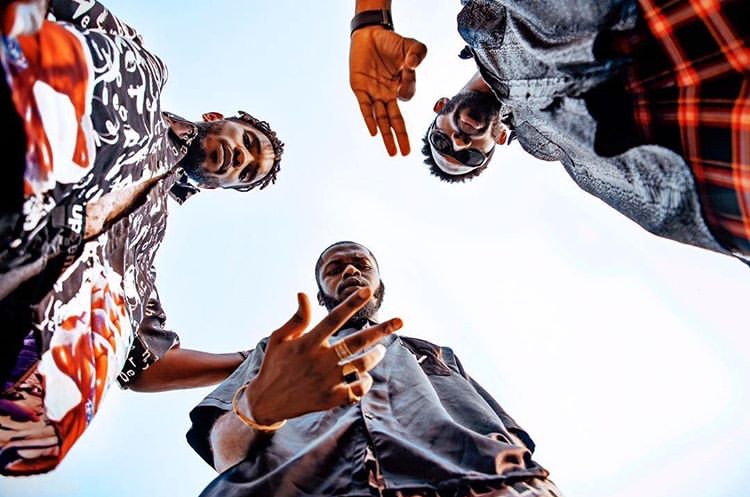
Veteran rap group and homesteaders of the alté sound, DRB Lasgidi, have been hinting at the release of their upcoming album, Pioneers, all year. After spending the last few years perfecting their sounds individually, DRB has reconvened to translate their experiences into collectively enjoyable music.
To further whet our appetites as we await
the Pioneers album, the group serves
up an Afro-Highlife number, ‘Softly’. Highly reminiscent of the palmwine music
soundscape signature to SDC, the Pheelz produced track finds each artist
playing their part in providing a buoyant vibe.
Boj’s melodic voice lays the foundation as
he serenades a love interest with a catchy hook. Fresh L and Teezee follow suit
with rhythmic flows and signature wordplay filled verses expected of the clan.
And the true star of the show, the Pheelz-produced beat, seals the deal;
serving as the perfect backdrop to convey the relaxed vibe of the track.
The tracklist of Pioneers is already looking fire, housing guest appearances from household favs like Santi, Maison2500, and Tems, and if ‘Softly’ is anything to go by, then we’re certainly in for a treat.
Following the release of his last project, Fucking Hell, last year, UK based Nigerian trap artist, New World Ray has since then gone on to tour the project in the UK and Toronto, Canada. Subsequently, he blessed us with some new singles to usher in the new decade, including the all-star Maison2500 and dndSection collab, ‘Status’.
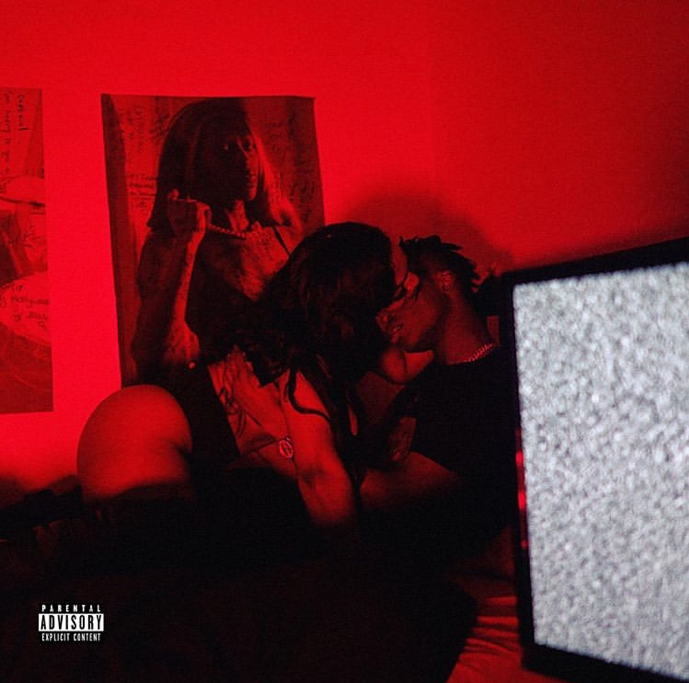
For his first offering of the year, Ray serves up a double whammy release of singles, ‘Minaj’ and ‘Mollywood’. Embodying the psychedelic soundscape native to his rap collective, No Politics Mob, both songs take on similar themes with different sonic intentions. The 808onthetrack produced ‘Minaj’ sees the rapper recounting his experiences in threesomes with women; his simplistic chorus echoing repeatedly over upbeat, looped drum kicks & tinkling hi-hats, ‘I’m finna have a Minaj/Ménage à trois’.
On ‘Mollywood’, the rapper takes a more melodic route, narrating from the perspective of the hallucinogen drug ‘Molly’ as she declares her love for and loyalty to him, ‘I done fell in love again/I’m gon’ be your wife and your best friend/Said her name is Molly/And when you got Molly/You don’t need anybody’. The thumping 808s and murky synths courtesy of theskybeats certainly play no small role in giving the song that extra oomph.
With accompanying visuals hinted to be on the way, we can’t help but wait for what next Ray has in store for us amidst this lockdown.
New Music Friday is here again and this week doesn’t disappoint.
This week we have features from rising producers Higo, GMK, Hvrry, a new track from your favorite Abuja hailing trap-lord Psycho YP and project from the new kid on the block Whoisakin.
Enjoy.
Higo & Hvrry – Company/Issues
Producers Higo and Hvrry have proved time and time again to be the perfect tag team. From their stellar work on Prettyboy D-O’s ‘Pull Up’ to their masterclass on PsychoYP’s trap ballad, ‘Superpowers’, the pair have had a steady incline to becoming the Lebron James and Dwayne Wade of production. For their first release of the year, the pair have admittedly ‘unlocked a new bounce’, serving up a double release of hip-swaying bops, Company/Issues. Enlisting new generation Afropop household favs, WANI, Buju and Minz, both tracks take on different routes as odes to their love interests. ‘Company’ sees WANI and Buju in true tag-team fashion, crooning delicious melodies over an enjoyable groove; with Buju admittedly proving to be a One Take Jake in the studio. WANI gets to work again on ‘Issues’, tapping in Minz who’s higher tones perfectly complement his baritone harmonies.
Stream both tracks below.
DJ
T1Z & PsychoYP – Pay Up, Don’t Be Foolish
Over the years, Abuja based rapper, PsychoYP’s melodic trap soundscape has steadily earned him a well-deserved seat at the table of the Nigerian trap scene. However, his latest release, Pay Up, Don’t Be Foolish, with DJ T1Z, sees him explore his more ruthless and savage side as he assertively demands the love and respect he believes he deserves. ‘Pay Up’, the first track sees YP expressing his discontent with the industry as he demands his flowers for his rap skills, while ‘Foolish (Outstanding Dinner)’ drafts a menacing drill beat to further drive his point home as he raps, ‘Man can’t be chatting to me/I done been in the Champions League’.
Stream Pay Up, Don’t Be Foolish below.
Joeboy
– Call
EmPawa Africa alumni, Joeboy’s trajectory
to stardom last year began following Mr. Eazi’s cosign after the release of his
smash hit, ‘Baby’. For his latest offering, the Afropop star dishes out a love
ballad in his signature style. ‘Call on me/Call on me/You know say I go pull up
on you’, he sings over a Dëra produced beat, reassuring his love interest he’d
be there whenever she needs him.
Stream ‘Call’ below.
GMK
& Tomi Thomas – Lagos (Everyday)
Producer and audio engineer extraordinaire, GMK, already ushered in the decade on a memorable note as he reunited Prettyboy D-O and Sugarbana on his single, ‘Strong and Solid’. For his latest release,’Lagos (Everyday)’, GMK swaps out the calypso infused palette for a more mellow guitar-led spiritual soundscape, enlisting frequent collaborator, Tomi Thomas. On the track, Tomi showcases his vocal range as he pens a love letter to Lagos city, ‘Lagos na barracks/Lagos na home/Lagos na where the hustle dey pay everyday’. Inserting samples of the bustling chatter at a rowdy bus stop in the city, the pair inject shots of nostalgia and give us something to look forward to post-corona lockdown.
Stream ‘Lagos (Everyday)’ below.
Whoisakin
– Full Moon Weekends
New kid on the block, Whoisakin, is out
with his debut project, Full Moon
Weekends, showcasing his sultry melodies over subtle bass-led beats.
Enlisting soulful vocalist, Olayinka Ehi, he creates an infectious vibe over
the 5-track project, crooning passionate harmonies as he portrays the different
experiences of an unhealthy relationship with an ex-lover; earning him a
deserving co-sign from EmPawa Africa boss, Mr. Eazi.
Stream Full Moon Weekends below.
Blizzy – Fallout
Since we’re on lockdown, Bliizzy is here to set our feet and bodies free with this new jam. If you’re set for take-off, fasten your seatbelts and join him on this journey.
Take off was produced by Nigerian Record Producer Kannon, recorded in Lagos, mixed and mastered by Yazid-xo and Code6ix, and is going to be released on Friday 10th of April, 2020.
Music as the purest art form has served as a compelling medium of expression from time immemorial. However, its true beauty and power lie in its ability to exist as a cross-breed of various forms without any labels. Where its counterparts, like film and the visual arts, may be restrained by the confinement of the boxes they have been placed into; with music, one is able to blur the defining lines separating one genre from the other.
Digital advancements and sonic discoveries have played a hand in birthing experimental music; pushing existing boundaries and genre definitions. These days, to be experimental doesn’t necessarily involve producing creatively complex music; it simply means to begin to speak a language not everyone speaks yet. Afrobeats has quickly become the dominant worldwide representation of Nigerian music, transcending international borders to dominate foreign airwaves. However, Afrobeats is just one chapter in the story of current Nigerian music. A new generation of innovative artists are creating a style of music that isn’t easy to define; telling their distinctly Nigerian stories in voices peculiar to them.
Enter Seo, an Ireland-based Nigerian producer, and singer-songwriter, who is quickly on her way to cementing her place in the melancholic ranks. Inspired by a Jonas Brothers concert she attended, Seo began creating music by writing songs at age 11, attempting to emulate their sound. It wasn’t long before she fully came into her own person and ditched the pop stratosphere for a soundscape more authentic to her. Combining this new urge to create music with 7 years of violin and guitar lessons, she began exploring production elements, experimenting with different tones to properly convey the vibe she wants.
Thriving predominantly in dark and desolating themes, Seo creates music that’s ‘more abstract than direct’, often lacking in an obvious subject matter and while her sound can be described as genre-fluid, it’s hard to ignore the obvious elements of ambient music, trip-hop, melancholic soul and even avant-garde music fused into her tones. As a producer, Seo dwells more in minimalistic production; implementing apocalyptic distortions over stripped back heavily syncopated chords and synth lines. It’s unorthodox and lacking in a defined structure, but there’s beauty in the chaos; an underlying yet hard to ignore, holistic patience in each record.
Releasing music since 2017, the 23-year-old possesses a surprisingly prolific catalog with a myriad of EPs and singles; each conveying a different soundscape. ‘Capture’, lead single off her 2017 introductory EP, Avena Sativa, is a deeply pensive, somber serenade. Over arpeggiated piano chords, ethereal synths and a sudden discordant drum loop, Seo explores themes of growth and consciousness of one’s current situation, ‘What do you recall/About how high we leap before we fall/Think before you answer/Because there’s too much to capture’. The intimacy of the production is heavily captivating and instantly casts the listener to a place of self-reflection.
Her ability to move from cinematic to breezy on a record is evidently due to her self-production, perfectly encapsulating her emotions as she would like them to be conveyed. However, sometimes the production doesn’t necessarily match the message related. ‘Cherry’ finds the reclusive artist delving into desolate themes hidden in the playful textures of her voice, over an unexpected galactic production, as she echoes, ‘Blossom with me/I’ll help you to see/That the worst is yet to come so let’s be easy’. On ‘Pain’, she wishes for death over a contrasting mid-tempo beat, ‘Kill me in my sleep/See if I care/They say my words are too dark/I say not dark enough’.
While Seo’s lingering relationship with the
dark and despondent might seem distasteful to some, it’s hard to deny the
beauty in the darkness. In the melancholic ranks where heartbreak is a
saturated commodity, Seo’s raw and unfiltered dance with her demons is oddly
enough, a breath of fresh air. ‘I Just
Hate Breathing’, a dissonantly sorrowful ballad, depicts the artist in a
state of complete dejection, ‘I don’t
hate breathing you in/I just hate breathing/I don’t hate being alive/I just
hate being’. Elsewhere on ‘Try’,
she vows to battle her inner demons and make it out alive. Over rising synths
and forlorn piano chords, she breathily purrs, ‘Turning back into who I was/I don’t know how but I will try’.
Among her admittedly dense discography, Seo is found performing solo; writing, producing and performing every single track. However, this does not mean she’s closed to collaborative efforts with other artists. Her outstanding work as the uncredited female vocalist on a number of songs by the alternative band, Forevatired is a testament to this. While working with the band, although Seo’s soft-layered desolation meets with their more structured production, the resulting emotion conveyed is no different from her self-produced work. Standout tracks like ‘Cold’, ‘Kiwi’, ‘No Land In Any Direction’ and ‘Lost’ are abstractly constructed, reverb-heavy soliloquies comprising ambiguous lyrics sultrily delivered over serene piano strokes, gloomy guitar strums and an overall psychedelic soundscape. And delving into the Nigerian Lo-fi community, her soothing vocals on ‘Liberty Road’ off ICTOOICY’s chart-topping EP, ‘Sorry I Don’t Like Phone Calls’ certainly gave the project the diversity it needed.
Gloom and despair seem to be all too familiar tropes for Seo, but there’s a part of her that wishes for a break from the bleakness – no matter how little. Hence the birth of Moonbather, stylized as ‘m00nbather’, a lighter and more optimistic version of the singer, dwelling more in uplifting themes. Speaking on the disparity between both personas, Seo tells me, ‘Seo’s music is more authentic to who I am. Moonbather is a different, more cheerful, smaller part of Seo. A part I’m trying to make bigger’. Fusing electronic pop and dream pop elements, Moonbather exudes hope in a period of darkness. ‘Take It Easy On Yourself’, a track off her recent Imperfection EP, finds the artist crooning encouraging lyrics over an 80s pop aesthetic tinged beat. ‘The world is hard enough/Take it easy on yourself yeah’, she reassuringly echoes.
It’s certainly invigorating to see Nigerian artists taking more experimental risks in the production of their music, and even more exciting to witness the audience become more receptive to these unorthodox methods. Taking an even casual glance at Seo’s artistry so far, it’s evident she’s an artist far beyond her years. A true diamond in the rough, her ability to explore complex themes and sounds to conceive simple music that is equally as mysterious as it is moving is certainly a commendable feat. This is an artist fully aware of her being, opting for a stream of consciousness style as opposed to more playlist ready fare; a true love child of Grouper and FKA Twigs. Her sound is visceral and oceanic, created with intimacy and intent, with effortless delivery of lived-in vocals elucidating the inner workings of an artist comfortable in her authenticity. With such artillery in her sonic war chest, this dark flower can only bloom even further and we’ll be here watching.
Atlanta-based Nigerian trap collective, Traplanta, have steadily been making their mark as forerunners of the Nigerian trap scene; individually and collectively. Frontman and rapper, KA$H took his signature storytelling to impressive heights with the release of his sophomore solo 2019 project, Reborn. For his first offering of the year, the rapper swaps out his dexterous narratives for a more explosive track oozing with braggadocio and bravado.
Shot and directed by John Dierre, and edited by MillionBenz, the video sees KA$H and a redhead video vixen trapping out to the song, while dressed in matching Matrix-esque outfits, as they echo the catchy lyrics ‘Put it in gas, Put it in sport’. The Elijah Bane produced track will be available on streaming platforms soon. In the meantime, watch the video for ‘NEO YOKIO’ below.
Contrary to what many may think, the music industry doesn’t solely comprise of the creators at the forefront; the vocalists and performers, songwriters and composers and producers/sound engineers. There is an entire force behind the scenes, pushing the music and the artists; the companies and professionals who create and sell the recorded music: music publishers and record labels; the professionals who help organise and present live music performances: booking agencies and show promoters; those assisting artists with their musical careers: A&R managers, entertainment lawyers and the individuals who broadcast the audio and video music content: music journalists and DJs. Without these less visible individuals, the music industry as we know it wouldn’t operate as seamless as it does.
Nevertheless, the music industry, as glossy as it may seem, is first and foremost a business; and a ruthless one at that. And like any other business, the aim is to obtain profit. Record labels take risks and make investments in artists they deem worthy, hoping to get a return on said investment. Getting signed to a record label lifts a huge weight off the artist’s shoulders. The label bears the burden of crucial aspects like marketing and distribution of recorded music; fronting all the costs said aspects may require. The criteria for selection of said artists lie on a plethora of factors including marketability, connections, or just a plain old strike of luck. In this light, it’s evident that unfortunately, not every artist may be able to taste the ‘luxury’ of getting signed and the benefits it comes with; leaving such acts to record and release music independently, solely bearing the cost of achieving that.
Thankfully, there are some platforms built specially to help independent acts release and distribute music with little to no hassle. Bandcamp, a US based online music company is a platform aimed at aiding independent artists and labels alike; offering them a space to release their music to be bought/streamed, as well as sell their merchandise. And here in our very own motherland is Ejoya, a startup marketing and distributing company specifically aimed at helping independent artists get their music on streaming platforms and to the ears of the consumer.
‘Most independent artistes do not have enough resources to put their music out there and properly push it as far as possible, as opposed to artists signed to a record label. So we try to fill that gap.’, Boluwatife Sodipo, an executive at Ejoya, tells me. A large number of fresh talent are faced with difficulty in pooling resources for adequate marketing, so Ejoya aims to curb that. Currently, artists are able to reach out to the platform and send in music for distribution and marketing, paying no fees at all; Ejoya’s profit is attained through revenue splits obtained from streams.
While access to marketing and distribution services are major problems for independent artists in the industry, a vital issue for such talents is lack of visibility; the majority of the general public may not have an idea of their existence. Enter Ejoya’s Class of ‘20 project; a scheme established to inspire a culture of creative co-existence by bringing together some of the best upcoming acts in the music industry. ‘The purpose behind the Class of ‘20 project is to continuously shine a light on the next set of sounds coming out of the continent and place them on a pedestal with all the marketing support they need’, Boluwatife adds.
Adamant on showing there is strength in numbers, the project packs a myriad of artists and producers; ranging from upcoming talents like DJ Yin, Tidé, Yusufkanbai and EMO Grae to more prominent names like Fasina, Buju, Jinmi Abduls, Higo and Minz. The artists and producers were camped in an open house for six days, with minimal complexity with production as sessions were going on in every space. It was a haven for free expression of everything each artist had to present.
A blend of Afro-pop, Afro-beat, Hip-hop and alternative sounds, the album gives an experience of creative diversity and communal brilliance. Tracks like ‘Selense’, ‘Lagos Girls’ and lead single, ‘Mind Games’ lean towards the more conventional Afrobeat/Afro-Pop sounds, while cuts like ‘Lifestyle’, ‘Gboju’, ‘Pick Up’, ‘Ko Le’ and street anthem-to-be ‘Collect’ exhibit more alternative soundscapes, further depicting the versatility of these artists.
The initiative behind Ejoya’s Class of ‘20 is certainly commendable but there is evidently room for improvement. It’s absurd to think that in these progressive times, a 12- track collaboration project comprising a plethora of male artists and producers, only had one female artist on it. In the future it would be imperative to see more female artists on such projects; there’s undoubtedly an ample crop of young talent to choose from.
Ejoya is revolutionizing the way music is distributed, creating a platform that brings the talents close to the awaiting fans who want to consume quality music. There’s a paradigm shift, they’re shaking things up; setting the pace for a new order in the Nigerian music industry.
Producer, vocalist and graphic artist member of alternative band, Forevatired, Golddrummachine is renowned for his chillwave essence; highlighted by his signature ethereal synths. Since debuting his solo discography in 2016 with his Africa in Technicolor EP and following up with 808 CR in 2017, the reclusive artist’s solo career has been rather quiet, as he focused on working more on projects with the band.
Now back with a track he describes as one he’s ‘held on to for so long’, ‘There’s Nothing Left To Hold On To’ is a warmly welcomed breath of fresh air, especially in these unfortunate corona times. Written, performed and produced by him, the track sees the artist dwell in his tendency to gravitate towards the self-referential; emanating the escapist lyrics particular to the chillwave genre.
Exploring themes of self-reflection and loneliness, ‘There’s Nothing Left To Hold On To’ is a soliloquy portraying the artist in a state of sombre introspection, ‘Never really deeped how lonely I be/Dipped in reality with my own depravities/Dipped in insanity this ain’t how it post to be’, as he acknowledges his unhealthy coping habits, ‘My soul is tethered to the NyQuil up in my satchel/And the vitamins and capsules in my pocket/I’m a motherfuckin riot’. But he’s not oblivious to the possible consequences; he knows exactly where he may be headed if he keeps this up, ‘One of these days I’ll end up in a case’.
Golddrummachine experiments with the various textures of his
voice; reciting the hook in a voice highly reminiscent of Smino, following with
a verse recounted in digitally enhanced baritone vocals, and switching things
up with a pleasantly soulful falsetto on the outro; inherently showcasing his
versatility in creating instantly recognisable but completely original music.
With these unpredictable times leaving us with ample opportunity to overthink, it’s tempting to get in our heads and resort to unhealthy habits to blur out the chaos up there. Instead, we can channel these thoughts towards resonating music like ‘There’s Nothing Left To Hold On To’, as we gear up for new music from Forevatired. Stay safe.
Stream ‘There’s Nothing Left To Hold On To’ below.
It’s another Friday, which typically means our favourite music acts from around the world bless us with new music in the form of singles or projects.
Since most African governments enforced a shutdown, new music or content in any form has been very welcomed by an eager audience in need for anything that will distract them from the boredom or anxiety that comes with being locked down.
This week’s new music Friday is dominated by mostly Ghanian acts with only one entry from Nigeria, enjoy.
Nxwrth – NASA: Thanks
For Flying
Urban Ghanaian music collective, La Même Gang, is renowned for their Afro-Trap sound; boasting of artists Darkovibes, Kiddblack, RJZ, $pacely and Kwaku BS. But the key element to their soundscape is producer Nxwrth, whose contributions to the gang’s first two projects ‘La Même Tape’ (2017) and ‘Linksters’ (2018) helped create an unorthodox sound, defying the otherwise mainstream genre in Ghana. Finally ready to kickstart his solo discography, Nxwrth steps out with the release of his debut album, NASA: Thanks For Flying. Just as the title suggests, the entire 12-track project poses an intergalactic feel; highlighted by the blend of extensive synth progressions with Afropop drums. Drafting in a host of artists from Tsoobi, to a fellow gang member, Darkovibes, Nxwrth sets the listener on an astronomical plane to watch his battle for world domination take form.
GuiltyBeatz –
Different EP
2019 hosted a number of wins for ‘Akwaaba’ hitmaker, GuiltyBeatz. From performing alongside Empawa Africa boss, Mr Eazi, at Coachella, to racking up three production credits on Beyoncé’s Grammy-nominated album, The Lion King: The Gift; the Ghanaian producer’s year couldn’t have gone any better. Now back with his long-awaited project, Different EP finds GuiltyBeatz flexing his versatility and range. A blend of AfroPop, AfroBeat, Reggaeton and Gqom sounds, the project packs an array of artists highlighting each genre; with each song seamlessly transitioning into the next, inherently urging one to listen with no skips.
Stream Different EP below
Kwesi Arthur – Turn
On the Lights
Ghanaian singer/rapper, Kwesi Arthur is back like he never
left. For his first offering of the year, he delivers his version of Future’s
‘Turn on the Light’, steered in a more AfroPop direction. The catchy, Yung Demz
produced track finds Arthur lamenting on the woes of the single life ‘Turn on
the lights/I’m looking for a boo/I just wanna put my hands on someone’s
daughter too’.
Stream Turn On the Lights below
Darkovibes – Kpanlogo
Sensational Ghanaian AfroPop/Afrobeat singer-songwriter,
Darkovibes has finally unleashed his highly anticipated debut album, Kpanlogo. A blend of Highlife, Afrobeat
And Reggaeton soundscapes, Darkovibes creates a masterpiece conveyed through a
potpourri of Ga, Twi, English and Pidgin English. The name Kpanlogo is a
Ghanaian dance form, associated with the Ga ethnic group, thus in a way giving
off the direction the album might be targeted towards. Enlisting A-list
features ranging from Joeboy to Stonebwoy to Peruzzi, the Ghanaian artists
makes a bold statement on his trajectory for 2020.
Stream Kpanlogo below.
Ogranya – Imperfect
EP
Budding Port Harcourt singer/songwriter, Ogranya, has been steadily making his mark on the scene. His latest offering, Imperfect EP, is a project showcasing the artist’s progression as he experiments with his artistry. An honest coalescence of Afro-soul, R&B and Jazz, the project sees the artist showcase his refreshing originality and compelling vocal prowess.
OG Caesar has come a long way from his early days on the rap
scene. From his late 2016 debut, ‘All Winter’, the Lagos/London/Brighton based
artist steadily progressed with multiple single releases over the course of
2017 up until the release of this debut album. A blend of intense rock and
electronic music influences, his 2018 debut project, Queen, undoubtedly illustrates his artistry at its finest. Now back
with a new single, Caesar teams up with producer, Jeremiah Cartier, to deliver
a catchy bop highlighted with Caesar’s signature melodic trap soundscape.
Caesar’s music is heavily laced with inspirations from women and relationships, and ‘Toys’ is no different. The track finds the artist rapping about being an emotional punching bag in past relationships, ‘Shawty tried to break me and put me back together/I am not a toy’.
Seemingly taking a lesson out of Pi’erre Bourne and Koji Kondo’s books, Cartier shoots us with tasteful injections of sonic nostalgia as he layers thumping 808s and fluttering hi-hats over a looped video-game/ice cream truck sample, providing a nicely dense listen.
The Nigerian Lo-Fi community is growing exponentially and
it’s a sight to see. Housing some of the country’s most authentic artists, this
body of DIY performers consistently push the borders of ‘conventional’ sound to
blurry edges. Aussie Maze, one of such artists, caught our eye recently with
‘Femme Fantasia’; a melancholic, emotion-evoking track, which earned him our
seal of approval on our Voices in Music feature.
Now back with his first release of the year, Aussie switches out his signature somber tones for a more playful, bedroom pop palette with ‘Arya’. Over mid-tempo drums and soft-layered piano chords, the 808vic featured track sees Aussie recounting the story of meeting his now ex-partner, ‘I met this girl in St. Tropez/Right in the park like everyday/She used to smoke right in my face/Her blunt was laced with summer taste’. 808vic then taps in with an equally light-hearted and loose-lyrical verse.
With these unpredictable corona times having summer feel like a foreign concept, we can channel the summery feel off ‘Arya’ as we hope for the best.
One of the most fascinating (and controversial) products of pop music is the boy band. From influential motown groups to 90s R&B heavyweights and pop-punk pin ups, boy bands have created some of the best-loved music of all time. Over the years, these venerated pop institutions have easily been characterised by their innocent male harmonies on pop choruses, synchronised choreography and matching outfits; exuding an adolescent appeal overall.
However, as sound has shifted with time, the audience has in turn also shifted with it; fully embracing the movement. As a result, the staple definition of a boy band has been altered over time. Where the veteran groups were predominantly existing in the pop stratosphere, with a seemingly copy-paste conventional sound and image, this present generation of innovative creators are more defiant and daring than ever; debunking pigeonholed stereotypes and creating genre-defying sounds while still embodying the overall essence of a boy band.
US male group, BROCKHAMPTON, is a prime epitome of this new age wave of male groups. A blend of hip-hop, soul and funk sounds, the 14-man group of rappers, vocalists, creative directors and producers have given a new meaning to the boy band. Following closely in their footsteps is Nigerian music collective, Forever Tired, stylised as ‘Forevatired’.
Originally making music individually, the boys always felt an underlying ‘mutual responsibility to express themselves in a way that inspires others’. Linked by this shared mindset, a common yearning for a community dawned on them. Pieced together in 2017 by front man Faith (Kyyd), the 10-man group of rappers, vocalists, producers, graphic artists and photographers joined forces to create a functional ecosystem; selecting a name that served as an interpretation of the group’s environment and experiences at the time.
Sonically, the boys are as diverse as they come; yet somehow seem to create a seamlessly cohesive sound classified as genre-swirling hip hop. It wouldn’t be outlandish to assume that this feat is achievable because as most groups often do, the boys all seem to have their various roles and parts played in this musical machine. Frontman Kyyd doubles as executive producer as well as rapper. Production is assisted by Golddrummachine and Brum3h, who also double as vocalists. The vocal team is completed with Etienne while Pharaoh, Rookie SBK, Faruna, Burgundy, Indigo and Rockimonsta all rap.
Influences from music collectives like Odd Future and The Internet are evident in the boys’ unorthodox, non-conforming aesthetic, while The Pharcyde’s impact is noticeable in their sound. Nevertheless, while drawing inspiration from such figures, the boys still manage to maintain their individuality musically.
Their latest offering, Before You Kill Us All, perfectly depicts the sonic direction Forevatired is headed. A blend of melancholic soul and bouncy hip hop, BYKUA emanates the whirlwind of emotions the group experienced during its making; each song quintessentially on a different sonical path than the one preceding it, seemingly implying a different emotion at each turn. Opening up with the sombre open letter, ‘Frank’, the listener is abruptly cast into a self-sabotage/self-analytical plane as Golddrummachine’s deadpan delivery urges them to ponder on the meaning of life. ‘Now what is love when you never ever feel alive/Now what’s the fear of the reaper when it’s been prophesied ?’, he raps questioning the essence of our very existence. Teaming up with Brum3h, ‘Else’ finds Golddrummachine seeping back into the critical cave of self-searching, delivering ethereal vocals on a bed of soulful guitar strums. ‘I wish I could change myself/I’m reaching out for any help’.
Nonetheless despair isn’t the only running theme on this project. ‘Nawty Boys’ sees Etienne and Rockimonsta tackling crucial social issues like sexual consent through a catchy mid-tempo bop. ‘Don’t touch/Don’t touch/She don’t wanna be touched’, they echo repetitively to listeners. Elsewhere on ‘Gone Bad’, (arguably the best track on the project) Rookie SBK and Burgundy pair up to deliver a feel good chillhop vibe, perfect for the first kickback post-‘rona. And with ‘420’, Indigo delivers a stellar performance on the trap bop; oozing braggadocio and bravado as he spits witty rhymes alluding to his smoking prowess.
While the boys all play their part in creating the magic that is Forevatired, the true enchantment and underlying secret weapon of it all lies in 23 year old female vocalist and producer, Seo; an affiliate of the group. With such a lived-in voice, it’s easy to assume the singer has experienced an entire lifetime prior to this one. Thriving predominantly in desolating themes, Seo effortlessly delivers dark, introspective lyrics over minimal production.
‘Cold’ is a self-reflecting soliloquy which sees the artist questioning her inconsiderate actions, ‘I don’t know why I’m so cold/Guess it’s just a part of me’. The artist admittedly ‘prefers darker lyrical themes that are more abstract than direct’ and this is evident on ‘Lost’ and ‘Kiwi’. Both tracks seem to have no obvious subject matter; comprising ambiguous lyrics sutrily delivered over gloomy guitar strums and an overall psychedelic soundscape.
But the true unsung hero in their discography is presented in the form of ‘No Land In Any Direction’, an alternative cut performed by Seo herself. Over sullen guitar licks and stripped down, slow tempo drums, Seo expresses complex emotions of vulnerability and sadness. ‘Please don’t look too closely/You’ll see me when you see me break’, she drawls in a melancholic almost-whisper, warning a potential partner of the cracks in the perfect picture they might realise as they spend time with her. ‘Zoom in if you must though/Get it over with so/So I can go’, she decides it’s better to let them see her at her lowest so they can decide if they’re interested or not. Feeling trapped by the constant feeling of inadequacy, she yearns for an escape. ‘Dangle off my sleeve now/Don’t hang around, don’t hang around/It’s time for me to leave now/Just wanna dangle down’, she despondently sings. Finally, she’s made it out of the chaotic mess that is her head, but for how long ? When will she be finally free from her own thoughts ? (‘Get a hold of this place/I made it out I did escape/But not forever/Get out I wanna go’)
In an age of progressive ideas and initiatives, the world has certainly become more accepting of unconventional genres of music and it’s refreshing to see the Nigerian audience following suit. Forevatired isn’t your everyday alternative band; they’re a posse of multilayered artists who couldn’t be more diverse. Blending Golddrummachine’s chillwave essence highlighted by his signature tinkling synths, Rookie’s brooding presence, Brum3h’s soulful melancholia, Indigo & Burgundy’s hard-hitting, playful rhymes and topping it off with Seo’s soft-layered desolation; you are blessed with a pleasant combustion of emotions certain to take you on a journey – it’s just a matter of where you want to go. We’re excited to see Forevatired’s next sonical sojourn, and you should be too.
Over the years, advancements in music tech have steadily shaped the contemporary music genre. The invention of 808s for example, veered hip hop away from its funk roots, leading up to today’s trap sub-genre. As music production software steadily evolved, the adoption of technology to achieve faster results inherently stimulated the inception of DIY artists, creating music classified in a genre coined as ‘Lo-Fi’, or its more melancholic sibling, bedroom pop. Both genres are unorthodox styles of music, yet to be thoroughly explored in Nigeria.
In an age of social media and digital advancement, with
access to a wide range of influences at one’s literal fingertips, this present
generation of innovative artists have assumed the freedom to take experimental
risks in the creative process of their music. Enter 19-year old Chike Ugwu,
commonly known as Aussie Maze; a Lagos based Lo-fi rapper/singer-songwriter.
In a classic case of ‘big brother, little brother’, Aussie took up music in 2016 after years of growing up watching his older brother freestyle raps. Naturally, he initially leaned towards the hip hop genre, however, after discovering himself as well as influences from alternative artists he stumbled upon, his trajectory veered towards the bedroom pop sound. Since then, music has become a solace; a reassurance that there’s a progression of some sort in his life.
The core aesthetic of Lo-Fi production is defined by the inclusion of elements usually deemed as undesirable in professional contexts, as an intentional aesthetic choice. The deliberate distortions, fuzzy background noises and misplayed notes all aid in providing the warm, nostalgic feeling popular with bedroom pop; and this is exactly what Aussie’s music entails. Although he’s yet to release a full-length body of work, his SoundCloud discography is notably dense; showcasing his steady progression as an artist finding his distinct sound.
‘Noriko’, a Taylor Majay featured alternative cut, finds the artist in a state of wistful longing for his significant other. ‘And the sun will keep me warm/Even when you’re gone’, his layered melancholic vocals croon softly as he patiently waits for his lover’s return. Elsewhere on ‘sad boy’, a heartbroken Aussie is found recounting his pain to the deaf ears of a partner, ‘Because my heart is sad/It’s broken from the time I’ve been falling/And you know I’m sad/But you act like my emotions are foreign’.
While themes of love and failed/failing relationships are rampantly infused in his music, Aussie isn’t afraid to explore other subject matters. ‘Forgive me’, an attempt at more straightforward rapping, finds a despondent Aussie blankly spitting about the coming Apocalypse, ‘God save us/The end is near/Nothing keeps me warm but these overflowing tears’. Following in his brother’s footsteps, the rapper admittedly creates the bulk of his music by ‘freestyling and sticking to the melody that slaps the most’. Earlier releases like the loose-lyrical ‘Texaco’, ‘Fantasy’, ‘Fin’ and ‘Aqua Teen 17’ are clear testaments of this; seemingly lacking in a particular subject matter.
Perhaps the most fascinating feature Aussie possesses is his ability to sound like everyone and no one at all. Influences from Joji and TEMPOREX are evident on cuts like ‘Love Me’ and ‘You Suck!’ (a cover of Joji’s ‘You Suck Charlie), while elsewhere on ‘Moody Young Teens’, his steely, baritone voice grants him more Rejjie Snow leanings. And yet, the most impressive performance in his discography is on a song where his individuality is at its peak: ‘Femme Fantasia’; a sombre, tear-jerking track, depicting a relationship with two different girls, who both cause him emotional damage. ‘I’m losing focus/But as you can see/there’s not much to me/Should have been somebody else/Please stay’, he gloomily sings over guitar-led Lo-Fi production courtesy of Aquinas.
Given that Lo-Fi music is still an emerging genre in
Nigeria, it wouldn’t be outlandish to assume acts like Aussie are faced with
difficulty in finding producers who match their aesthetic. However, the underground
Lo-Fi scene is a budding community; and they all seem to have formed an
ecosystem – comprising young producers, engineers and artists alike, mutually
benefiting from each other. Aussie has certainly used this ecosystem to his
advantage, collaborating with artists like Osayuki on ‘Dreams’ and ICTOOICY on the title track of her chart-topping debut
EP, Sorry I Don’t Like Phone Calls, as
well as producers like weirdjason.
In an age where a majority of the more mainstream Nigerian music all seem to sound monotonous and lacking in originality, it’s certainly refreshing to see talents with clear-cut individuality. Aussie’s journey into the discovery of his sound is evident in his discography; he’s gone from freestyling nearly meaningless raps over beats to creating authentic, emotion-evoking music (think King Krule but smoother around the edges). His goal for the near future is to ‘spread his horizon’ by collaborating with more artists and releasing more music in general. With his unequivocal versatility and irrefutable talent, the sky’s just a stepping stone for this young man; it’s only a matter of time.
It’s no news trap artists have never exactly been taken
seriously as their lyrics often get too lost in their showy narratives to
possess much substance. To curb this stigma, several trap artists have become
more proficient in their craft; others have spun this to work in their favour.
Lagos based rapper, Straffitti, is a prime example of the latter.
Employing braggadocio as a running theme in his music,
Straff has created a persona renowned for his debauched confidence as portrayed
on his songs. His latest offering, ‘Straff From Nigeria’, is a self-assuring
trap anthem which finds Straff relishing in the notoriety he’s amassed over
time.
‘I don’t really care about friends or foes/All I wanna do is be
counting my doe’, he uninterestedly raps letting everyone know he pays no
mind to the peripheral distractions; it’s tunnel vision for him. He then
continues his verse spitting about the numerous ‘bitches on his dick’ and the ‘bands
he’s getting’.
It’s popular knowledge that Straff’s lyrics are usually very hard to digest, (‘Say your prayers when you see me with your sister/She gurgle on my dick on her knees imma bury her’), but it would seem his entire persona rests on such hedonistic assertiveness. Rapping over a looped flute sample and thumping bass lines provided by Chicken Sauce, Straff acknowledges his status as the torchbearer holding it down for the indigenous acts on the Nigerian trap scene; and he demands that you follow suit.
The Nigerian trap scene, while still an emerging bubble, is certainly expanding daily; with new artists on the rise boldly dabbling in the genre. Needless to say, gratitude is owed to the new generation of Nigerian youth for this feat. Among these acts is multi-genre recording artist and record producer, Majik; a new kid on the block whose distinctive sound is set to propel him to the forefront of the scene, it’s just a matter of time.
Born Ibukun Oyewumi, the 22-year old began rapping at the age of 17, eventually taking up production at age 19 when faced with difficulties in attempts to find the beats he wanted. Majik only ended up becoming a full-fledged recording artist upon losing his passion for schoolwork. Months of dabbling in production and refining his artistic craft resulted in his 2019 self-produced debut offering, ‘Slide’; a catchy trap cut delivered over thrumming guitar strings and pulsing synth chords. Without a doubt, this effort certainly portrayed him as an artist with a firm grip on his creative process.
Now back with a follow-up release, ‘Pull Up’ is a loose-lyriced, downbeat, trippy trap anthem; characterised with pulsating hi-hats and an almost inaudible yet somewhat ethereal synth progression (think Travis Scott’s ‘coordinate’). ‘Pull up when I’m in your ends like – YEAH’, he suggestively raps, depicting a casual sexual acquaintance stemming from a bad break up and fuelled by some liquid courage. ‘Let’s get cozy but as friends now’, he reminds his acquaintance of what this is; just a link up. Throwing in playful rhymes, Majik further indicates what’s in store for his interest once they meet, ‘Drop a pin and I’ll put any events on hold/Pull up with the ruler/Make you curl them toes’. However post-relationship heartbreak, he’s only here for a good time, not a long time (‘But I’m not the one you can depend on – no’). Upon stating these conditions, Majik lets his interest know if she’s down, he’s down, ‘You say yes and we can finally/Get these plans on’ (a consent-seeking king!)
Observing both singles the budding trap star has offered, his versatility seems limitless. While ‘Slide’ offers a more bouncy, feel good rhythm, the Utibe-produced ‘Pull Up’ delivers a druggy, psyched-out tempo, punctuated with Travis Scott inspired ad-libs. Majik’s end goal is to ‘make music that outlives him’. ‘I try to channel my energy, whatever I’m feeling into my music, so when I’m gone, it’s still going to be there for anyone who’s feeling the same way’, he admits.
Influences from veteran producers, Kanye West and Timabaland and inspiration from his peers on the local scene are evident in the confident delivery portrayed in his music. While describing the current state of the Nigerian trap scene, Majik assertively states, ‘There’s too many talented people, it’s crazy. And collectively we’re doing this for the guys coming after us so it goes full circle eventually.’ Following this release, his trajectory to the top is certainly en route, hang on tight for more from him.
It’s often said one can easily differentiate between a producer-turned-artist and an artist-turned-producer. The former tends to be a bit more intentional in the creative process of the music. Afro-fusion artist, Yinka Bernie is an undeniable testament to this. The same can be concurred for British-Nigerian multi-instrumentalist, producer and more recently singer-songwriter, Dr. Cube.
From his early days on the music scene, he’s dabbled in underground production; testing the waters releasing music via his SoundCloud and Tumblr accounts, where he gained a sizable following. His 2017 debut effort as a full-fledged artist, ‘Fall in Love’, a soothingly stripped down melancholic ballad, gave us a taste of the artillery he had packed in his musical war chest.
Now back and completely ready to kickstart his musical adventure, he provides his new single, ‘To Your Love’; a loose-lyriced mid-tempo track depicting a one sided conversation with his partner. The track opens up with a looped mid-cadenced piano chord sample, following a harmonised blend of his & Melissa Frame’s vocals singing ‘Shine in the light/Baby shine in the light’; their vocal chemistry highly reminiscent of Yinka Bernie and Joyce Olong.
‘You’re so blue baby/You let me in then let me go’, his clear-cut baritone voice pierces through, punctuated by fantastic classic saxophone lines (provided by Koye Sax & Joshua Olawanle) and soothing bass guitar licks (courtesy of Greg Hummell), as he acknowledges the growing rift in their relationship & deliberates on what they can do to fix it.
Drawing evident influences from his music idols, Fela Kuti and Asa, Dr.Cube delivers an upbeat Afro-fusion bop, certain to have your body gyrating. Juxtaposing this track with his debut offering, his versatility is clear-cut, further verifying him as an artist to keep on our radar. We can’t wait to see what he cooks up next.
From time, music has always served as a tool to channel
one’s emotions. Be it rage, despair or elation; music offers a suitable medium
to relay one’s feelings – for artistes as much as listeners.
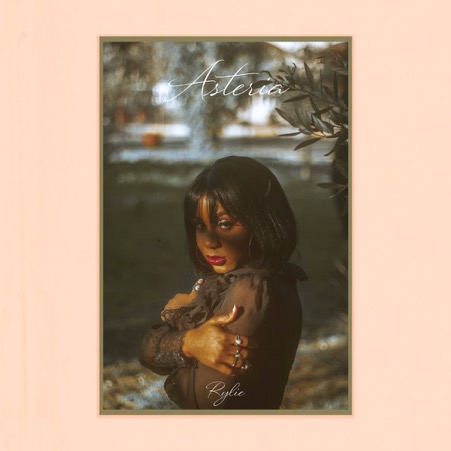
For 21-year-old neo-soul singer, Araoluwa Akintunde, music is an outlet; an escape route from the chaotic mess that is her head. Being inexpressive in conveying her thoughts, she found solace in music as a means to make sense of the flurry of emotions camping in her head.
Releasing music under the moniker, donttouchrylie, her debut
project, ASTERIA, in its entirety is
a depiction of her depressive episodes and how she deals with them, as gloomy
as they come. The 4 track EP opens up with ‘IV’, a soulful Trap & B ballad
which finds Rylie sultrily crooning lyrics acknowledging her sadness. ‘I wanna
fly away from here/Take me home, my love/To the place above’, she sings
despondently about dying, sneaking in a Forrest Gump reference.
The project’s title admittedly stems from the Greek mythological Titan goddess of ‘falling stars and nighttime divination’, Asteria. Further pulling reference from this, ‘Love, Phoebe’ is a string of encouraging words from Phoebe (Asteria’s mother) who doubles as a metaphor for Rylie’s own mother, attempting to comfort her in her moment of despair. (‘I know you don’t believe/But there’s people who care’)
‘Light!’, a more upbeat bop, sees Rylie realising that she’s
the only key to the end of her depressive episode. ‘But if you come out/Right
outside/You might touch the/Touch the light!’, she sings as she comes to terms
with what she must do. The track features a catchy verse from Na-Ku, who slides
in a cheeky Death Note reference (‘This song is light/I am Ryuk but I got me a
Misa’)
The tape is drawn to a hopeful close with ‘Here Now’,
marking the end of her episode but for how long ? ‘Don’t know how long I will
take/But I’m here now’, she sings, accepting her fate that these episodes will
come and go, but she’s well now and that’s what matters.
Overall, ASTERIA,
is a graphic journey into the convoluted mind of an artist, simply trying to
find her feet through music as she grapples with the tasking mission of
understanding her own thoughts. It’s a raw and unfiltered performance yielding
in a delicate work of art.
Since its inception, popular music has existed in a constant state of development. It’s a tale as old as time itself; comfortably characterized by the partition of the rock genre into alternative rock, punk rock and metal in the 90s, or the births of disco, funk and neo-soul, as sub-genres of R&B. Nevertheless, rap in its comparatively short lifespan as a genre has arguably witnessed more changes than its contemporary counterparts. With its ‘present-day existence as an ever-morphing expression of black ingenuity’, rap’s seemingly limitless expansion over the years is a product of the ever-evolving culture phases in black societies.
From the birth of gangsta rap in the early 90s to the popularization of dirty south and crunk music in the late 90s, to the commercialization of ‘snap music’ in the early 2000s; the evolution of rap music has indeed seen various phases. As a result of said evolution, trap music was born. Originated in the Southern United States by Lil Jon, DJ Paul and Ghetto Mafia in the late 90s, and expanded in the early 2010s by Chief Keef, Young Jeezy and Future, trap music steadily gained momentum as the new wave of rap music.
African music while being majorly indigenous, certainly embraces influences from western sounds and this is evident in African hip hop culture. To this end, African rap music has followed suit in the evolution of its western counterpart and espoused the new wave that is trap music. Nigeria as the continent’s media hub has definitely bought into this phenomenon – or at least attempted to. Nigeria had always rendered a lukewarm reception pertaining to local efforts at the rap genre – the generality of music fans had seemingly failed to fully grasp and enjoy it.
Nevertheless, this didn’t stop artists from taking a stab at the genre, tirelessly attempting to cultivate an organic fanbase. Such attempts kick-started the careers of rappers like Ycee, M.I Abaga, and Olamide and Phyno – the luminaries who found a way to make indigenous rap work. In this light, with trap being the new wave of rap music, Nigerian artists have also made attempts to craft their versions of the wave. Still, this was met with minor success, resulting in said artists turning to the more mainstream Afro-Pop genre. Songs like Terry Apala’s ‘Champagne Showers’ serves as a noteworthy endeavour at the genre but still never attained the success level on par with its Afrobeat counterparts – until now.
Trap music in Nigeria is steadily gaining momentum and the new generation are at the forefront, leading the wave. While the older generation’s efforts have seemingly proved futile, the younger crop of talent has grabbed the bull by its horns and taken the trap scene by storm. For a lot of Nigerian youth, trap music represents an escape; a form of preservation of sanity they turn to as they attempt to get through the prevalent mental struggles faced daily. Hence, the importance of being able to create or access trap music that wholly represents the everyday tussle and emotional angst of an average Nigerian youth, cannot be over-emphasised.
Spearheading this movement is Rema, 2019’s breakout teenage sensation whose expansive interpretation of emo-rap fused with Afrobeat elements rapidly accrued him millions of fans globally. Seemingly popping out of nowhere, his music soon crossed the borders of Africa; breaking into the highly coveted market that is the Western shores. While this feat can be partly owed to backing from the powerhouse that is Mavins Records, it would be distasteful to completely rule out his irrefutable talent and overall ingenuity as a major reason for this accomplishment.
‘Trap music helps me convey my emotions in a different way’, the 19-year-old Benin native tells Okay Africa in a 2019 interview. With influences from critically acclaimed names in the emo-rap sub-genre – such as Swae Lee, Trippie Redd and JuiceWRLD – evident in his music, Rema creates unorthodox sounds depicting modern-day teen angst and his admitted ‘passion to save the youths through his music’.
Rema’s end goal is to ‘take the youths to a new level, showing them a fresh vision, showing them a new world.’ With standout tracks like ‘Why’, ‘Trap Out the Submarine’ and the sonically impressive ‘Spaceship Jocelyn’, the 19-year-old is undoubtedly well on his way.
Regardless of Rema’s current title as the de facto leader of the new generation of creatives looking for expression and change in the arts, there were many others before him. Alpha P, his former bandmate, is one of such talents. Being manufactured in the same factory, his understandably obvious similarity to Rema has proven to be a sort of thorn in his side as he is constantly compared to the Afrobeat star, gaining him the nickname ‘Rema 2.0.’ Nevertheless, this does nothing to negate his talent. Much like the Mavins golden child, Alpha P produces music coloured with trap cadences, depicting themes on love, heartbreak and youthful anxieties.
Braggadocio is a
running theme in rap music; every rapper alludes to their level of skill by
implying the incompetency of others. Straffitti,
a Lagos based trap artist, commonly implements this element, spitting bars in
the same debauched confidence as Future and Kanye. The rapper’s experimental
vision for Nigerian Hip-hop is manifested in his music, a seamless blend of
trap tempos, mainstream rap and indigenous rap styles. Despite the palpable
trap rhythms written all over his music, Straff’s obnoxious aesthetic screams
more 2012 Tyler, the Creator than Young Thug. While his 2017 debut project, Vanilla Sky, portrayed Straff as a
promising artist needing to work on reaching a final form, his latest offering,
an energetic and rage-inciting ‘Kuronbe’ depicts obvious growth in the rapper’s
sound. The obnoxious musical personality he started out with is still present;
it’s just more refined and convincing.
His music collective, Thirsty Worldwide, is a creative clinic boasting of fellow like-minded unorthodox Lagos based trap artists like Blue7lame and Jaiye, as well as graphic designers, photographers, producers, illustrators and videographers. Thirsty’s signature non-conforming aesthetic while highly reminiscent of the now separated Odd Future, denotes exactly what it means to be a Nigerian youth today – alternative in their perspectives and provocative in their fashion and music tastes. Much like Tyler, Straff serves as a torchbearer, holding it down for the indigenous trap acts in Nigeria, inspiring the youth to express themselves as creatively as possible.
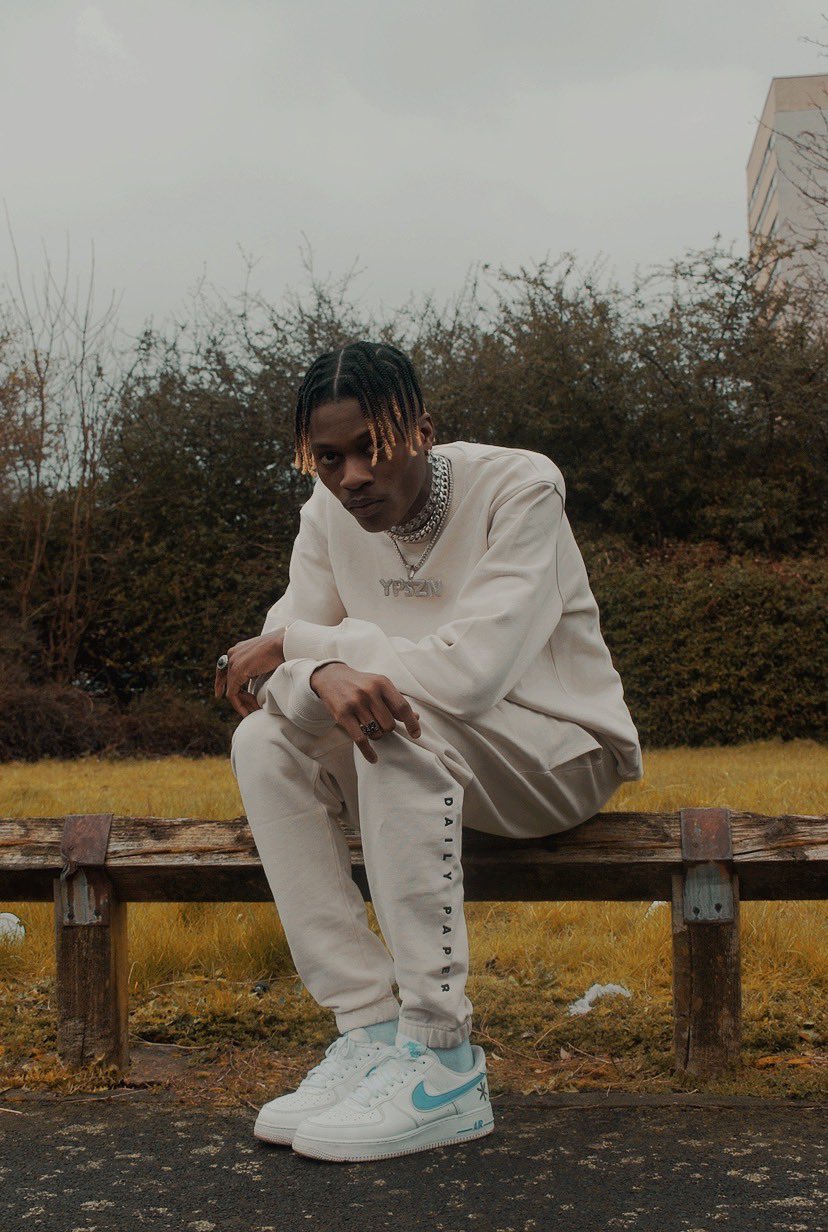
Elsewhere in the motherland, acts like PsychoYP and Zilla Oaks are making their mark. Proudly representing the state’s capital, these two frontrunners of the music collective, Apex Village have actively earned Abuja a seat at the table of the Nigerian trap scene. Frontman, Psycho YP, established the collective following the success of his 2018 debut YPSZN. While still basking in the success of the project, the thought of building a community dawned on him. ‘I was getting a lot of clout and all these things, getting a million streams on Apple Music. I just felt like there was a lot of attention on me and all my other friends had their own things going on that I felt the world needed to experience’, he tells Culture Custodian in a 2019 interview. Hence, the inception of Apex Village, a collective featuring artists ranging across multiple art forms. In this same Davido-inspired principle of ‘rising by lifting others’, YP made a conscious effort to ensure they understood the process of profiting from their art, to avoid exploitation from higher powers.
The change accompanied by this new-found knowledge is evident in the artists. Their first offering as a collective, Welcome To the Ville, is an obvious elevation from any of their individual work, with clean-cut delivery of ice-cold verses over head-bopping beats. Following the support attained from this debut, members of the Trap group have ventured on to release notable individual bodies of work, including Ayüü’s Ayüüniverse, YP’s follow up project YPSZN2, as well as Zilla’s recent bar-heavy collab with Dremo & Prettyboy-DO, ‘Ogini’. Hence, further bolstering their place as forerunners in the Nigerian trap scene.
Exterior to the continent’s shores, young diasporan acts are telling their distinctly Nigerian stories, fusing in western influences through the trap sound. Traplanta, the Atlanta based trap music group, is one of such acts. Similar to the likes of A$AP Mob, Traplanta has defined themselves as a lifestyle collective; bragging of talented rappers KA$H, Folabi Xan & OBA. While predominantly recognized as a collective, the boys still retain their individuality; each with a different approach to rap as is evident on their solo projects. KA$H’s dexterous storytelling is taken to impressive heights on his sophomore tape, Reborn while recently solo member, dndSection’s signature beguiling hooks aren’t lacking on his debut solo project, Love Lies Bleeding. Perhaps the most invigorating feature of the collective lies in the form of rapper Folabi Xan; the mystery man who often tends to shy away from the limelight. Xanny’s approach to rap is similar to Blueface in that rap-off-the-beat style – only much more convincing. Despite his solo discography being fairly sparse, he certainly offers the most intriguing yet memorable verses on the group’s collaborative efforts; spitting verses (and boy, does he spit) in such an eccentric manner it’s almost hypnotic, following every word.
Across the pond and on the soil of our colonizers, UK based creative collective No Politics Mob are equally pulling their weight on the scene. Characterised by their signature psychedelic soundscapes, the group consists of rappers New World Ray, Ade T and Maison2500, implementing said murky tones in their rap showings. While Ray could have been deemed the de facto leader of the group as he was certainly the most visible, Maison’s trajectory in 2019 stands to debunk this notion. Although the rapper’s ability to incite rage-filled moshpits grants him more Playboi Carti and Travis Scott leanings, his overall punk aesthetic, weaving between the cute, the odd and the angry, screams more Lil Uzi Vert. With the release of his game-changing 2019 sophomore project, Maseworld, a true cultural reset for the trap scene, Maison transcended into a god-like status similar to that of Playboi Carti; amassing a cult-like following of ardent fans. And without a doubt, co-signs from alté leaders, Odunsi and Santi certainly helped in this movement. Elsewhere in the UK is trap artist, Lörd Isaac, whose efforts like ‘Milli’ and ‘Main Guy’ have proven him an excellent craftsman in the trap sound.
Among all elements, trap music is most distinctly characterised by its sound; punctuated with hi-hat flutter riffs, thumping 808s and synths and bass-heavy drops. In this light, it would be obscene in the documentation of this movement to disregard the originators and consequently the backbone of the trap sound – the producers. Needless to say, the Nigerian trap scene undoubtedly boasts an ample crop of young talent in the production aspect, both home and abroad, each distinctive in their style. From prominent names like Genio, GMK and Higo, to more underground producers like Awful Daniel, +gray+, Tochi Bedford and Silla the Alchemist.
Given that the
Nigerian trap scene is still an emerging bubble in comparison to its more
mainstream counterparts, it’s imperative for the provision of adequate
platforms for these rising artists to showcase their talents and express
themselves. The NATIVE Magazine’s
annual festival, NATIVELAND, serves
as the ideal epitome of such a platform. Bridging the gap between diasporan and
indigenous acts, NATIVELAND provides an atmosphere for budding and prominent
talents alike to deliver exclusive experiences to fans. Lucid Lemons, a platform solely focused on showcasing Nigerian
creative also provides similar spaces, exemplified in their annual Lemon Curd festival and weekly open mic
event, Lucid Nights. And for the
moshpit fanatics, Thirsty Worldwide’s
Thirstynalia and Wolfing Thunder offer spaces for the
underground indigenous trap acts to wild out at a rage-filled fest.
While the steady growth of the Nigerian trap sound over the last four years is undeniably impressive, there’s certainly a conversation to be had about the efficacy of rap as a mainstream genre in the long run. Granted that the older generation has seemingly abandoned any efforts at the genre, opting for the ‘easy way out’ that is the Afro-Pop genus, it’s certainly up to the new generation to change that narrative, ensuring rap is viewed as an essential genre of music and remind people that great Hip-Hop can come from our country. Moving forward, it would be crucial to see more women in the trap scene. Globally, female rappers are on the steady rise, boldly dabbling in all aspects of the genre and doing it better than most of their male counterparts, hence it would be invigorating to see more Nigerian women voicing their lived experiences through the trap sound.
2019 will be etched in Nigerian music history books as a momentous year for the newbies. The success of the year’s steady risers such as Rema, Joeboy, Fireboy and Oxlade (to name a few) serve to highlight the present climate for new acts in the country. With Nigeria’s pace-setting status as the media hub, where budding acts spring to headline shows quicker than anywhere else in the world, it’s rapidly becoming clear that many more are set to follow in the footsteps of Rema and the like.
Here are 10 Nigerian artists to watch in 2020 and beyond.
Tems
Following her 2018 debut release of ‘Mr. Rebel’, Tems kicked off 2019 with the release of ‘Looku Looku’, amassing her anenviable fanbase. Further in the year, the Afropop singer dropped the chart breaking single, ‘Try Me’, bolstering her place in the melancholic ranks. Indeed the record opened her music to a wider audience, granting her the opportunity to share stages with local and international household names alike. Now in the new year, still basking in the track’s success, the burning question at the mouths of the masses is ‘What’s next for Tems?’ 2020 is envisioned to be a surreal year for the R&B artist, watch closely as her stock upsurges.
Maison2500
2019 was a rewarding year for Maison2500 and his fans. ‘Fuck it we on route, now you on the news’, the Manhattan based Nigerian trap artist foreshadowed on his early 2019Santi/Odunsi/Izzy collab, ‘Icy’. A year later, one can evidently conclude Maison made no mistake with that line. In July 2019, he shared the long-awaited revolutionary full-length project, Maseworld; a game changer for Nigerian trap music of the present generation. It’s no surprise subsequently after its release; Maison hastily garnered a cult following of devoted fans. The rapper followed up with a double release of two highly anticipated singles, ‘Mood Swings’ & ‘Molly + Fast Cars’, to appease his ever hungry fans. His return to Lagos in December was relentlessly yearned for and his live performances at various concerts further cemented his commanding grip on his fans’ interests. Looking ahead into the year in hand, Maison’s predicted journey is undeniably set to shake up the industry at large. ‘And my clique and my set know I’m prolly up next’, he further confirms on ‘Icy’. Hang on tight for more from the visionary artist.
Buju
It’s commonly presumed that a co-sign from a big artist is the quickest route to radio in Nigeria, and, in many cases, even as the landscape shifts, this is still assumed the case. For Afrobeat singer, Buju, this was evidently the spark he needed. Buju had been making music prior to his chart topping collaboration with critically-acclaimed street artist, Zlatan(‘Spiritual’), however it was said collaboration that really skyrocketed his journey into becoming a household name in the Nigerian music scene. Further in the year, he released a follow-up single, ‘L’enu’, which amassed massive airplay as well, cumulatively earning him a nomination for the 2019 Headies Rookie of the Year Award. 2020 is definitely looking up for the artist as a collaboration with Grammy nominated artist, Burna Boy, is said to be in the works. Watch this space!
DamiOniru
Singer-songwriter, Dami Oniru, released her first body of work, Cliché, in 2017. The R&B soul artist has since then colored her discography with singles like ‘Fallin’ and ‘Iyawo’; however with the 2019 release of her second body of work, Bri’s Lounge, Oniru showed remarkable growth in her artistry with her incredible vocal strength, melody and soothing lyrics. We look forward to great things from her in 2020.
Crayon
Veteran label boss, Don Jazzy, has consistently proved to have an eye for discovering new talent. Such was the case for previous mentees Reekado Banks, Korede Bello and more recently Rema. Among more recently discovered talents is Crayon, an Afrobeat singer who made his first appearance on the Mavins all-star single ‘All is in Order’. Subsequently, the Afropop singer released his hit single ‘So Fine’ off his Cray CrayEP, which rapidly gained major airplay and in turn bagged him a nomination for the Headies Rookie of the Year Award. Crayon is visibly hungry for success. “I want to put my community on the map,’’ he says. Great things are projected for the emerging artist this year; it’s certainly only a matter of time.
Gigi Atlantis
British-Nigerian singer, Gigi Atlantis, appeared on the Nigerian music scene in 2018 and has since then released a number of standout tracks including the GMK produced ‘Tequila Crush’ and the fan-approved ‘2020’. It was however with the release of the unapologetic Fasina-assisted record, ‘Wahala on the Rocks’, that she proved herself worthy of the accrued attention. Gigi, described by the NATIVE as ‘a singer who infuses sultry bedroom pop with lyrically frank R&B’, creates music with evident influences from American melancholic soul artist, ABRA; an unorthodox style yet to be thoroughly explored in the Nigerian music scene. It is for this reason we’re excited to see what’s next for the singer-songwriter in 2020.
Alpha P
In recent times, Afrobeats as a genre has come under experimentation, with its practitioners modifying its compositions to fit into the current fast-paced preferences of the Nigerian audience. However, spaces farther beyond Africa are targeted; hence, the need for fusion. Spearheading this movement are artists like Rema, and following closely behind is recent Universal Music Nigeria signee and Rema’s former bandmate, Alpha P. The 17 year old singer has been described as an artist bringing ‘genre-blending flavor’ as is evident on his 2019 introduction EP, King of the Wolves. Often dubbed as ‘Rema 2.0’, his understandably obvious similarity to the Afrobeat star may prove to be a thorn in his side as this makes it a particularly daunting task to sell Alpha P as an artist possessing his own individuality. Nonetheless, his irrefutable talent should serve as enough incentive for UMG to deliver more ingenious ways in developing his brand and artistry. Alpha P is destined for greatness and we’re eager to watch as it unfolds.
MOJO
With his 2018 romantic, AYLØ and Paula B assisted debut single ‘Sweet’, rapper MOJO joined the league of bilingual artists in the Nigerian music scene (including Naira Marley, Zlatan, Olamide and the like), infusing playful Yoruba verses over head-nodding beats. Much like fellow counterpart and collaborator, Prettyboy D-O, MOJO has often been branded as the quintessential bridge between alté and street music, as his musical palette appeals to audiences of both aforementioned sub-genres. The rapper teamed up with Prettyboy D-O to deliver the 2019 anthem, ‘Chop Life Crew’, rewarding him with an expansion of his audience. He followed up shortly with the catchy DaRe Kasali produced bop, ‘Shawarma’. We can’t wait to see what he cooks up next in 2020.
Jinmi Abduls
Prevalently called ‘Jinmi of Lagos’, the 22 year old singer-songwriter has carved a niche for himself with songs that carry the city’s energy, fusing tradition Yoruba sounds with storytelling R&B vocals to create evergreen pieces. Although he possesses a reasonably dense discography, as he started releasing music as early as 2013, Jinmi is yet to break the underground ceiling to move into the more mainstream market and receive the recognition he deserves. Nevertheless, observing his 2019 releases such as ‘Abena’ and ‘Greed’ featuring Oxlade, we’re certainly hopeful that 2020 is the year he attains more success than ever.
WANI
Since his debut in 2017 with the fan-approved ‘Instaman’, WANI has managed to maintain his relevancy each year; dropping the outstanding debut project that gained him well-deserved traction in 2018, Lagos City Vice, and his 2019 features on Odunsi’s ‘Better Days’ and SDC’s ‘In Case’. And yet, even with the enviable fanbase accrued over time, WANI can still be grouped with the class of artists running the underground circle; yet to break the ceiling and cement their significance in the top flight. Nonetheless, listening to his late 2019 double rollout, ‘Fast Life/No Love’, it’s evident the R&B singer is ravenous and ready. It certainly is a now or never moment and WANI is positively on the path to have a breakout year in 2020.
https://youtu.be/edtucTeBlfU
*Bonus Round*
Yinka Bernie
Afro-fusion artist and producer, Yinka Bernie’s music journey began in 2014, with the release of his first project, FelaObsessions. Since then, he’s shifted his focus from sampling and production to becoming a full-fledged musician, and it’s worked for him. He released his highly anticipated 2017 project, 19 & Over, gaining traction amongst listeners. Following up with subsequent releases in 2017 and 2018, Yinka further defined his own unique path to his artistry. 2019, however, saw the artist take a backseat from releases until he made his comeback late in December; dropping a track, ‘Bounce’, featuring long-time collaborator Joyce Olong. The short-lived hiatus from music enabled the artist further perfect his craft as is evident in the stellar performance delivered on ‘Bounce’, and has us giddy with excitement for what’s to come in 2020.